

A Stomach That Chews
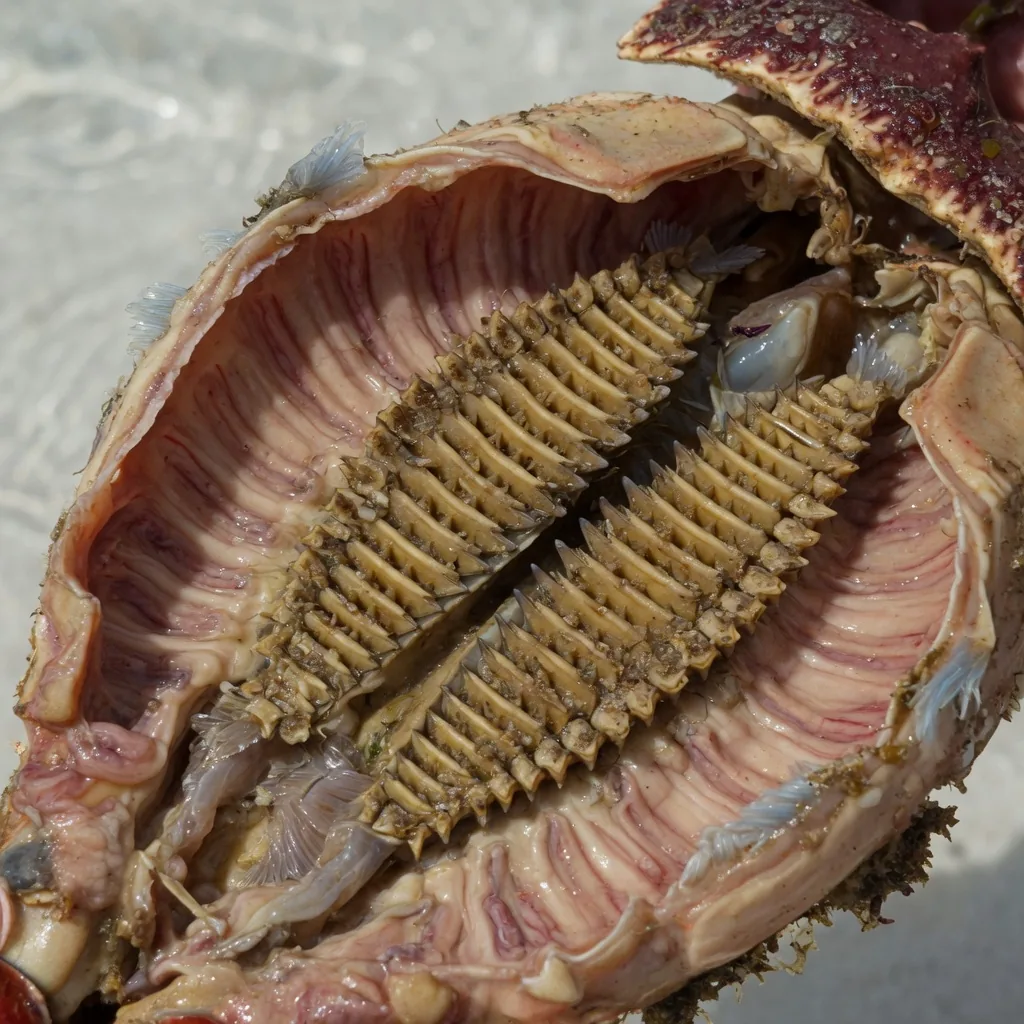
Did you know that crabs chew their food inside the stomach? Their stomach walls are highly muscular, with grooves and ridges. The raised, tooth-like structures break food into smaller pieces. This part of the stomach is called the gastric mill. Even the mouth parts of crabs are adapted to collect and tear food, pushing it into the esophagus. Though most crab species are aquatic, some are terrestrial, so the type of food they eat can vary by species.
What Crabs Eat
Most crabs are aquatic, and a big part of their diet is algae. But they are not limited to algae, most of these crustaceans are omnivores. However, some species are carnivores, and others are strict herbivores (like mangrove crabs). The meat-eating crabs will hunt other crustaceans, worms, and molluscs.
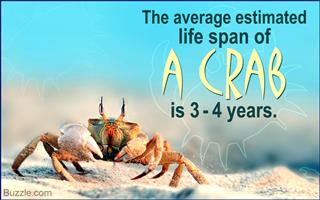
Most crabs eat both plant and animal matter. Some crabs are scavengers and will eat dead animals. Coral crabs eat coral polyps found in the warm waters of the tropical oceans. Ghost crabs and Fiddler crabs take in mud and sand on beaches, they filter out food particles and throw the mud back out. Pebble crabs and box crabs use their claws as tools to crack open marine snails.
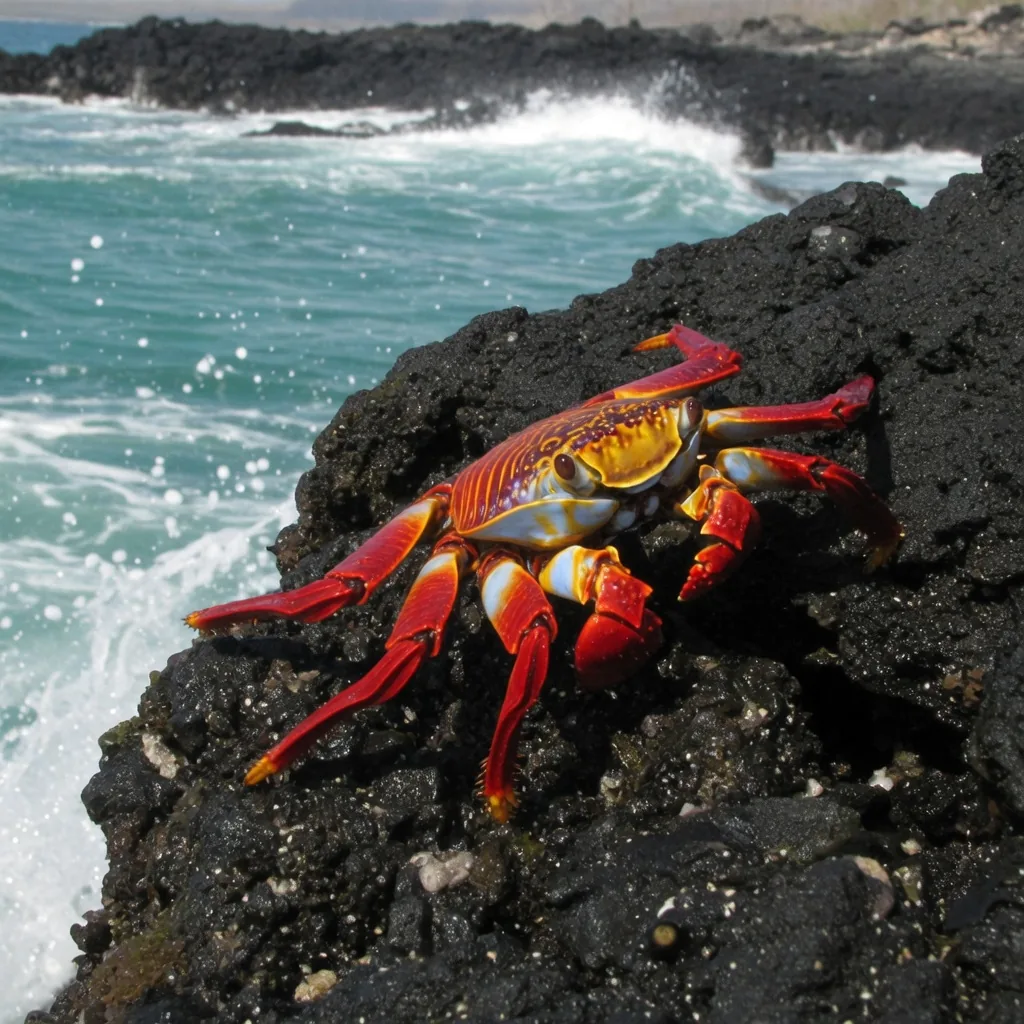
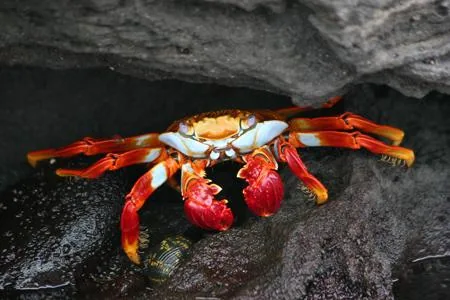
One of the most colorful crabs, the Sally Lightfoot (or redrock crab), feeds mainly on algae, but will occasionally eat carcasses and even bird droppings. Here is a short list of common foods crabs enjoy:
- Worms
- Fungi
- Plankton
- Bacteria
- Molluscs
- Shrimp
- Barnacles
- Krill
- Crayfish
- Detritus
- Tiny turtle hatchlings
- Partially decomposed plant or animal matter
Crabs need a mix of plant and animal matter to grow healthy and survive well. In the case of pet crabs, it is worth seeking expert advice to understand exactly what to feed them.
What Are the Parts of a Crab's Body?
Crabs are related to lobsters and shrimp. As they evolved, they developed the ability to walk and run sideways. These creatures can also burrow in the sand and swim in the water. They have a segmented body with many pairs of appendages. There are five pairs of appendages used for walking and two used as sensory antennae. The front legs have pincers known as chelae. These pincers are used for fighting, display, and feeding.
These highly evolved animals have an advanced and complex nervous system. The part that lets crabs pinch is located at the front of the body, this is the claw, used to catch prey. Crabs can survive in extreme conditions and adapt to climate change quickly. They have a pair of compound eyes that let them see fairly well, along with a very advanced sense of smell and taste. These senses help them find food and mates. Crabs have a soft inner body and a hard outer shell.
A Crab's Body Plan & Size
Crabs have ten appendages (legs). That is why they are called decapods, from the Greek words deca (ten) and poda (legs). The front pair of these appendages are not normal legs. They have been changed into claws, which are called chelae.
Crabs are crustaceans. Most animals have a skeleton inside their bodies, but crustaceans do not. Instead, they wear a hard outer shell called an exoskeleton. On a crab, this shell forms a shield over the body known as a carapace.
Crabs are also arthropods. The Phylum Arthropoda includes animals that have segmented appendages, among other features. Insects like the cockroach, butterfly, housefly, mosquito, and spider all belong to this phylum.
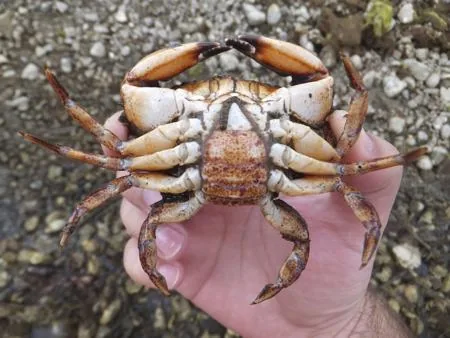
In most animals, the thorax and abdomen are two separate body sections. In crabs they are joined together into one unit called a cephalothorax. However, some crab species (such as the Raninoida) do not have this fusion. You can also tell male and female crabs apart just by looking at their abdomens: male crabs have narrow abdomens, while females have broader ones.
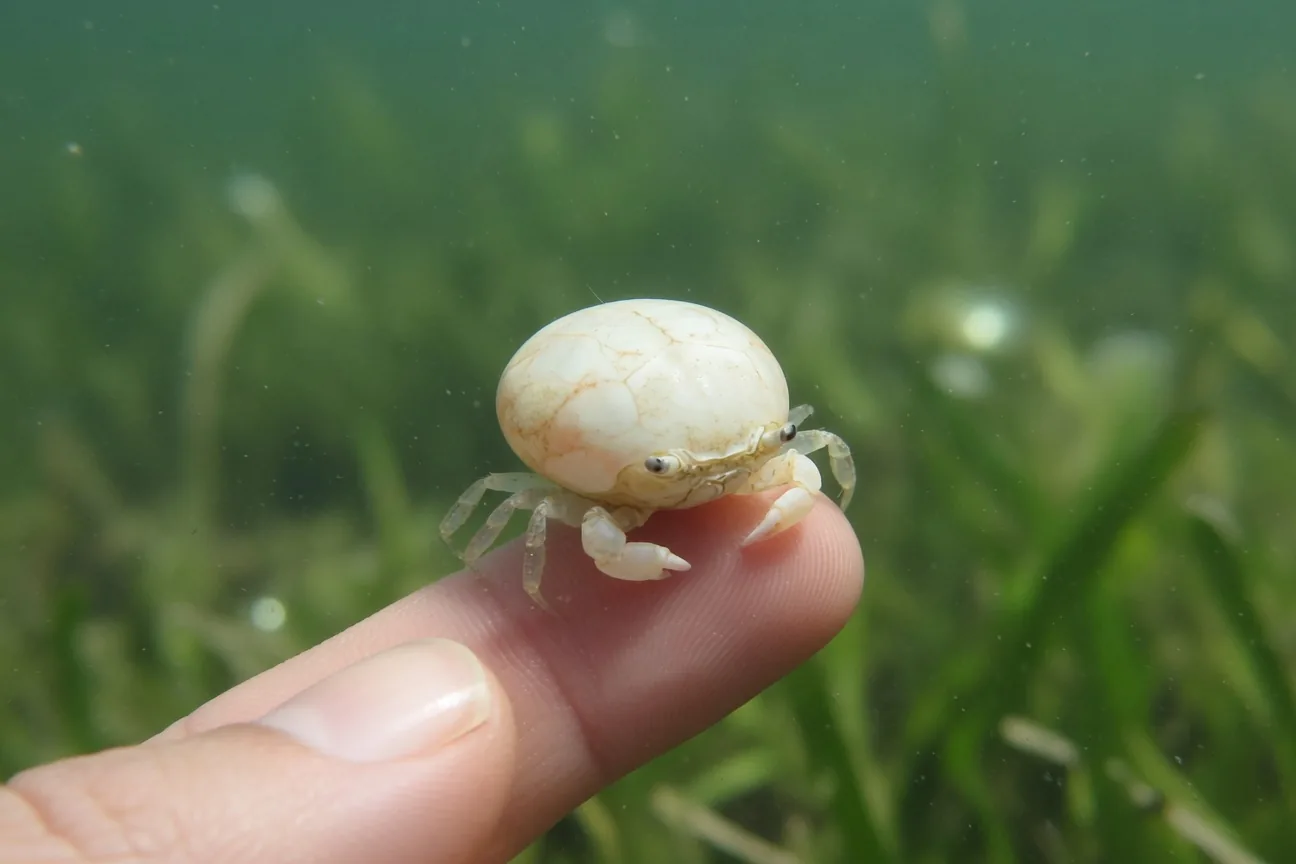
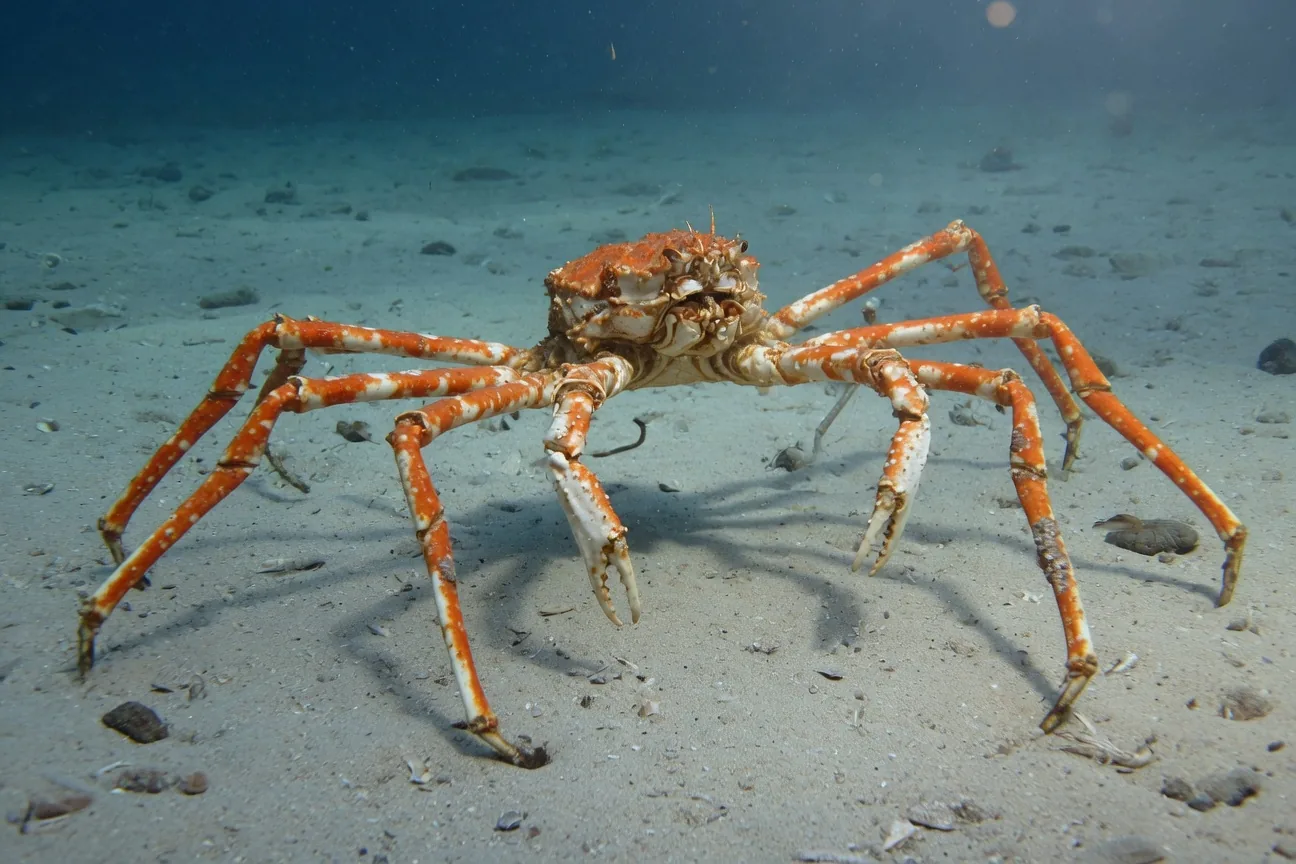
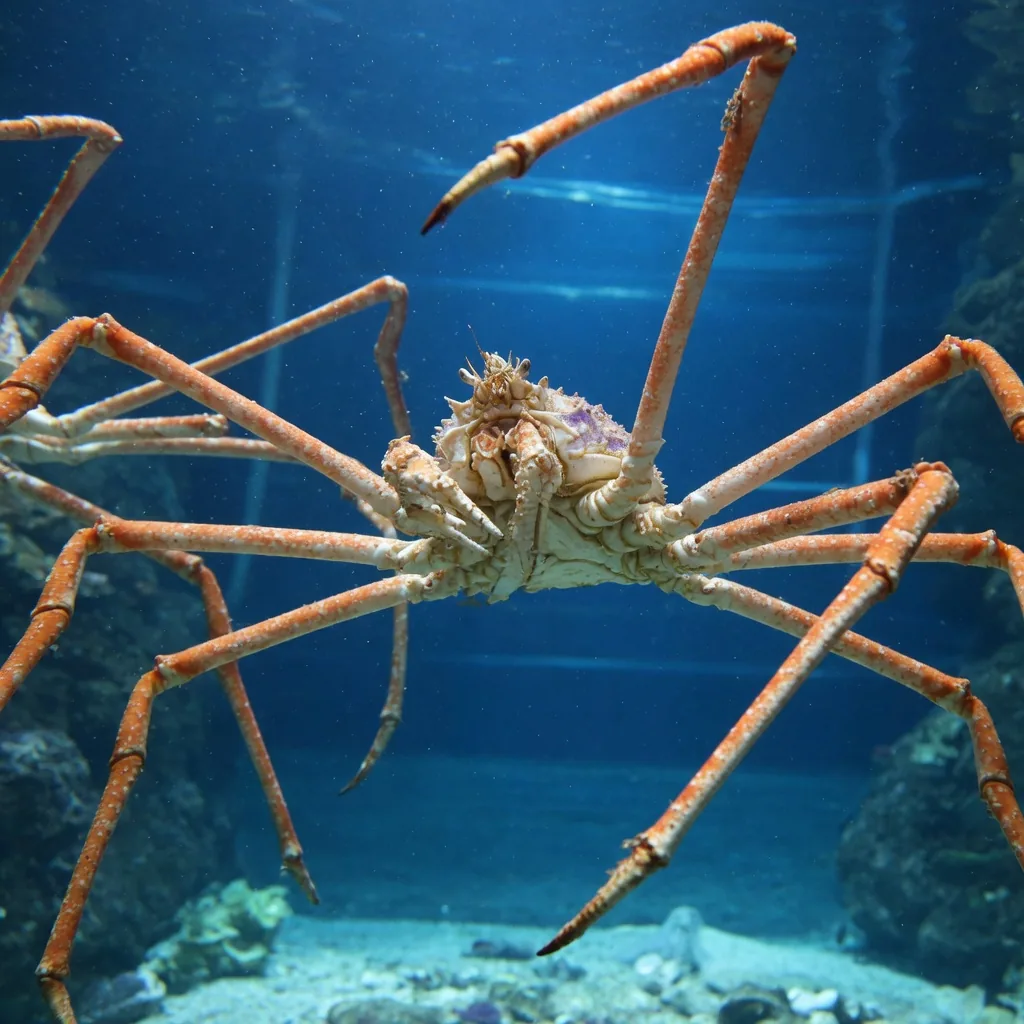
Crabs come in a huge range of sizes, from as small as a marble to several meters across. The smallest known species is the Pea Crab, named for its tiny size. The largest is the famous Japanese Spider Crab. It has a walking leg span of 3 to 4 m, and can stretch to 8 m when fully outstretched.
Test Your Crab Knowledge!
8 quick questions about crab diets, anatomy, and amazing facts.
How Do Crabs Reproduce?
Crabs have a complex mating ritual and communication system. They use their pincers for drumming or waving as a form of communication. The abdomen of a crab is like a tail, it is folded tightly under the body to form an abdominal flap. You can tell the sex of a crab by turning it over: the male has a triangular flap, while the female has a broad, oval-shaped abdominal flap.
During mating, the crabs assume the double position, with the male carrying the female. The mating can last up to three hours, and the crabs may stay in the same position for three days after mating. The female stores the male's sperm on the underside of her abdomen until the eggs are ready to be fertilised.
The sperm flow over the eggs and fertilise them. The female carries the fertilised eggs in a spongy mass located between the abdominal flap and the body. She uses her small legs called pleopods to hold the eggs in place, giving them a 'berried' appearance.
The female continuously waves water over the pleopods to keep her eggs healthy. She may migrate to saltier waters after mating. The eggs are incubated for about two weeks, after which crab larvae hatch. These larvae are released into the ocean and must fend for themselves. The larvae continue to grow for the next 4 days, then become adult crabs. During this time, they go through many molting stages.
Frequently Asked Questions
What do crabs eat?
Most crabs are omnivores and eat algae, worms, molluscs, shrimp, barnacles, krill, bacteria, plankton, and detritus. Some species are carnivores (like coral crabs) and some are strict herbivores (like mangrove crabs).
How do crabs chew their food?
Crabs chew food inside their stomachs using the gastric mill, a highly muscular section with ridges and raised tooth-like structures that grind food up.
How many legs does a crab have?
True crabs have ten appendages, they are decapods. The front pair are modified into claws called chelae. Hermit, King, Horseshoe, and Porcelain Crabs are not true crabs because they do not have ten legs.
What is the largest crab in the world?
The Japanese Spider Crab is the largest species. It has a walking leg span of 3 to 4 meters and can reach 8 meters when fully outstretched. It is also the oldest crab species and can live for over 100 years.
Do people eat crabs?
Yes. Humans eat about 1.5 million tons of crabs every year, about one fifth of all the creatures caught from the world's water bodies. The most-eaten species is the Japanese Blue or Horse Crab, with around 300,000 tons consumed a year.
Crabs as Human Food
Every year, humans eat 1.5 million tons of crabs from all around the world. Crabs make up about one fifth of all the creatures that people catch from the world's oceans, rivers, and lakes.
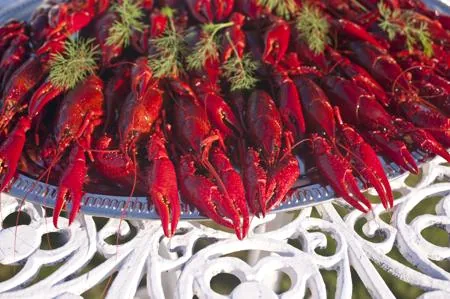
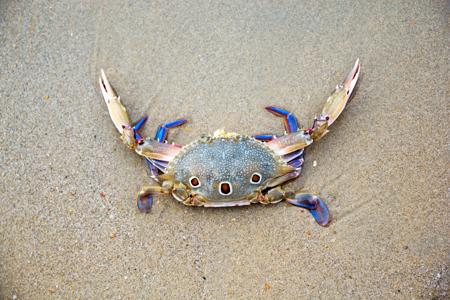
The species eaten most often is the Japanese Blue, or Horse Crab. Around 300,000 tons of it are consumed every year. It is native to the coast of China but is found in other waters too.
People who catch crabs for a living are called crabbers. Crabbers use a cage-like device to trap these animals. It works like a cage with several openings for crabs to enter, but none to escape through, each entrance has a one-way door.
Crab meat is packed with vitamin B12 (cobalamin). Just 2-3 ounces of the meat can give you a whole day's worth of this vitamin. Crabs are cooked in many different ways. One popular gourmet method is cooking them whole in their shell, a technique best suited to a variety known as Blue Crabs.
Explore More Animals
 Facts About Spider Crabs That are Insanely BizarreWhat exactly is a spider crab? Discover the giant Japanese spider crab, European spiny crabs, portly crabs, sheep crabs, and more, with facts, a quiz, and glos
 What Do Sea Turtles Eat? It's Not What You ThinkSea turtles, herbivores, carnivores or omnivores? The answer depends on the species. Discover the diet of all seven sea turtle species, plus a quiz, glossary,
 Meet the World's Largest Terrestrial ArthropodsCoconut crabs are the biggest land arthropods on Earth, tree-climbing, coconut-cracking giants. Learn their life cycle, diet, adaptations, names, and why they
 What Do Fish Eat? A Guide to Fish DietsA great diversity is observed in the diet of fish depending on the types and species. Some fish are even herbivorous! Here are the details of the diet of differ
Strange & Surprising Crabs
The Japanese Spider Crab is the largest crab in the world, and also the oldest species. Its natural habitat is usually the deepest parts of the Pacific Ocean. These animals are known to live for a century or more.
Hermit, King, Horseshoe, and Porcelain Crabs are not true crabs at all. They do not have the ten appendages that a true crab must have.
Some crabs look very unusual. The Ghost Crab really does look like a ghost, it has bulging eyes and even droopy front claws that look like ghostly arms! The Halloween Crab has colors that will instantly remind you of a Jack-O'-Lantern. There is also a Thumbnail Crab, which looks just like a human thumbnail.
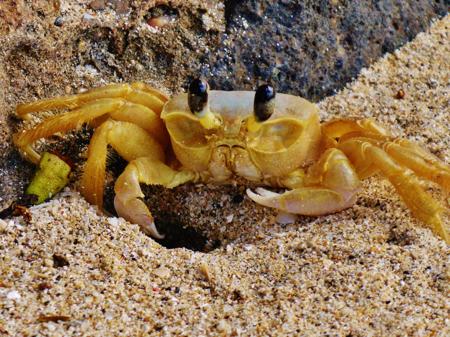
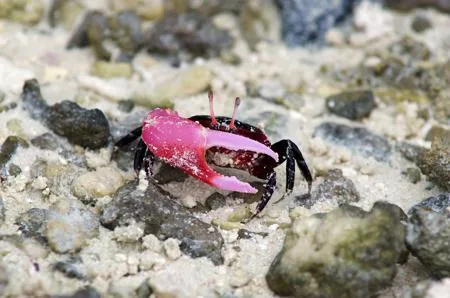
The Fiddler Crab is easy to spot because it has one enormous claw on one side. It can even raise this claw in a motion that looks just like someone waving. Fiddler Crabs also make good household pets.
The most colorful species in the world is probably the Sally Lightfoot Crab. This eye-catching animal has colors of red, orange, yellow, and white.
There is also a crab that gets mistaken for a spider because of its long, spindly legs, the Arrow Crab. Some people actually have to count the legs to tell it apart from a spider. (Spiders have eight legs; crabs have ten.)
Interesting Crab Facts
There are many interesting facts about crabs worth knowing. Here are some highlights:
- The name decapod means "10 legs" and Callinectes sapidus means "beautiful swimmer."
- An average crab can live up to 3 years.
- The swim paddle is used by crabs to swim through the water.
- If a crab pinches a person, the claw breaks off, and soon the crab is able to grow a new one!
- Crabs are also arthropods, meaning they have segmented appendages similar to those in butterflies and cockroaches.
- The thorax and abdomen of crabs are fused, forming a structure called the cephalothorax.
- Female crabs have broader abdomens; males have narrower ones.
- The shell forms the crab's skeleton. A crab sheds its shell and grows a new, larger one as it grows.
- Crabs can be pea-sized or may grow up to 4 meters in size.
- The Japanese Spider Crab has a walking leg span of 3 to 4 meters and 8 meters when fully outstretched.
- Hermit crabs, King crabs, Horseshoe crabs, and Porcelain crabs are not considered true crabs because they do not have 10 legs.
- Fiddler crabs have one large claw on one side. They raise it in a waving motion that looks just like a person waving.
- The Sally Lightfoot Crab holds the title of most colorful crab in the world, it comes in red, orange, yellow, and white.
- The largest crab ever recorded was a male measured at 9 inches, found in Maryland.
- The smallest species is the Pea Crab, and the largest is the giant Japanese Spider Crab.

 Fun fact for today!Crabs chew their food inside their stomachs, not with their mouths!