

Pig Diet
Pigs belong to the genus Sus and family Suidae. This genus includes several pig species, such as the domestic pig (Sus domestica) and the wild boar. It is believed that domestication of pigs started around 6000 BC.
While most pig species are domestic, some still live in the wild. Even though pigs will eat almost everything they come across, domesticated ones need a well-balanced diet. Pigs are classified as omnivores, meaning they feed on both plant and animal matter.
Wild pigs eat a wide variety of foods, including flowers, fruits, leaves, grass, roots, mushrooms, and tree barks. They also scavenge and feed on garbage, worms, dead insects, and carcasses.
Their diet includes small birds, rats, rabbits, and eggs. Even nuts like pecans and acorns are eaten by these animals. It has also been observed that, sometimes, newborn pigs are consumed by their mother. In short, pigs eat almost all sorts of food that are offered to them or that they come across.
Take the Pig Diet Quiz!
5 quick questions. How much do you really know about what pigs eat?
Feeding Domesticated Pigs
In the wild, pigs feed on everything according to their needs. For domesticated pigs, it is very important to understand their food requirements and provide them with a proper diet. Unlike cattle and goats, pigs have a single stomach and are classified as non-ruminant animals. They need foods rich in energy so they can grow quickly.
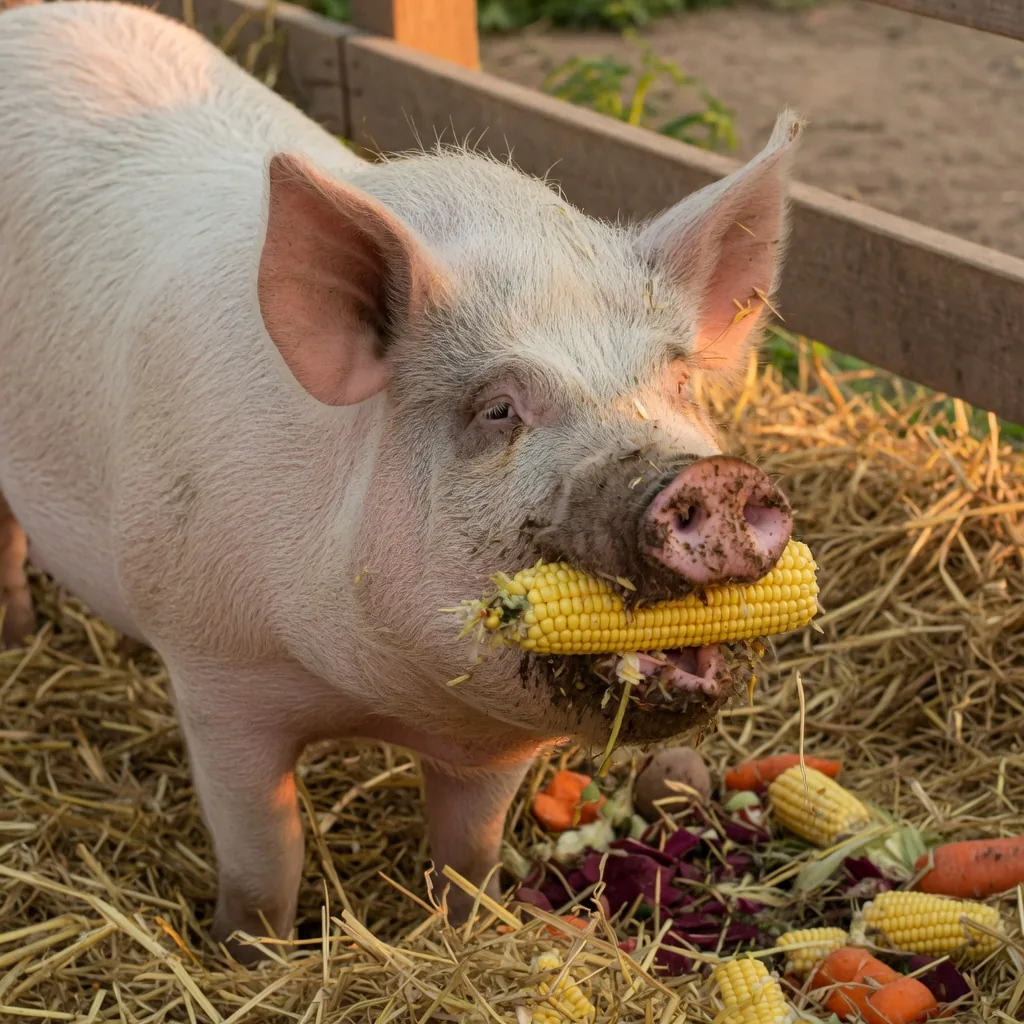
It is always better to feed them a concentrated grain diet that is low in fiber but fortified with protein supplements. So, pigs on farms are typically fed grains like corn, oats, barley, and wheat. Corn is considered one of the best foods for pigs, as it is a good source of digestible carbohydrates and contains less fiber. Pigs can also be fed soybean meal, hay, and vegetables like carrots and potatoes.
Never forget to supplement their diet with vitamins and proteins. While meat is the main source of protein for pigs, it is not recommended for domestic ones raised as livestock. This is due to the risk of diseases that may transfer to pigs through meat. So protein supplements are recommended for such pigs. The protein level in their diet must increase as they grow. Sometimes, dried whey is included in pig food as a source of protein.
Calcium supplements are also recommended for pigs. Commercial pig food can be used to feed these animals, but include plenty of fruits and vegetables alongside it. If commercial food is not fortified with vitamins and proteins, that gap must be filled separately.
In short, pigs need high-energy foods that are low in fiber, along with a steady supply of clean, fresh water. This is only a brief overview of the diet of pigs. It is better to consult a vet for more information about the feeding requirements of specific pig breeds.
Explore More Animals
 Unexpectedly Awesome Examples of Omnivorous Animals With PicturesOmnivores are found all over the world. In North America, coyotes and black bears are textbook examples of omnivorous animals. They don't just hunt small mammal
 What Do Squirrels Eat?We often come across squirrels around our homes, but seldom do we pay attention to what they eat. Their eating habits go well beyond nuts and corn.
 3 Lovable Pig Breeds You Can Keep as PetsPigs as pets are cute, lovable, and friendly. Discover the three most popular pet pig breeds (pot-bellied, miniature, and kune kune) and find out which is rig
 What Do Groundhogs Eat? Not What You ThoughtGroundhogs eat one-third of their body weight every day! Find out what plants, vegetables, and flowers they love, and why they eat so much in summer.

 Fun fact for today!Pigs have been sharing meals with humans for over 8,000 years, domestication began around 6000 BC!