

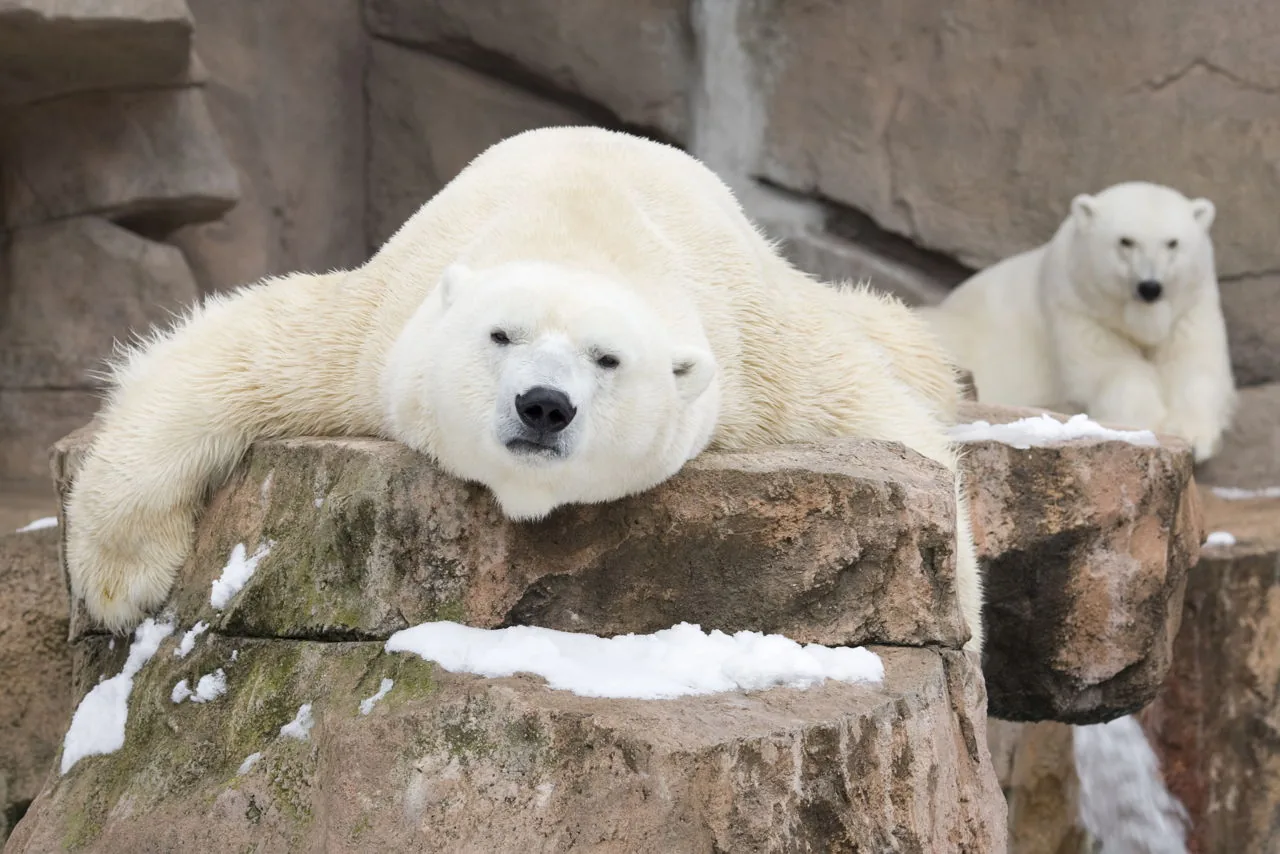
Polar bears are the largest bears in the world. They live in the Arctic region and, though they are related to the brown bear, many of their features have evolved as adaptations to the harsh Arctic conditions. They are classified as marine mammals and are otherwise known as the 'maritime bear'. These giant bears are the largest carnivores of the bear family. Their adaptations let them move across ice, land, and sea. They are excellent hunters, and their white coat helps them blend in with the snow. Though they are carnivores, polar bears may occasionally eat plant matter too.
Polar Bear Diet
Polar bears hold the top spot as predators in the Arctic food chain. While most bear species are omnivores, polar bears are classified as true carnivores. Their carnivorous nature is considered an adaptation: other food sources are scarce in the Arctic. However, they may eat berries, roots, and seaweed occasionally, mainly during summer, when other food becomes hard to find.
What is the Staple Food of Polar Bears?
The staple and primary food of polar bears is seals. These bears mainly feed on ringed and bearded seals. They also eat hooded and harp seals. Seals are plentiful in the Arctic and are hunted when they come out to rest on the ice, or when they surface through ice holes to breathe. Adult polar bears eat the seal's skin and the fatty layer beneath it, called blubber. The protein-rich red meat is left for younger bears and other animals like Arctic foxes and ravens.
The subadults (young bears that live separately from their mothers) also get enough nutrition from these leftover carcasses. Even when subadults hunt and catch prey themselves, adult polar bears feed on the prey first and leave the half-eaten carcass behind. Seal hunting happens throughout fall, winter, and spring, when there is plenty of ice. Polar bears rarely hunt seals in open water.
What Do Polar Bears Eat Other than Seals?
Apart from seals, polar bears eat the carcasses of adult walruses, beluga whales, and narwhals. Sometimes they kill young beluga whales and walruses. Adults are not attacked, they are too large for a polar bear to overpower.
During summer, most of the ice melts and seal hunting becomes nearly impossible. Some polar bears travel long distances to stay in ice-filled areas. Those that remain on land eat other wild food, rodents, shellfish, crabs, reindeer, muskox, birds, eggs, and even other polar bears. They also eat plant material like berries, roots, and seaweeds during this season. However, the main part of their diet is still fat and meat from marine mammals like seals, because terrestrial food simply does not provide enough calories.
Polar bears can also act as scavengers. Near human settlements, they may consume garbage, even things like car batteries and plastic.
Do Polar Bears Hibernate?
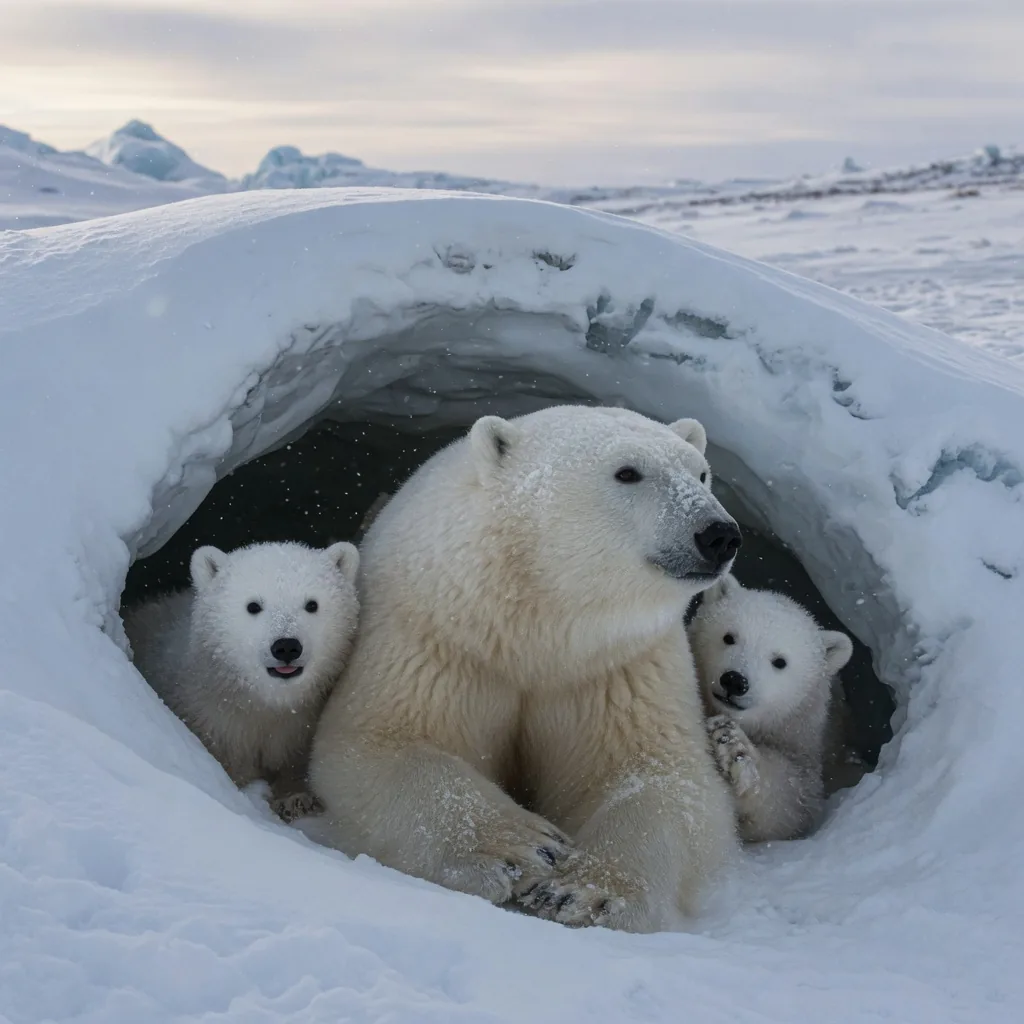
Polar bears do not hibernate in the true sense. Males and non-pregnant females enter a lighter state called walking hibernation. This usually happens when food sources become scarce. During fall, pregnant polar bears make dens in snow or in the earth beneath the snow. They stay in these dens from fall to spring, giving birth to cubs during November or December and coming out of the den in March or April.
Inside their dens, they sleep and rest. Their heart rate slows down, but body temperature stays close to normal, which is necessary for giving birth and nursing cubs. Polar bears other than pregnant females are active throughout the year. But when food becomes scarce, their body temperature and heart rate lower slightly. Their metabolism slows, and they use the fat reserves stored in their body. In short, polar bear hibernation is linked to food scarcity, but it is not the same as the deep hibernation of other animals.
Frequently Asked Questions
What is the main food of polar bears?
Seals, primarily ringed and bearded seals
Do polar bears eat anything other than seals?
Yes, they also eat walrus, beluga whale, narwhal carcasses, and in summer: rodents, birds, eggs, berries, roots, and seaweeds
How do polar bears hunt seals?
Still hunting, they wait at ice holes where seals surface to breathe, then pull them out with a forepaw
Do polar bears hibernate?
Not fully. Pregnant females den from fall to spring; males and non-pregnant females enter a lighter state called walking hibernation when food is scarce
What is the conservation status of polar bears?
Vulnerable, they may become endangered in the future, mainly due to global warming
Take the Polar Bear Diet Quiz!
5 quick questions. How well do you know the Arctic's top predator?
Hunting and Feeding Habits
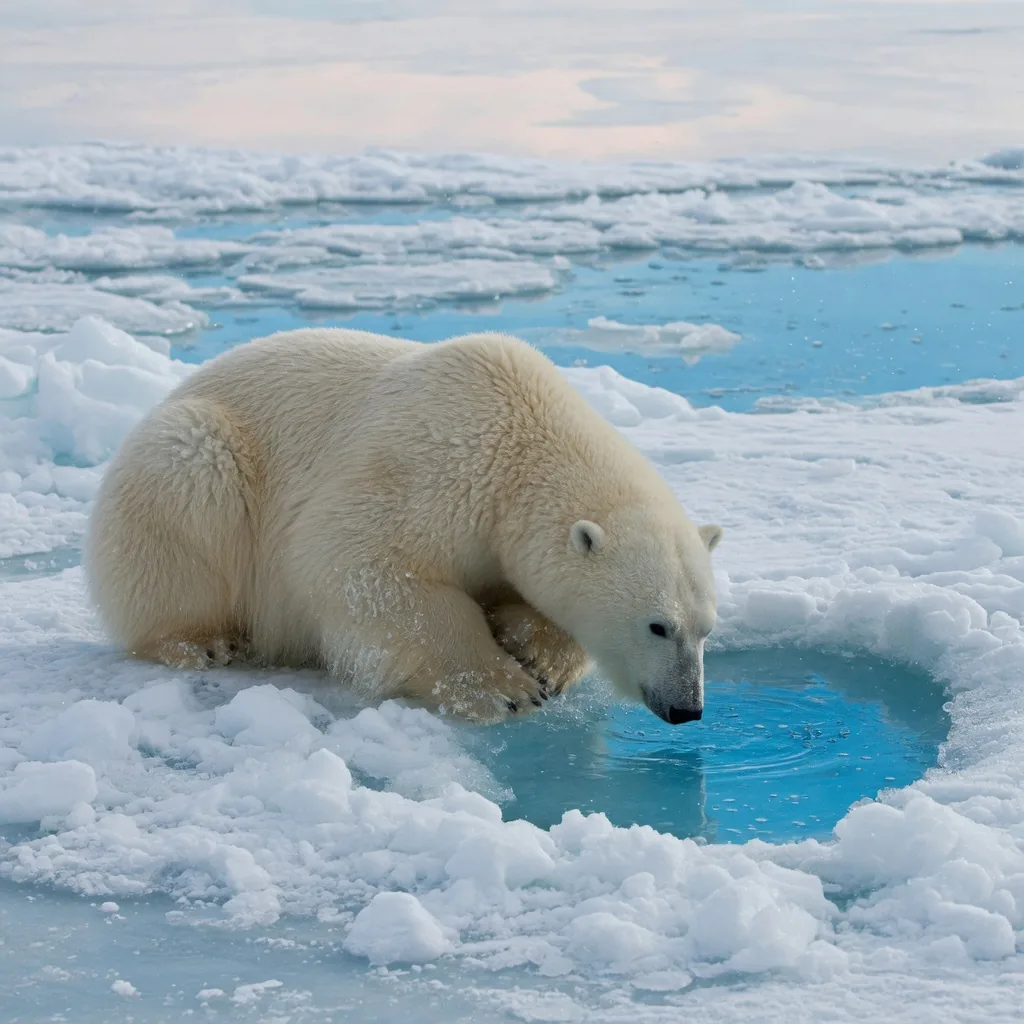
The hunting area of polar bears is primarily the interface between air, water, and ice. It is very rare to see a polar bear hunting for a seal on land or in open water. They use a method called 'still hunting' to catch prey. These bears can actually smell the breath of seals and wait near the ice holes where seals surface to breathe. As the seal exhales, the polar bear smells it and uses its forepaw to reach into the hole and drag the seal out onto the surface of the ice. Once the seal is out, the bear bites into the skull to kill it.
Polar bears can also hunt seals resting on the ice. On spotting a seal, the polar bear walks to a spot that is around 100 yards away from the seal. Then they crouch and move another 40 feet closer before attacking. They also search for the birth lairs that female seals build in the snow. In the case of whales, the same method applies: polar bears swipe at whales when they surface at breathing holes.
It is very rare for polar bears to attack an adult walrus, they are too large and powerful. Being heavy themselves, polar bears cannot outrun most land animals. And in the water, marine animals can swim faster than polar bears. This is why their diet is built mainly around seals. These bears are also remarkably clean, they wash themselves with water or snow after every meal.
Polar bears are categorised as a 'vulnerable' species, as they may become endangered in the near future. Their life cycle is affected by many factors, the most important being global warming. Now that we know what polar bears eat, we must think carefully about our own activities and how they affect these animals' food supply.
Explore More Animals
 Polar Bear AdaptationsDiscover the amazing physical and behavioral adaptations that let polar bears survive Arctic temperatures of -34°F, swim icy oceans, and thrive where few animal
 Polar Bear Facts for KidsPolar bears are some of the most majestic, beautiful, and dangerous creatures on Earth. The Inuits call polar bears, Nanook. Today, there are an estimated 20,00
 What Do Seals Eat? Diet and Food Habits ExplainedWhat do seals eat? From harp seals crunching cod to leopard seals hunting penguins, discover the surprising diets of seals, plus a quiz, glossary, and fun fact
 Are Polar Bears Endangered? The Truth Will Leave You in ShockPolar bear population was believed to be endangered due to global warming and melting sea ice. But recent studies show numbers have risen. So are polar bears en

 Fun fact for today!Polar bears are classified as marine mammals (just like whales and seals) because they depend so heavily on the ocean for their food!