

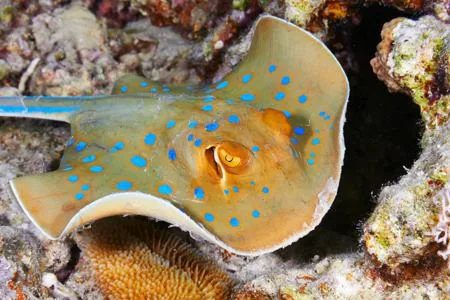
Stingrays are flat, marine fish, named after the barbed spines (or stingers) present on their long tails. They are related to sharks, and both fish, despite their fearsome reputation, actually have a skeleton made of cartilage. The stingray even has cartilaginous teeth, though these are extremely powerful because they are reinforced with different types of cartilage. Until recently, very little was known about stingray behavior, since they spend most of their time hidden on the seabed and become active only at night. However, their rising popularity in aquariums has resulted in increased curiosity about this fish, especially its feeding habits. So what do stingrays eat? Let's find out.
In the Wild
Stingrays are carnivores, which means they are predators that hunt other animals, some of which are predators themselves. They are nocturnal, meaning they are active and hunt at night.
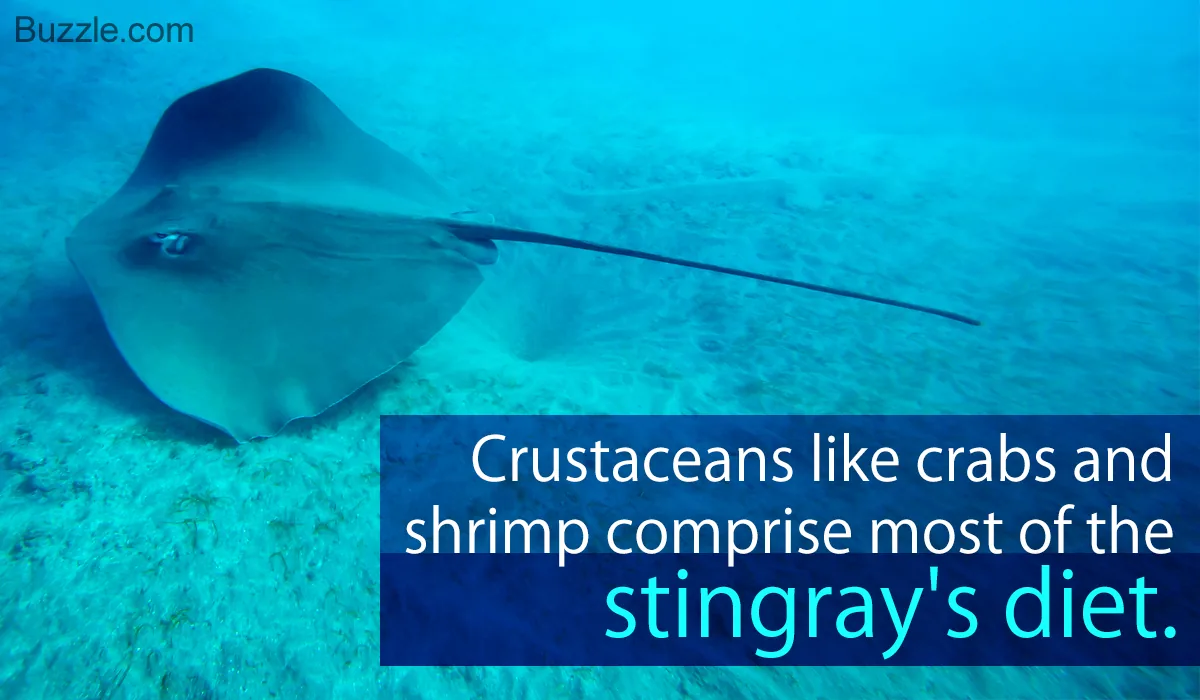
Their diet predominantly comprises crustaceans like crabs, shrimp, lobsters, barnacles, krill, and crayfish. They also consume molluscs such as clams, snails, squid, mussels, and oysters.
Apart from this, stingrays (especially freshwater species) consume insects like mosquitoes and their larvae. In fact, some types of rays have evolved to survive on insects alone. Annelid worms and jellyfish also form a part of their diet.
Most stingrays are benthic feeders, meaning they hunt at the bottom of the ocean. They stir up sand on the seabed by flapping their fins, or by forcing jets of water from their gills, to uncover hidden prey. They also lie concealed under the sand to ambush anything that comes close enough.
Upon spotting prey, they suck it up by forming a vacuum with their mouths and crush it with their strong jaws, which are lined with several rows of broad teeth. Then the prey's soft flesh is swallowed, while any sharp or hard parts are regurgitated.
Some pelagic stingrays hunt in the upper waters of the oceans to catch bony fish like sardines, salmon, anchovies, pufferfish, mackerel, and even plankton. Some species have even been observed using their pectoral fins to 'hold' fish while consuming them.
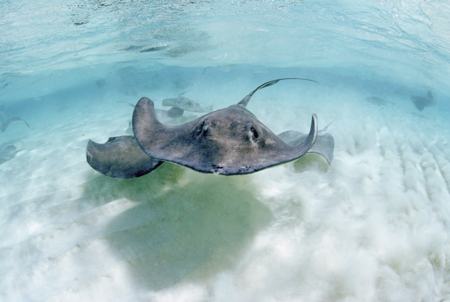
In places like the Grand Cayman island, stingrays have become so accustomed to humans that they directly accept food from tourists standing in waist-deep water.
What Do You Know About Stingray Diets?
5 quick questions, put your stingray knowledge to the test!
In Captivity
When reared in captivity, stingrays have to be fed at least two to three times a day, as they have a high metabolism rate.
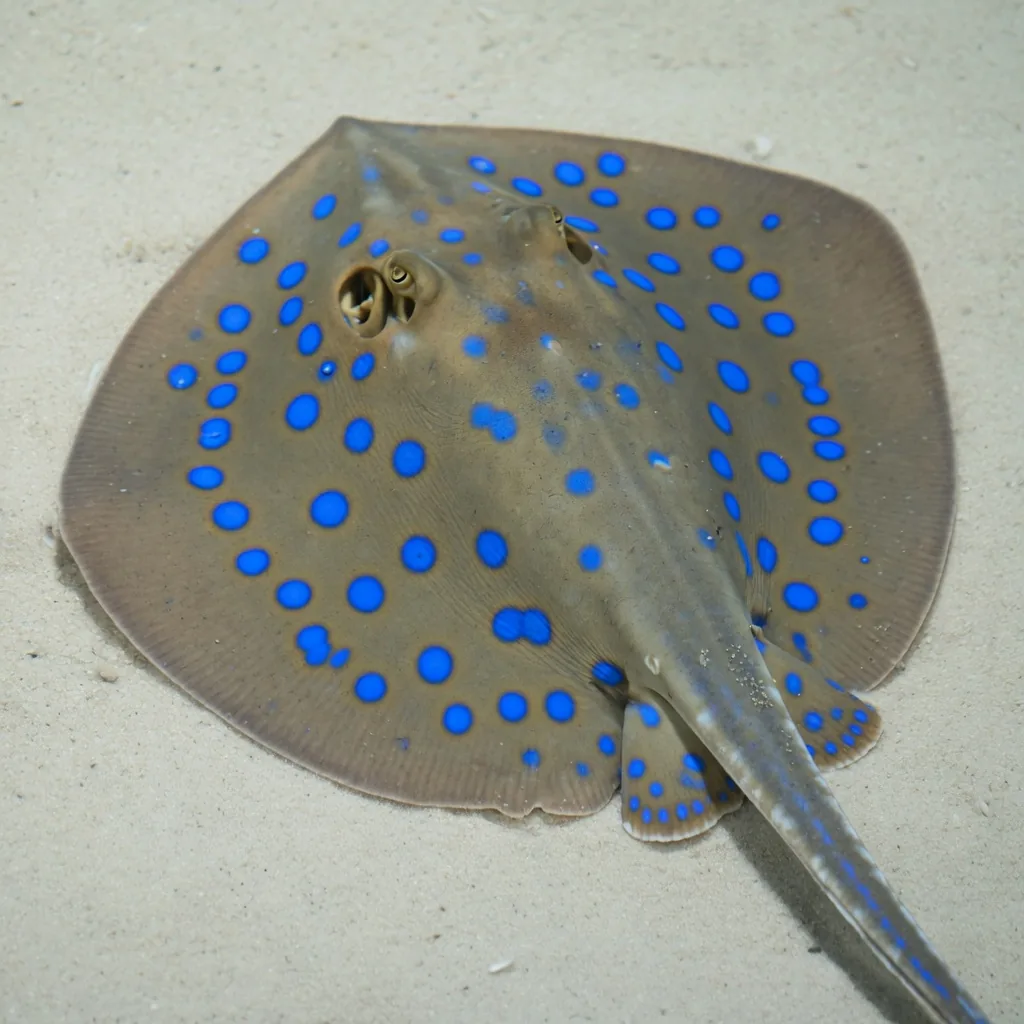
Young rays can be fed with live Tubifex worms and blackworms. As they get older, they can be fed with krill, oysters, squid, and fish. However, these items should be given whole (without chopping, gutting, or processing) so that they resemble the ray's natural diet.
Captive stingrays should also be fed with terrestrial food like earthworms. Since earthworms eat vegetation, they have a high nutritional value for the ray, and being terrestrial, they lack the ray's natural parasites.
Since rays have a small mouth, worms should be chopped to the right size before feeding. If the ray is observed repeatedly ingesting and spitting out food, this means the morsels are too large for its mouth.
Providing frozen food is advisable, as freezing kills any parasites that could infect the stingray. However, such food should be soaked in a vitamin supplement beforehand, both for thawing it and for adding valuable nutrients.
Explore More Animals
 What Do Fish Eat? A Guide to Fish DietsA great diversity is observed in the diet of fish depending on the types and species. Some fish are even herbivorous! Here are the details of the diet of differ
 What Do Crabs Eat? Diet, Body, Food & Amazing Crab FactsWhat do crabs eat, and what makes them so strange? Explore the crab's chewing stomach, body plan, diet, how humans eat crabs, and the weirdest crabs in the ocea
 What Do Squid Eat? The Diet of One of the Ocean's Deadliest HuntersSquid are fierce hunters with a parrot-like beak and three hearts. Discover exactly what squid eat (from tiny plankton to whales and sharks) and how they catc
 What Do Sea Turtles Eat? It's Not What You ThinkSea turtles, herbivores, carnivores or omnivores? The answer depends on the species. Discover the diet of all seven sea turtle species, plus a quiz, glossary,
Observe the stingray to see if it consumes all the food given to it. Its spiracles (the openings near the eyes) will rapidly move to eject water when it is feeding.
Provide food in sufficient quantities only, to avoid wastage, accumulated food can decompose, releasing nitrogenous waste into the tank. While feeding captive rays, use a pair of long metal forceps to avoid injury by the stinger.
To conclude, the stingray diet mostly consists of invertebrates hiding on the ocean floor, occasionally supplemented with fish. According to scientists, stingrays play an important ecological role, as their habit of disturbing sand on the seabed also uncovers prey for other animals and releases nutrients trapped in the sand.

 Fun fact for today!Stingrays visit 'cleaning stations' where tiny fish eat the parasites off their bodies, a meal for the cleaner fish, a health boost for the ray!