

What Kind of Animal Is a Zebra?
The word 'zebra' came from the Old Portuguese word zevra, meaning wild ass. Zebras are species of equids, hoofed mammals with slender legs, a coat, and a mane. It's the group that horses and donkeys also belong to.
What sets zebras apart from other equids is their striking pattern: each zebra has a unique pattern of white stripes on a black-colored coat. No two zebras look exactly alike.
What Do Zebras Eat?
The diet of zebras mainly consists of grass. Shrubs, twigs, bark and leaves are also part of their diet. Their digestive system and metabolism are such that they can thrive on a low-nutrition diet. They can digest coarse grasses that other herbivores cannot. This actually helps other wild grazers: zebras consume the coarse grass and leave softer grass behind for them.
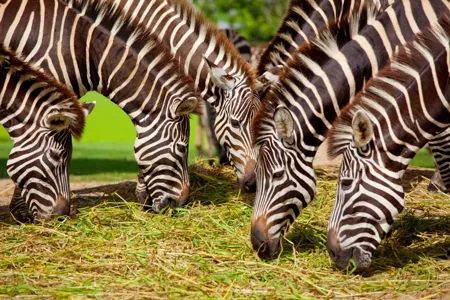
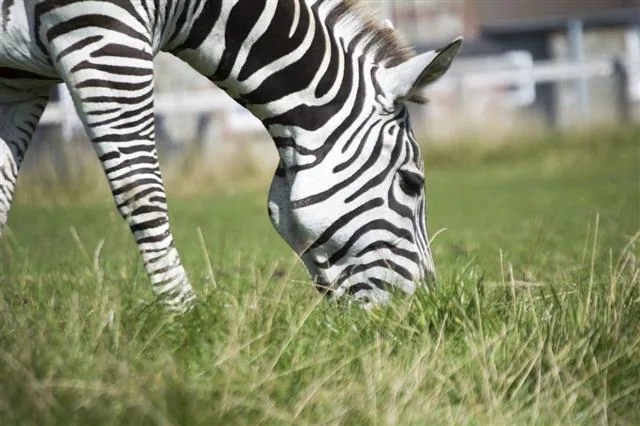
Zebras grip grass with their lips and bite it off with their front teeth. They then use their molars to grind the food down.
Eating Habits
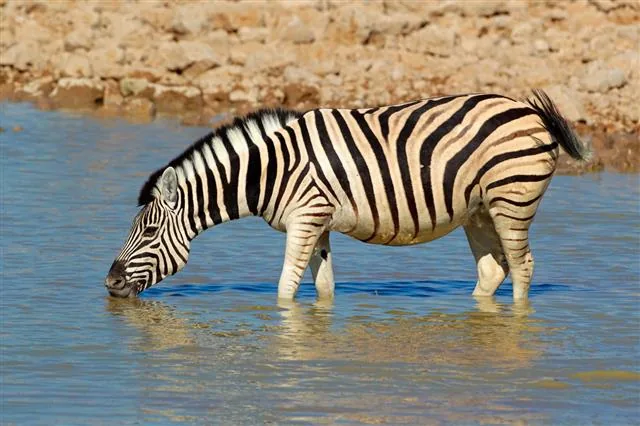
Zebras tend to stay near water holes. They typically seek green pastures, but during dry months they survive on dry grass. They live in grasslands and savannas, as well as coastal, hilly, and mountainous regions.
Zebras have a large appetite. They spend almost 60% of their day eating. They like tall grasses that grow in wet soils. When food is scarce, that rises to about 80% of their day.
Wild Vs. Zoo
In the wild, zebras feed on grass stems and sheaths. In zoos, they are fed hay, oats, and alfalfa.
Take the Zebra Diet Quiz!
5 quick questions about what zebras eat and how they graze.
Diet of the Three Zebra Species
There are three species of zebras: the Plains zebra, Grevy's zebra, and the Mountain zebra. Their physical characteristics, habitats, and diets all vary. The Plains zebra and the Mountain zebra look like a horse, while the Grevy's zebra resembles an ass. Grevy's and Mountain zebras are both endangered herbivores.
Plains Zebras
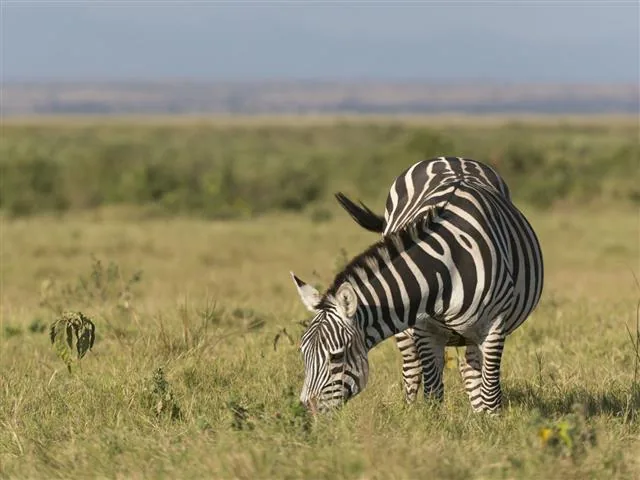
Plains zebras depend heavily on water. They migrate up to 700 miles in search of food and prefer moving to areas where it has recently rained. They depend on the rains for both food and water. They prefer short grass for grazing, especially freshly grown, young grasses. They also eat leaves and shoots.
Frequently Asked Questions
What do zebras eat?
Zebras eat mainly grass. They also eat shrubs, twigs, bark and leaves. Their digestive system lets them thrive on a low-nutrition diet and digest coarse grasses that other herbivores cannot.
How much time do zebras spend eating?
Zebras spend almost 60% of their day eating. When food is scarce, that rises to about 80% of their day.
What are zebras fed in zoos?
In zoos, zebras are fed hay, oats and alfalfa instead of wild grass.
Are zebras ruminants?
No, zebras are not ruminants. This means they extract less nutrition from their food and need to graze for much of the day to meet their energy needs.
Grevy's Zebras
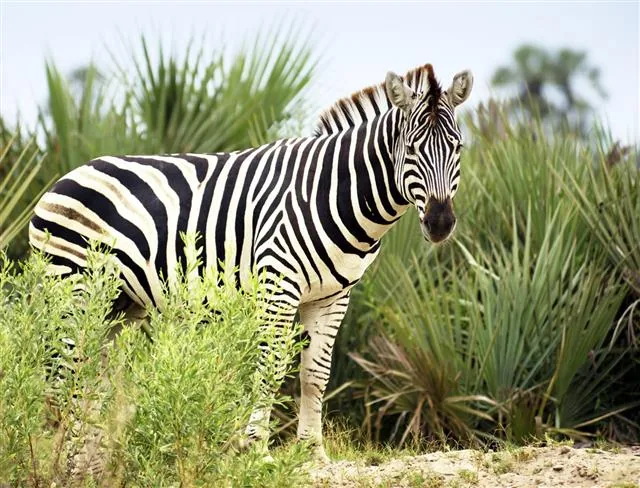
Unlike Plains zebras, Grevy's zebras are not dependent on water. They can survive without it for up to 5 days. These zebras eat grasses and legumes. Mares search for territories that offer good food and water. Leaves can make up around 30% of their diet.
Mountain Zebras
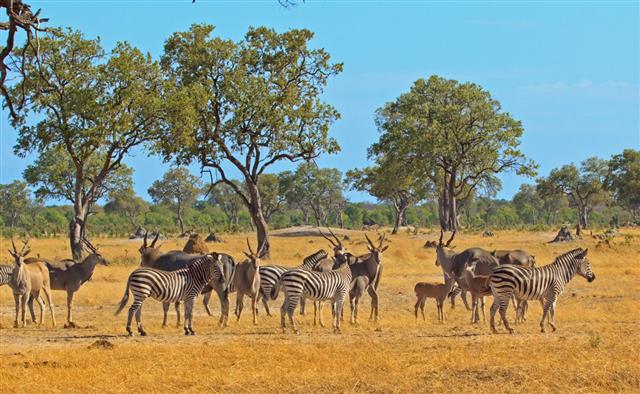
Mountain zebras live in hot, dry, mountainous regions. They dig for ground water. They feed on tufted grass, leaves, bark, buds, and fruit. Mountain zebras split into two sub-species: Cape mountain zebras and Hartmann's mountain zebras. Cape mountain zebras feed on grass and, if left with little choice, eat bushes. Hartmann's zebras feed on stems, roots, and leaves in addition to grass. These zebras drink water at any time of day, but because of the risk from predators, they prefer to drink at night.
Explore More Animals
 Zebra Adaptations & Facts: How Zebras SurviveAfrican savannas are full of predators, and zebras have remarkable adaptations to survive them. Meet all three zebra species and discover how stripes, speed, he
 Black or White? What Color are the Stripes of a Zebra?Everyone knows that zebras are striped black and white. But are they black stripes on white, or white stripes on black? Find out the science behind the stripes
 Grassland AnimalsOne of the most interesting biomes on the planet, the grassland biome is spread across six of the seven continents. Discover the animals that call it home, from
 What Do Elephants Eat? Diet, Habits & Fun FactsElephants consume up to 375 pounds of plants every day. Find out exactly what wild and zoo elephants eat, how they find minerals, and why they spend 80% of thei
Zebras Are Not Ruminants
Unlike many other grazing animals, zebras do not ruminate. This is why they extract less nutrition from the food they eat, which in turn explains their need to graze nearly all day. Search for food is the main reason they migrate.
Wildebeests and zebras generally migrate together and are often seen grazing side by side. An interesting thing about how zebras graze is that some bend down to eat while others look around to guard against predators.
Zebras and Their Food Sources Under Threat
Due to overgrazing and the pressure of livestock on grasslands, zebras are losing their habitat. Their food sources are shrinking. They are under the threat of extinction. We should all do our bit towards saving them.

 Fun fact for today!Zebras spend up to 60% of every day eating, and up to 80% when food runs short!