

Classification
- Kingdom, Animalia
- Phylum, Chordata
- Class, Mammalia
- Order, Carnivora
- Family, Felidae
- Genus, Panthera
- Species, Panthera tigris
How the White Color Is Obtained
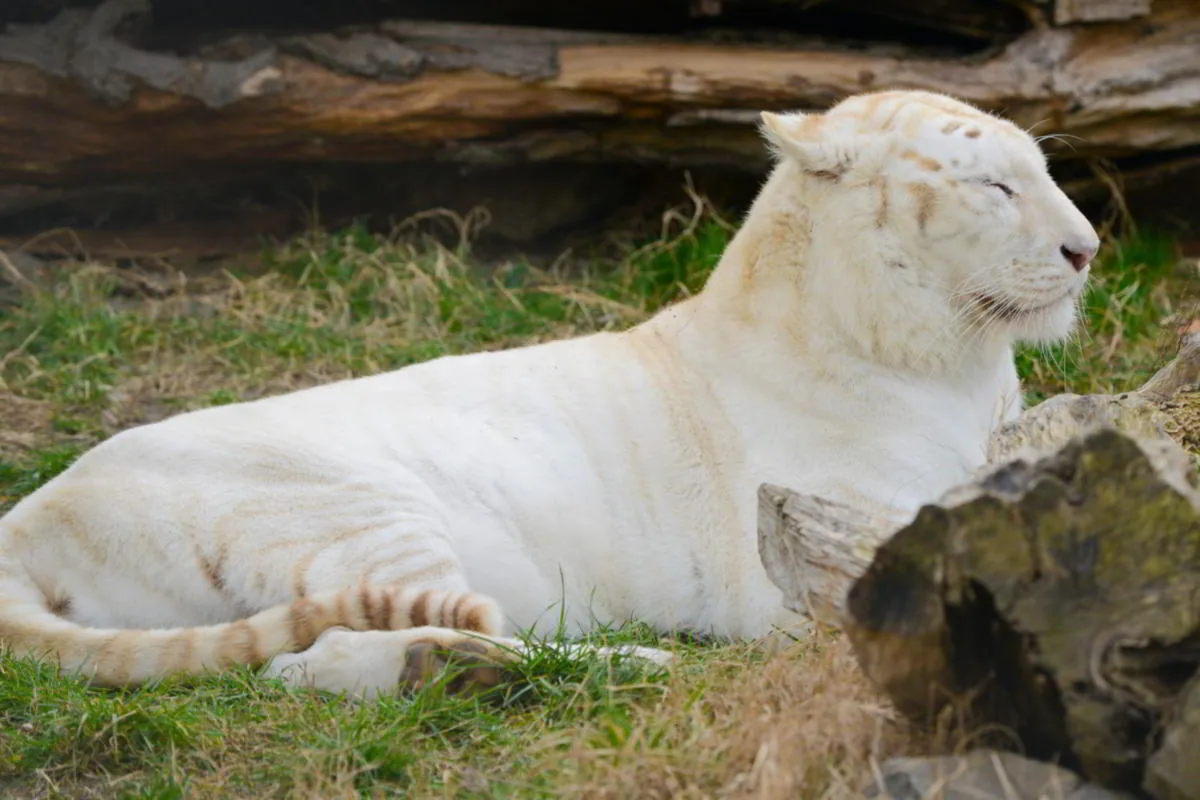
White tigers are actually Bengal tigers, not a separate or albino species as was once believed. They lack the skin pigments that typically give tigers their orange color, and this happens because of a recessive gene. That defective gene must be present in both parents for the cubs to be born white. The white tiger is produced with the help of the allele called chinchilla albinistic.
The enzyme tyrosinase is needed to produce melanin. In white Bengal tigers, this enzyme exists in a mutated form. So when the temperature drops below 99°F (about 36°C), the tigers appear darker on their face, legs, and the body parts most directly exposed to the cold.
In the wild, Bengal tigers are the only subspecies observed to carry the white color. Even all the white tigers held in captivity are partly Bengal in subspecies. Scientists believe the rare recessive gene for white fur comes from Bengal tigers only, though they haven't yet been able to explain exactly why.
Appearance
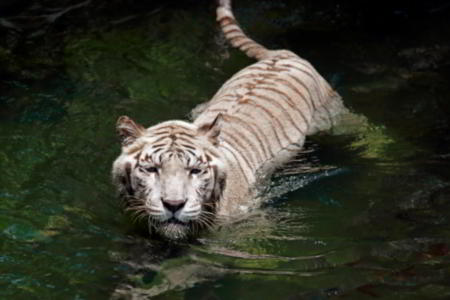
Stripes: White Bengal tigers have white fur with black or chocolate-brown stripes. The stripes are unique to each tiger, no two patterns are exactly the same. Just like every human fingerprint is different, the stripes differ from tiger to tiger. These stripes help them blend into their surroundings in the wild.
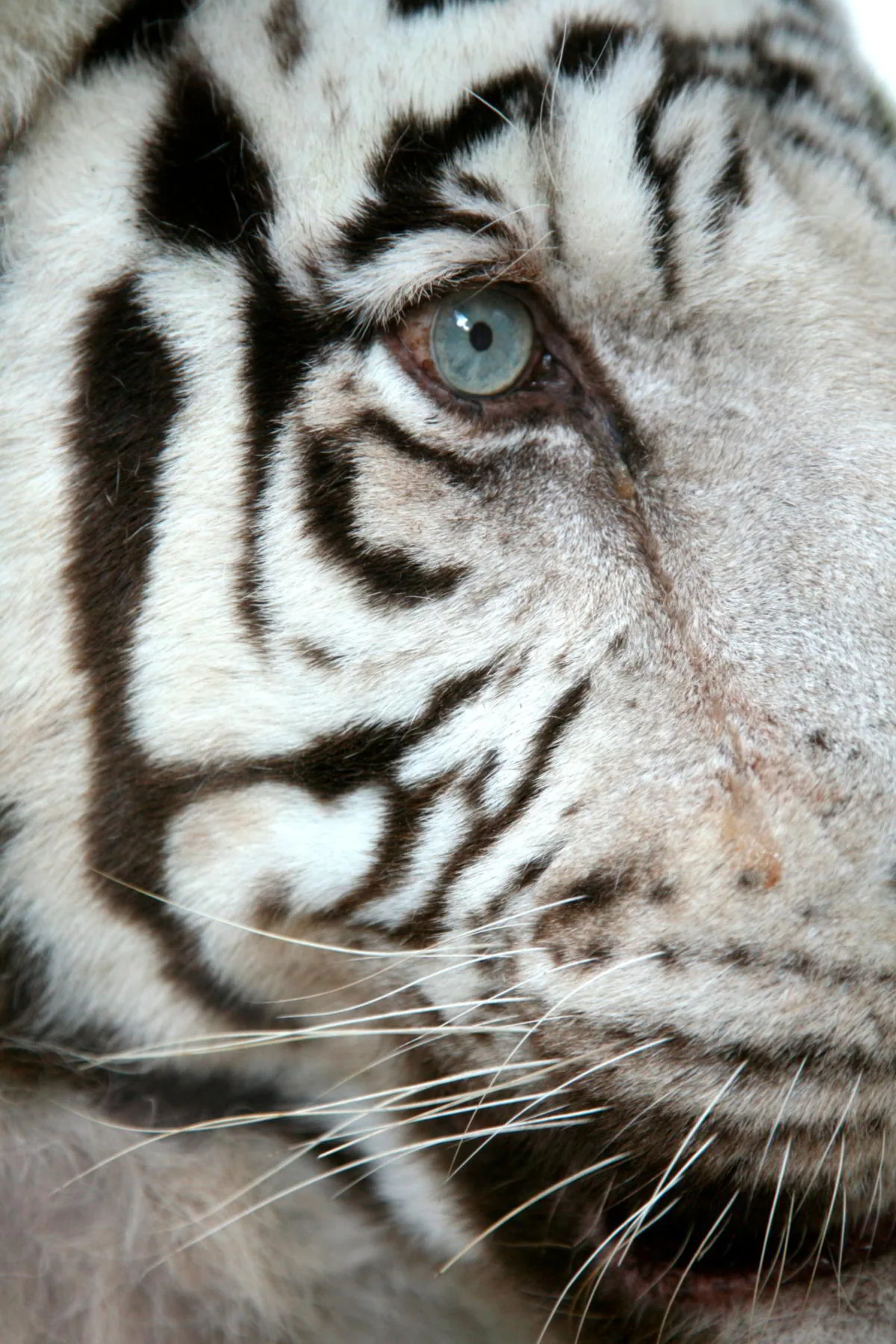
Eyes: Their eyes are blue in color, instead of the usual yellow or green. They also have better night vision thanks to a retinal adaptation that reflects light back into the retina.
Size and Weight: White tigers measure between 6 to 10 feet long, including the tail, which is 3 to 4 feet long on its own. Males weigh between 400 to 550 pounds (170 to 250 kg), while females weigh between 200 to 350 pounds (100 to 160 kg).
These tigers are actually larger than their orange-colored counterparts. Apart from their lack of orange, some white tigers have very pale stripes that are barely visible. Those white tigers without any stripes at all are called 'snow white' tigers. Like all members of the cat family, white tigers have retractable claws, used to scratch trees as a way to mark their territory.
Distribution and Habitat
In Captivity: White tigers are very rarely seen in the wild. There have been almost no confirmed sightings of them in forests in the last century. However, white tigers are bred in captivity and live in a select few zoos around the world.
Their Distribution: White Bengal tigers are found in the wild in the Indian states of Assam, Bihar, Bengal, and the former princely state of Rewa. They are mostly found on the mainland of Southeastern Asia and in the central and southern parts of India. They are also found in neighboring countries like Nepal, Bangladesh, and Bhutan.
Their Environment: Their habitat includes swampy areas and tropical forests.
Test Your White Tiger Knowledge!
5 quick questions about the world's rarest big cats.
Hunting Technique
White Bengal tigers are known to be very patient while stalking their prey. They can wait and watch for hours to make the right move at exactly the right time. They use their strong jaws to catch prey by the neck and strangle it, or bite a major artery and let the prey bleed out.
It is their powerful eyesight that helps them hunt successfully even at night.
Reproduction
Breeding Period: Being solitary animals, their only social interaction happens during courtship and the bond between a mother and her young. Females go into heat all year round in tropical climates, and only seasonally in temperate climates. They do not cycle again until their cubs are grown and independent. The gestation period lasts about 100 to 103 days.
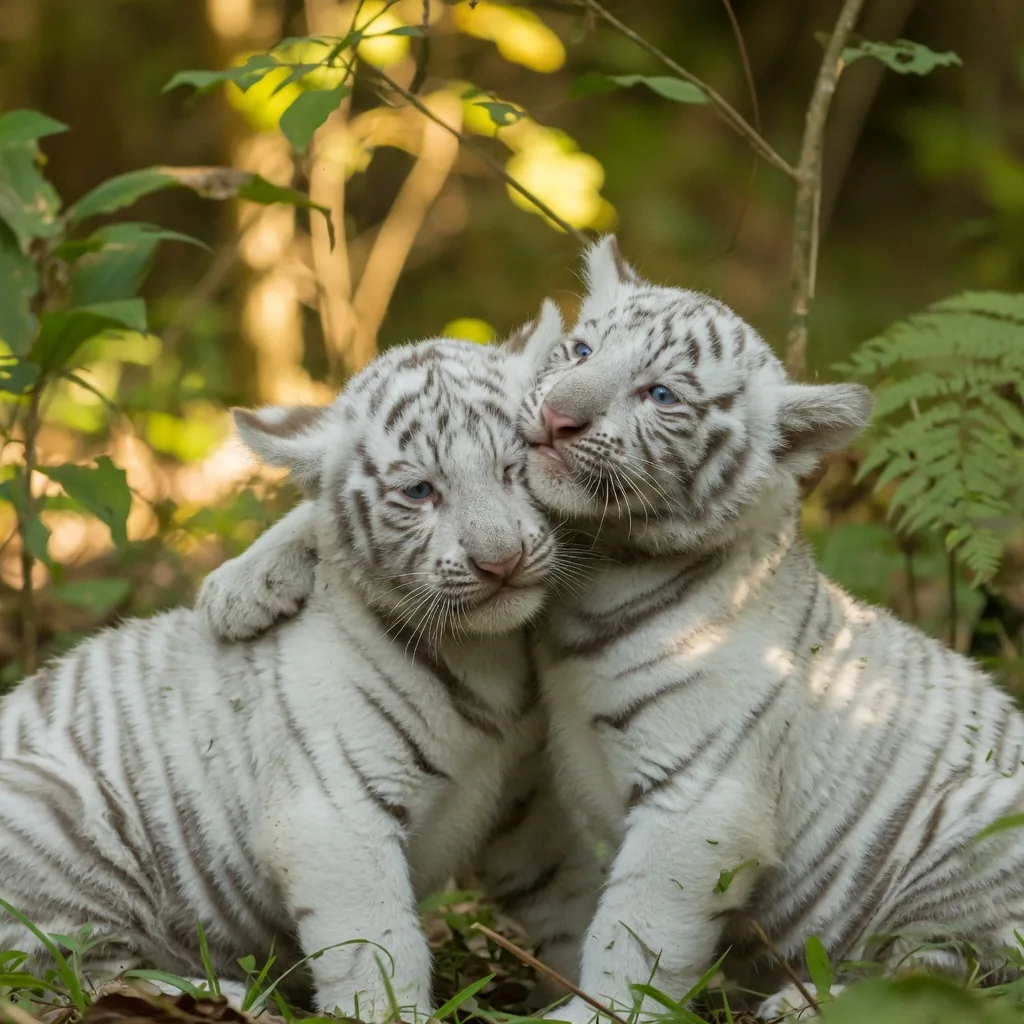
The Cubs: Tiger cubs are born blind at birth and weigh only about 2 to 3 pounds. They need milk for about 6 to 8 weeks. The mother takes the cubs along on kills so they can watch and learn the hunting process. Tigresses are extremely protective of their cubs and care for them until they are about 2½ years old.
Interbreeding
Flaws: Because of their low numbers, breeding white tigers often leads to interbreeding. This should be avoided because it can cause serious physical defects, including scoliosis, strabismus (crossed eyes), and cleft palates. Even the healthiest white tigers from such pairings have shorter lives.
Mixing: There have been attempts to breed white tigers with orange ones to try to address this problem. When orange and white tigers interbreed, subspecies mix. White tigers were first bred back in the early 19th century. They are only born if both parent tigers carry the rare gene that produces white fur.
Explore More Animals
 Facts About the Bengal Tiger That Will Leave You FlabbergastedBengal tigers are the second largest big cat on Earth, and one of the most endangered. Discover their stripes, hunting habits, white tiger connection, and how
 Survivors of the Cold: Interesting Facts About Siberian TigersSiberian tigers are the biggest cats on the planet and one of the most endangered. Discover facts about their size, diet, hunting skills, and survival in Russia
 White Lion FactsHave you ever heard about the white lions of Africa? Discover why these stunning pale lions aren't albinos, where they come from, and what threatens them today.
 Tiger's Habitat: What do Tigers Eat?Royal in their appearance, tigers are one of the most majestic animals seen in the wild. Here is some information about their habitat and food habits.
Conservation
It is often rumored that white Bengal tigers cannot survive in the wild. However, this is not true. Today, as a result of poaching and other illegal activities, white tigers are bred in captivity. The body parts of these animals are highly sought after for use in medicine and exotic cuisine. If not killed for cuisine, white Bengal tigers are unfortunately also hunted for their coats.
Other Fascinating Facts
Some people believe that white tigers are more endangered than the tiger species as a whole. This is a common misconception.
It is also wrongly believed that white tigers are albinos, partly because their scientific name includes the word albinistic. Their body lacks the pigment pheomelanin (the pigment that gives normal tigers their orange color), but they still have dark stripes, which means they do produce some pigment.
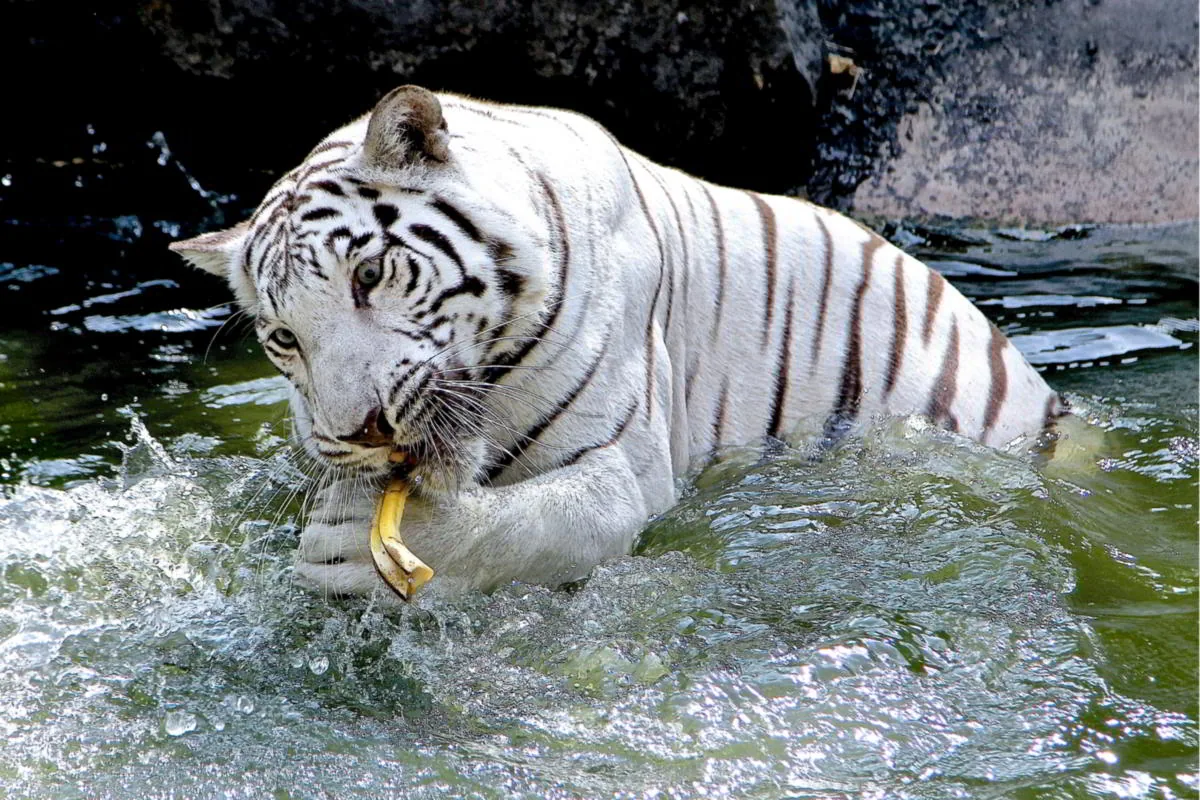
White tigers are among the few wild cats that love water. They have rounded pupils instead of slits, which gives them better overall vision. The white gene is so rare that it occurs only once in every 10,000 births. White tigers hunt at night and generally spend the day in their dens. A majority of tigers have more than 100 stripes.

 Fun fact for today!In 2004, a stripeless white tiger cub named Artico was born in Alicante, Spain, both his parents were normal orange tigers!