

Sea turtles are commonly known as marine turtles, placed under the Cheloniidae and Dermochelyidae families. There are seven species of marine turtles, and six of them are on the endangered species list.
Endangered Sea Turtle Species
| Species | Status |
|---|---|
| Green Sea Turtle (Chelonia mydas) |
Endangered |
| Hawksbill Sea Turtle (Eretmochelys imbricata) |
Endangered |
| Kemp's Ridley Turtle (Lepidochelys kempii) |
Endangered |
| Leatherback Sea Turtle (Dermochelys coriacea) |
Endangered |
| Loggerhead Sea Turtle (Caretta caretta) |
Threatened |
| Olive Ridley Turtle (Lepidochelys olivacea) |
Endangered |
Most of these species are listed on Appendix I of the Convention on International Trade in Endangered Species of Wild Fauna and Flora (CITES), which means international trade is banned among the 166 CITES member nations. Three of these sea turtle species are classified as Critically Endangered on the IUCN Red List.
Why Are Sea Turtles Endangered?
There are many reasons that have put these animals in danger. Sea turtles have a built-in navigation device that helps them find their way through the ocean. But threats from humans and nature have made survival very hard. Here are the six main reasons marine turtles like the green sea turtle and leatherback turtle are endangered.
1. Nesting
Sea turtles live in water, but females come onto land to nest. The females can nest more than once, and this is when they are most vulnerable. Their nesting areas have been taken over by human development, settlements and resorts have replaced the beaches they need. This forces them to look for areas that are less suitable for nesting. Many times, females will abandon their eggs because there is no good nesting area left.
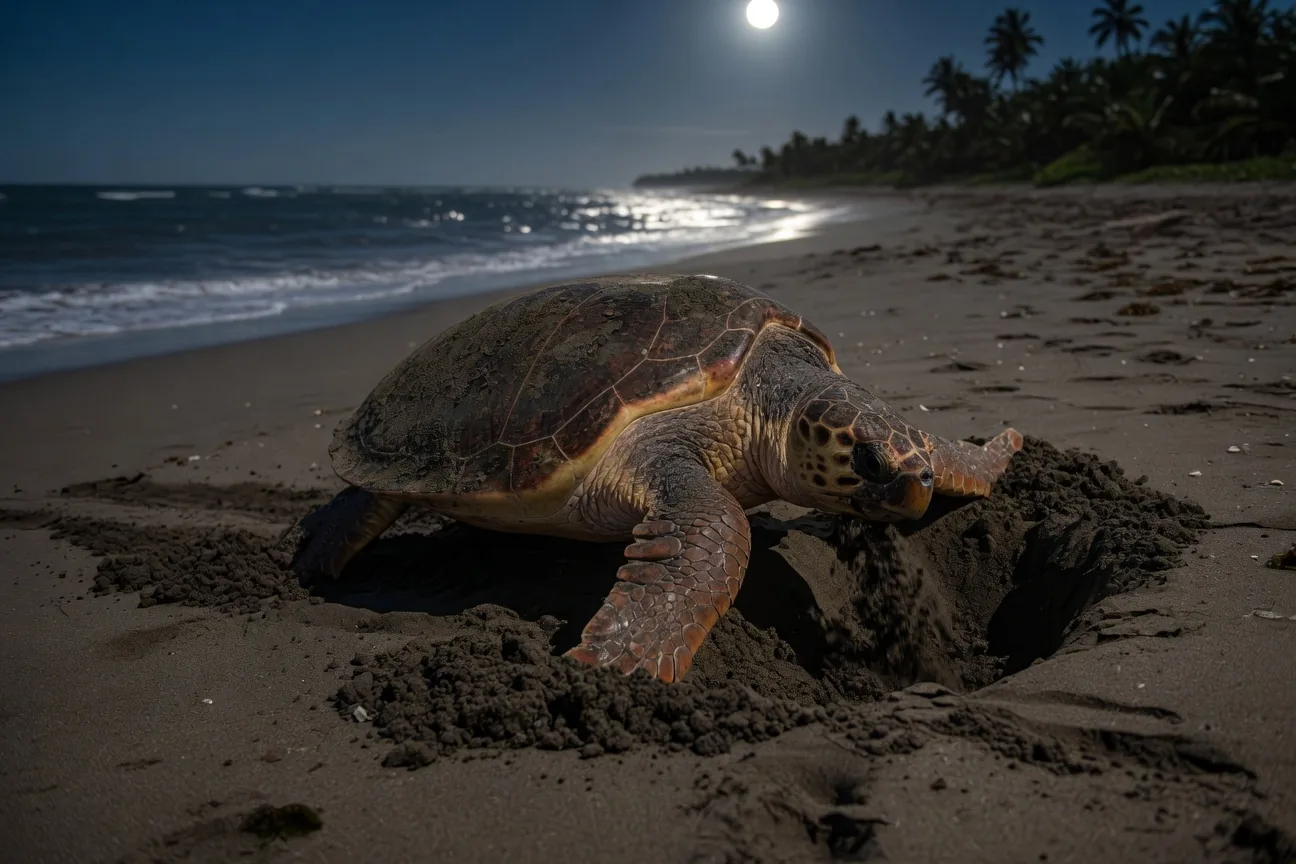
These turtles navigate using the reflected light from the moon, moving between land and water. But artificial lights from neon signs and buildings confuse them and disturb their nesting patterns.
2. Poaching
Eggs are the first step for a sea turtle to have a chance at life, and in many countries, those eggs have become a delicacy. Sea turtles are easy targets on land because of their poor vision and slow, awkward movement out of water. They have no claws or venom to protect their eggs. Poachers have an easy opportunity to steal them.
The cartilage (or "callippe") is sometimes cut from a live turtle at the bottom of its shell. The poor animal is left on the beach to die. It is a deeply cruel practice that has pushed these ancient reptiles closer to extinction.
3. Fishing
Sea turtles are accidentally caught in shrimping vessels that use trawl nets. Because sea turtles must breathe air, they drown when they cannot reach the surface. Gill nets and dredging for oil also cause habitat destruction and injury to these animals. Sea turtles spend most of their lives in the open ocean, which puts them in the path of commercial fishing operations.
Sea Turtle Knowledge Quiz
5 quick questions. How much do you know about why sea turtles are endangered?
4. Predators
One female sea turtle can lay hundreds of eggs in a single nesting season. But only a few hatchlings survive even under natural conditions. The eggs are preyed on by crabs, foxes, birds, and humans, as they make their run toward the sea.
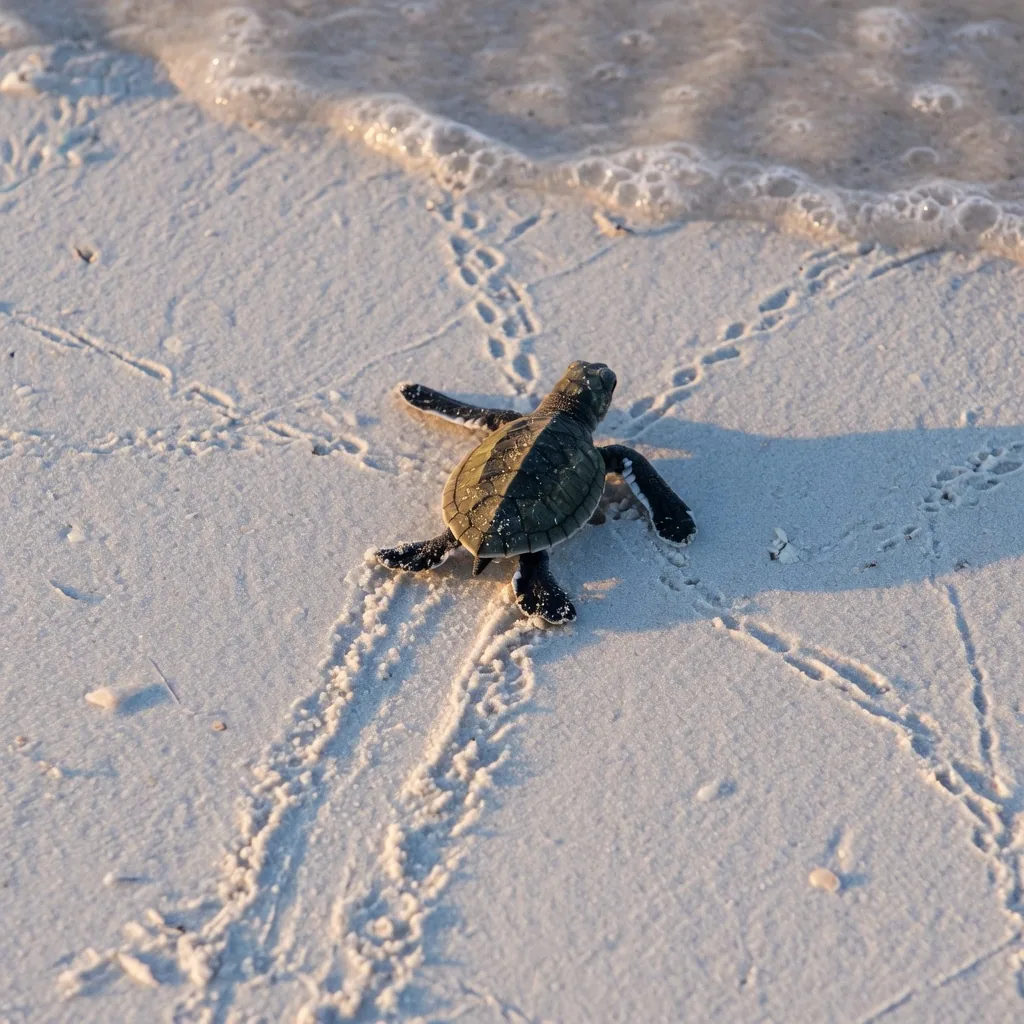
By the time hatchlings reach shallow water, half of them have been caught by land predators. A few more are eaten by fish in the water. Only a lucky few survive past their first birthday.
Frequently Asked Questions
How many sea turtle species are endangered?
Six of the seven species are listed as endangered or threatened.
What is the biggest threat to sea turtles?
Multiple threats combine: nesting habitat loss, poaching of eggs and adults, accidental capture in fishing nets, natural predation of eggs and hatchlings, disease (Fibropapilloma Tumors), and their slow life cycle leaving little room for population recovery.
What are Fibropapilloma Tumors in sea turtles?
Large, lobe-shaped tumors that grow on the soft body parts of sea turtles. They can grow as big as a cauliflower, and when they grow over the eyes the turtle goes blind and starves.
5. Tumors
Sea turtles suffer from a disease called Fibropapilloma Tumors. These are large, lobe-shaped tumors that grow on the soft body parts of the turtle. They can grow as big as a cauliflower, causing serious problems and eventually death. If the tumors do not kill the animal directly, starvation does, because tumors can grow over the turtle's eyes, blinding it so it cannot find food.
This disease was first seen mainly in green sea turtles and was once called "green turtle disease." Today it has started to affect other species too.
6. Life Cycle
Sea turtles take more than a decade to complete their juvenile stage and reach maturity. Only then do they start breeding. For the population to stay stable, adult turtles must live for many years. But adults face so many dangers (pollution, long lines of fishing fleets, rough seas, and tumors) that many die before they can reproduce enough.
Explore More Animals
 What Do Sea Turtles Eat? It's Not What You ThinkSea turtles, herbivores, carnivores or omnivores? The answer depends on the species. Discover the diet of all seven sea turtle species, plus a quiz, glossary,
 Save Tigers from ExtinctionTigers are vanishing fast. Learn why only around 5,000-7,000 remain, which three subspecies are already gone, and what you can do right now to help save them.
 A List of Endangered Animals From Every ContinentFrom the Bengal tiger and giant panda to the mountain gorilla and polar bear: a continent-by-continent list of the world's endangered animals, with photos.
 All About the Food and Habitat of the Great White SharkGreat white sharks are the largest predatory fish of the oceans. Dubbed as killing machines, they derive their name from their typical white underbellies.
Why Sea Turtles Matter
Sea turtles live in the open ocean and feed on tiny animals found in floating seaweed patches. They are preyed upon by fish, sharks, and birds. This makes them an important link in the marine food chain. Their disappearance has caused widespread effects in both the open ocean and coastal ecosystems.
Sea turtles can be called biological nutrient transporters. They feed in the coastal and open-ocean ecosystems, then come onto beaches for nesting. The energy stored in their eggshells comes from the marine environment. When those empty eggshells are left on the beach and decompose, they transfer sea nutrients into the land. This keeps coastal and ocean ecosystems connected.
The turtles are also important for ecotourism. Hundreds of tourists pay thousands of dollars for a chance to see these beautiful animals. They help provide jobs and income for seaside communities and attract other marine species that increase ocean biodiversity. Sea turtles are a major economic boost for many coastal countries.
Sea turtles and other endangered animals are a vital part of our planet. If one precious species is lost, it can lead to the decline of many other species that share their ecosystem. Please avoid buying turtle shell items like jewelry, meat, and shell decorations. Also avoid eating turtle meat and callippe soups. Sea turtles are better living than dead. They can stay around for over a hundred years, your grandchildren could see a live one someday, instead of only a photo.

 Fun fact for today!Sea turtles have been swimming Earth's oceans since the age of the dinosaurs, over 100 million years!