

What a Bonding!
The relationship between the pilot fish and the shark is symbolic and a matter of real curiosity. These two ocean creatures have inspired many myths and legends over the centuries. A shark has a set of 300 teeth in its jaws at various stages of development, no creature can escape its deadly bite. Scientists have reported that the great white shark is the hardest-biting creature alive, with a bite rate of 1.8 tons, which is 20 times greater than the human bite.
Isn't it amazing that only one sea creature can enter the mouth of a shark without becoming its next meal? That creature is the pilot fish. Let's take a closer look at this curious little fish and its unusual behavior.
The Shark and Its Territory
Sharks are found all over the world, in both shallow and deeper ocean water, depending on the species. The oceanic whitetip shark (Carcharhinus longimanus) lives mostly in tropical and sub-tropical deep ocean waters and is a slow swimmer, which makes it a perfect companion for the pilot fish to keep pace with.
Sharks sit at the top of the food chain. Their diet mostly consists of fish and sea-dwelling invertebrates such as squid. These predators hunt weak and injured creatures, removing them from the ecosystem.
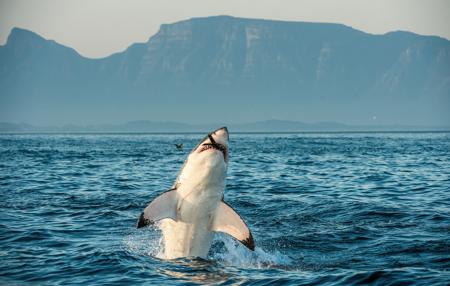
Sharks are excellent hunters and scavengers. They can spot prey from a very long distance thanks to sharp eyesight and a powerful sense of smell. Their bodies also contain a large network of pores that pick up electric impulses given off by other animals.
Characteristics of a Pilot Fish
Pilot fish (Naucrates ductor) are largely carnivorous and commensal, meaning they live in a mutual-benefit relationship with another organism. They are mostly found in warm or tropical ocean waters.
They grow up to 60-70 cm and are dark blue or blackish-silver in color. Legends and myths describe them as ship-loving creatures. In ancient times, sailors believed that pilot fish could guide a ship to safe shores by showing it the right direction.
Take the Pilot Fish & Sharks Quiz!
5 quick questions. Find out what you really know about this unlikely ocean partnership.
The Symbiotic Relationship Between Pilot Fish and Shark
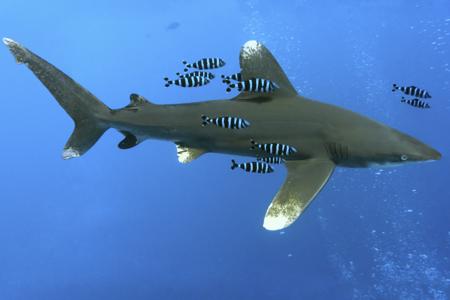
It is well-known that pilot fish seek refuge with sea turtles, rays, and sharks. They are said to be in a symbiotic relationship with these creatures, and they mostly swim with the oceanic whitetip shark (Carcharhinus longimanus).
Frequently Asked Questions
Why do pilot fish swim with sharks?
For protection from other predators and to feed on the shark's parasites and food scraps, a symbiotic deal where both sides benefit.
Do sharks eat pilot fish?
No. Sharks do not eat pilot fish. The shark tolerates them because pilot fish remove parasites and keep the shark healthy.
What is the scientific name of the pilot fish?
Naucrates ductor.
How big do pilot fish get?
They grow up to 60-70 cm in length and are dark blue or blackish-silver in color.
The oceanic whitetip shark must swim constantly to push enough oxygen through its gills. While traveling long distances, it needs the company of pilot fish to keep its gills free from parasites.
The reason pilot fish swim with sharks is simple: to find refuge from other violent predators at sea. In return, they eat the ectoparasites and leftovers from the shark, helping the host stay germ-free.
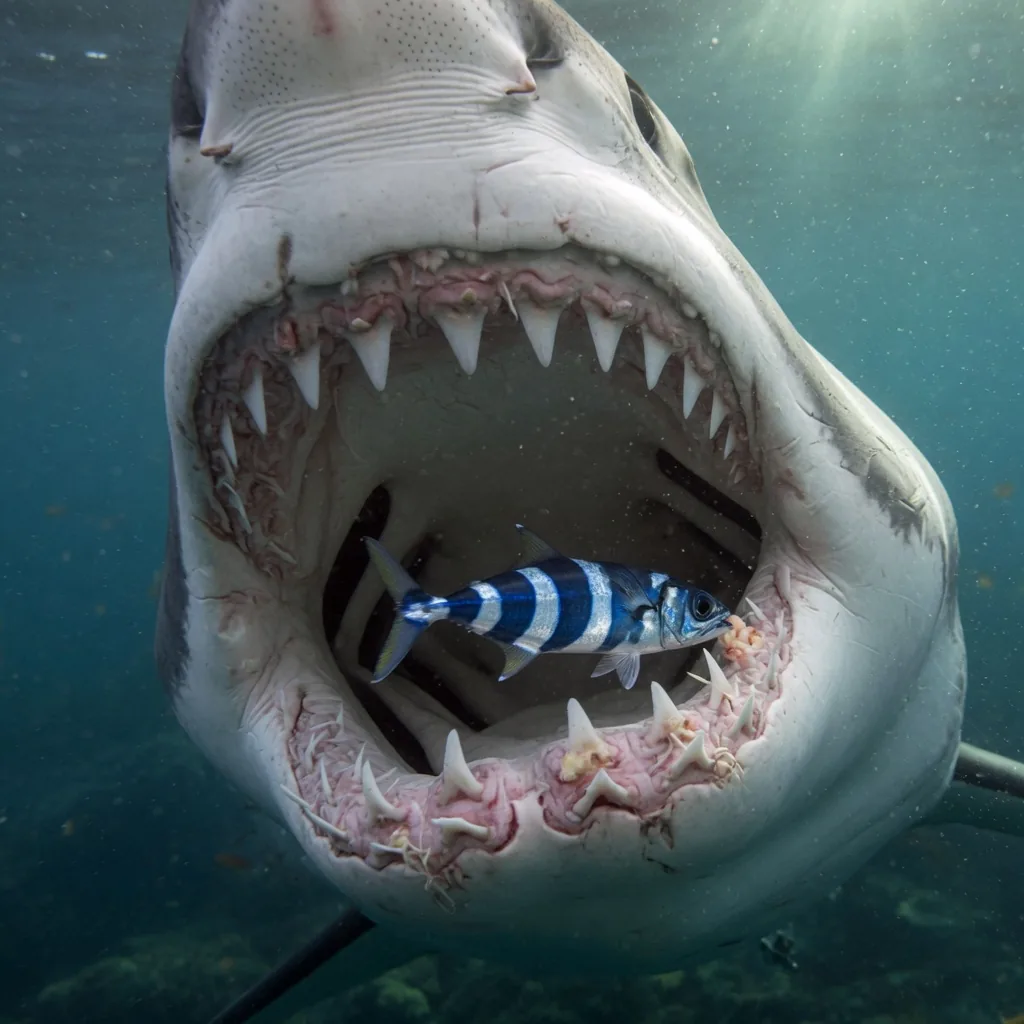
It has been observed that small pilot fish swim directly into the mouth of the shark to clean fragments of food from its teeth. As they travel with the shark into deeper oceans without being threatened, they save energy and gain access to more food sources.
Pilot fish are very territorial about the shark they travel with. They do not allow extra pilot fish to join the group. They are basically described as 'cleaner fish' because they keep the shark clean and healthy from parasites.
The ocean can be a very dangerous place, but having a powerful predator by your side has its own advantages. And in a remarkable show of restraint from the shark (showing its level of trust in the little pilot fish) this bond is truly fascinating!
Explore More Animals
 The Enigmatic Relationship Between Clownfish and Sea AnemoneThe relationship between clownfish and sea anemone is beautiful, yet enigmatic. They share a complex bond of interdependence, which is something we can learn fr
 Are Sharks Mammals or Fish? Get Your Answer Right HERE!Whether a shark is a mammal or fish is a query that leads to quite a lot of confusion. Most people think sharks are mammals, but the fact is, sharks are fish.
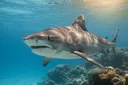 Habitat of a Tiger Shark: Where Does It Live?The tiger shark lives in warm tropical and subtropical seas worldwide. Discover its habitat, range, physical features, diet, and reproduction, plus a quiz!
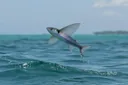 Amazing Facts About Flying FishThe term 'flying fish' may appear to be an oxymoron at first, but these apparently anomalous creatures exist, and are one of nature's most fascinating marvels.

 Fun fact for today!Pilot fish can swim inside a shark's mouth to clean its teeth, and the shark lets them!