

Reindeer (Rangifer tarandus) live in the Arctic and sub-arctic regions. They are also called caribou in North America, and they thrive in and around the northern Holarctic region. Originally the species lived across Scandinavia, Russia, Eastern Europe, and Mongolia, and could even be found in northern China. Today they are perhaps best known as Santa's choice of animal to pull his sledge.
What makes reindeer unusual among deer is that both males and females grow antlers. Males shed their antlers in December each year. Females shed theirs in summer.
Antler Composition
Reindeer antlers are quite different from the horns of cattle, which are hollow. Reindeer antlers are made of hard bone tissue with a honeycomb structure. They are supported by pedicles, small nubs covered by skin that protrude from the skull. These pedicles support antlers that range from a single shaft up to a dozen branches. When antlers are shed, the break-off point is the pedicle on each side. Pedicles are permanent; they first appear on a reindeer's forehead during the animal's first year.
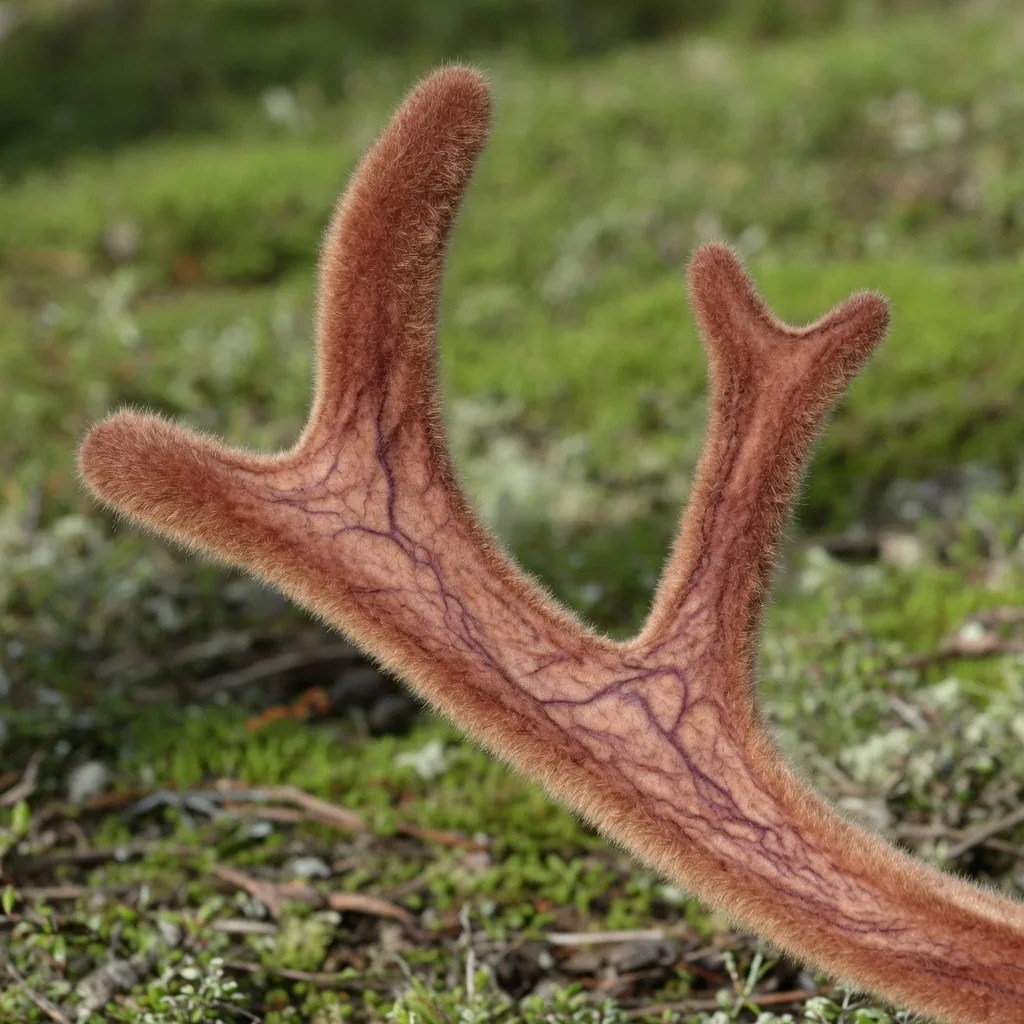
Antlers first appear as straight sprouts. The shafts start out spike-like, only branching when the animal reaches its third year. After that, the antlers grow and branch with every year added to the animal's age. While they are growing, the antlers are covered in very sensitive skin called "velvet." The vitamins and minerals that power antler growth travel through blood vessels inside the antlers during these formative years.
Once the antlers are fully grown, the velvet is no longer needed. A ring forms at the break-off point, this is the main shut-off region. When the antlers are ready to be shed, the blood supply is automatically cut off. The velvet withers, shrivels, and falls away. This is the moment when reindeer can often be seen rubbing their antlers against tree trunks. The cycle of antler growth and shedding happens before and after every mating season.
Shedding of Antlers
Reindeer shed their antlers in order to grow new ones. This process is called regeneration. Females usually grow new antlers after a calf is born. In both males and females, the shedding process lasts at least three weeks. Males begin shedding once the mating season is over, because the main reason for having large antlers (attracting females) is finished until next year.
Growth is largely shaped by three things:
- The genetic make-up of the individual animal.
- The amount of daylight the animal experiences in its region.
- Calving patterns and levels of testosterone in males and females.
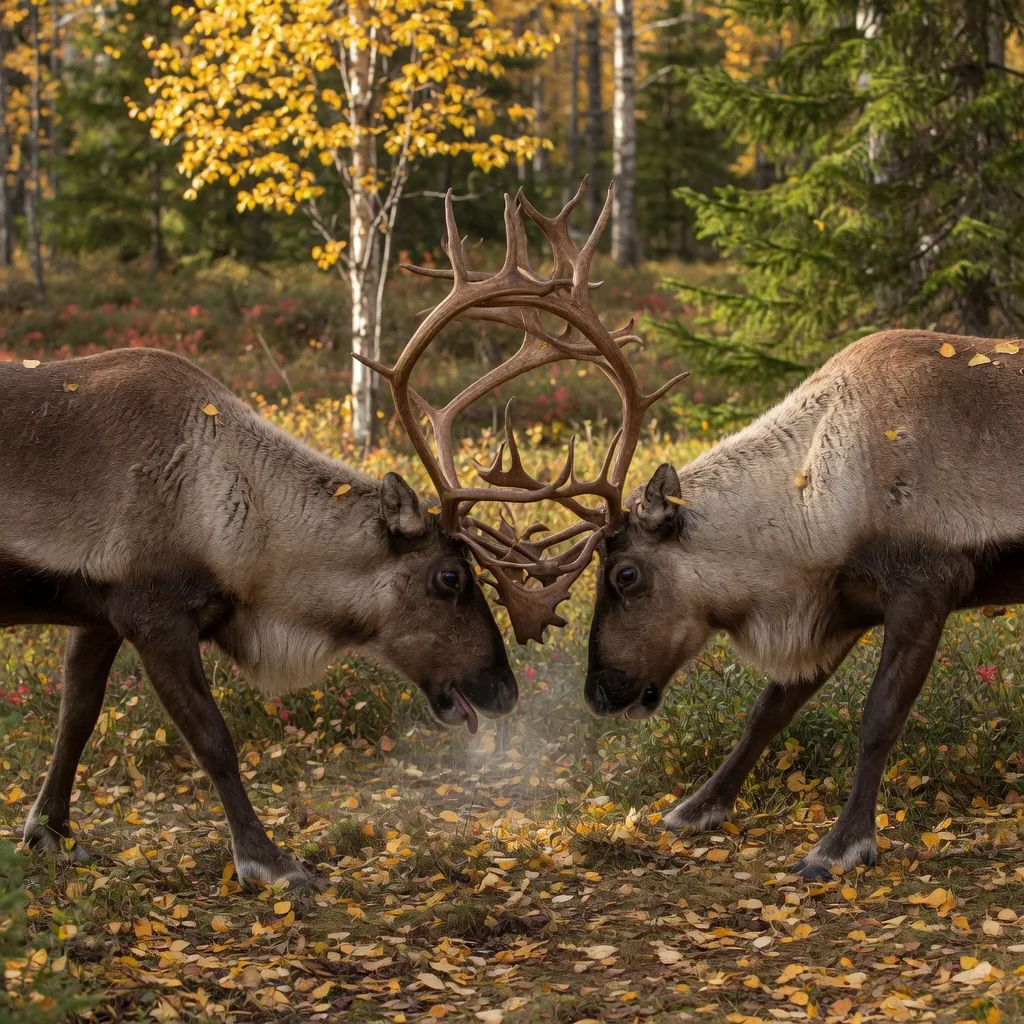
Reindeer keep shedding and growing new antlers throughout their lives. Antlers serve several purposes beyond attracting a mate:
- Showing superiority when two males are head-locked over territory or a female.
- Acting as weapons in combat for survival.
Frequently Asked Questions
When do male reindeer shed their antlers?
Male reindeer shed their antlers in December, after the mating season.
Do female reindeer also grow antlers?
Yes, reindeer are unique among deer because both males and females grow antlers. Females shed theirs in summer.
What is velvet on reindeer antlers?
Velvet is a soft, blood-vessel-rich skin that covers growing antlers and delivers the nutrients needed for growth. It dries up and falls off once the antlers are fully grown.
How long does the shedding process take?
In both males and females, the shedding process lasts at least three weeks.
What are reindeer antlers made of?
Reindeer antlers are made of hard bone tissue with a honeycomb structure, unlike the hollow horns of cattle.
Take the Reindeer Antler Quiz!
5 quick questions about reindeer, antlers, and the annual shedding cycle.
Antlers in Arts and Crafts
Shed reindeer antlers are prized possessions in many cultures around the world. They are displayed on trophy heads as decorative pieces. They are also used in crafts ranging from decorations to furniture to accessories. The wide use of reindeer antlers has helped build flourishing arts and crafts markets in and around the United States of America, Canada, and New Zealand.
Explore More Animals
 Reindeer FactsReindeer are found all over the Arctic area. Read on for some more facts about them, which are bound to make you more knowledgeable about these fascinating crea
 Irish Elk FactsThe Irish Elk was the biggest deer to have ever lived on earth. Its fossils reveal the animal's antlers were 12 feet long. Learn facts, extinction theories, and
 A Definitive List of the Different Types of Deer | Animal SakeFrom the white-tailed deer and the giant moose to the tiny pudu: meet the world's deer species, with photos, sizes, habitats and a full list of every kind.
 Absolutely Delightful Facts About the Black-tailed DeerConsidered as one of the nine species among the mule deer, the black-tailed deer is an elegant mammal that mostly inhabits North America. AnimalSake rolls out b

 Fun fact for today!Reindeer are the only deer species where both males and females grow antlers!