

Most people tend to associate the wolverine with wolves (because of its common name) or with bears, because of its striking resemblance to the members of family Ursidae (the bear family). The fact, however, is that the wolverine is neither related to wolves nor to bears.
"Looks can be deceptive." This quote is perfect for an animal like the wolverine (Gulo gulo). It is just the size of a Cocker Spaniel or a Beagle, but it has enough muscular strength to defend itself against other predators and bring down an animal as large as the caribou. Although it weighs somewhere around 20-50 lb, it can defend its food from a pack of wolves, cougars, and grizzly bears. Relative to its size, it is thought to be the strongest animal among mammals. There are many more riveting facts about this weasel species, each more interesting than the last.
10 Facts About Wolverines
1. A Water-Resistant Winter Coat
A wolverine's fur is brownish-black with light brown stripes along the sides. The fur is dense and long, and it resists water, which helps the wolverine tolerate the cold and frost of the environment it inhabits.
2. Built for Snow
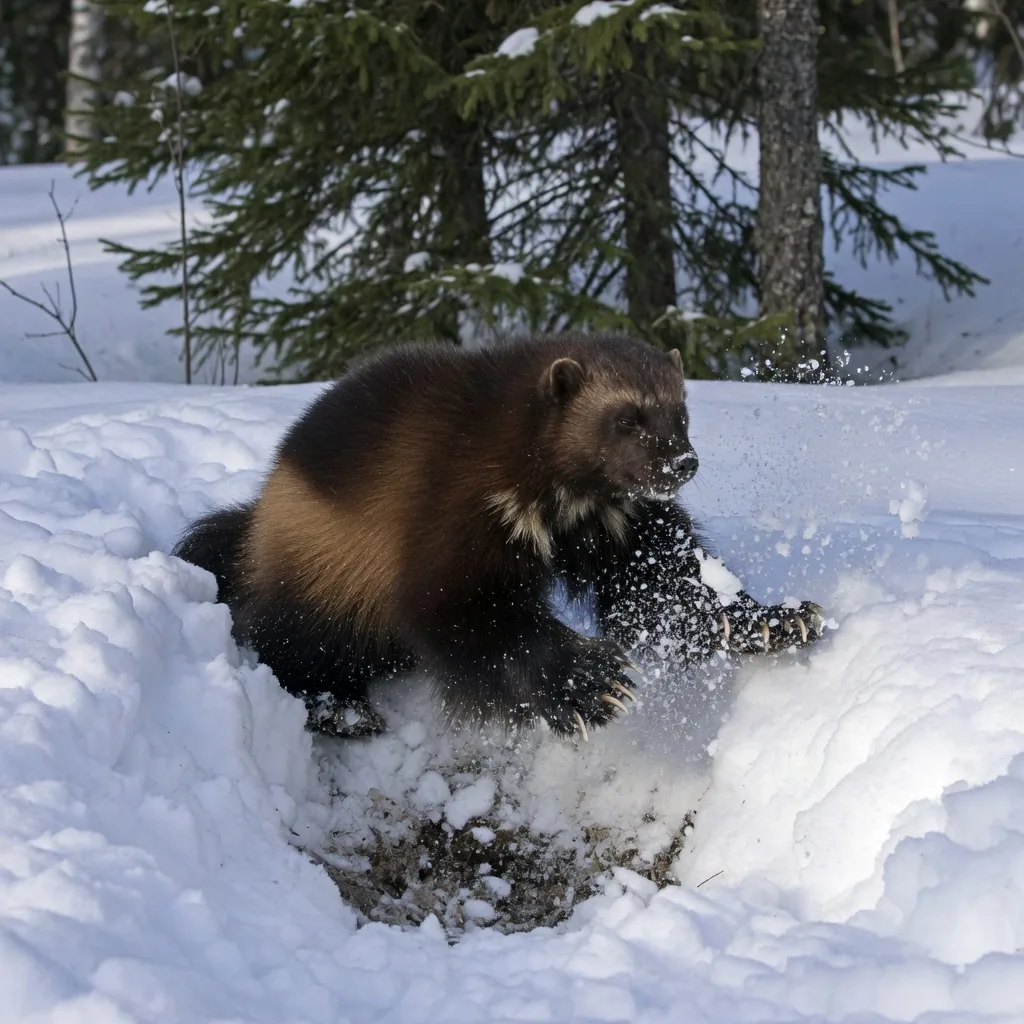
Wolverines have a stocky build with powerful limbs, a large head, a short tail, and small ears. Their feet are equipped with pads and large claws, which let them traverse through heavy snow with ease.
3. Tireless Travelers
The wolverine is basically solitary and needs a lot of space to roam. It has been known to travel 15-20 miles a day looking for food. Some animals have even been tracked over the snow for 60-80 kilometers.
4. Remote Wilderness Hunter
For food, wolverines attack caribou herds when they migrate, and feed on carcasses that bears and wolves leave behind. Because they need such large ranges of habitat, wolverines are found in the remote regions of the Tundra, Taiga, and Boreal forests in the northern parts of North America, Asia, and Europe. They have a strong preference for areas uninhabited by humans.
5. Curious, Daring, and Omnivorous
Similar to other weasels, the wolverine is curious, daring, and tough by nature. It is an omnivore, feeding on a wide variety of food. In summers, wolverines eat berries, edible roots, and various plants, but this is only a small part of their diet. Being tenacious predators, they travel great distances to find their main food: meat.
Test Your Wolverine Knowledge!
5 quick questions about the toughest animal in the north.
6. Opportunistic Feeder
Smaller prey like rodents and rabbits are easy targets, but if given the chance, a wolverine will attack animals much larger, like deer and caribou. They are also opportunistic feeders, eating animals killed by other predators such as caribou, deer, and elk. Eating carrion helps them survive the winter when food is scarce. They will even dig into the snow to find and eat hibernating animals.
7. Surprisingly Athletic
The wolverine is mainly a ground animal, but it is very good at climbing trees and is also a powerful swimmer. It has great stamina and uses a fast lope to travel long distances without stopping to rest.
8. Adapts to Arctic Light
The wolverine is generally nocturnal, but if it finds itself in regions of extended darkness or daylight (as happens in the far north), it will change its pattern of sleeping and waking. Like bears, this animal has poor eyesight, but its hearing and sense of smell are very good.
9. Solitary but Social Within the Family
Males use their scent glands to mark out their territory, sometimes even marking their caches of food. They are polygamous and share their territory with a number of females. Although wolverines are solitary animals, family members do play with each other.
10. Underground Birth
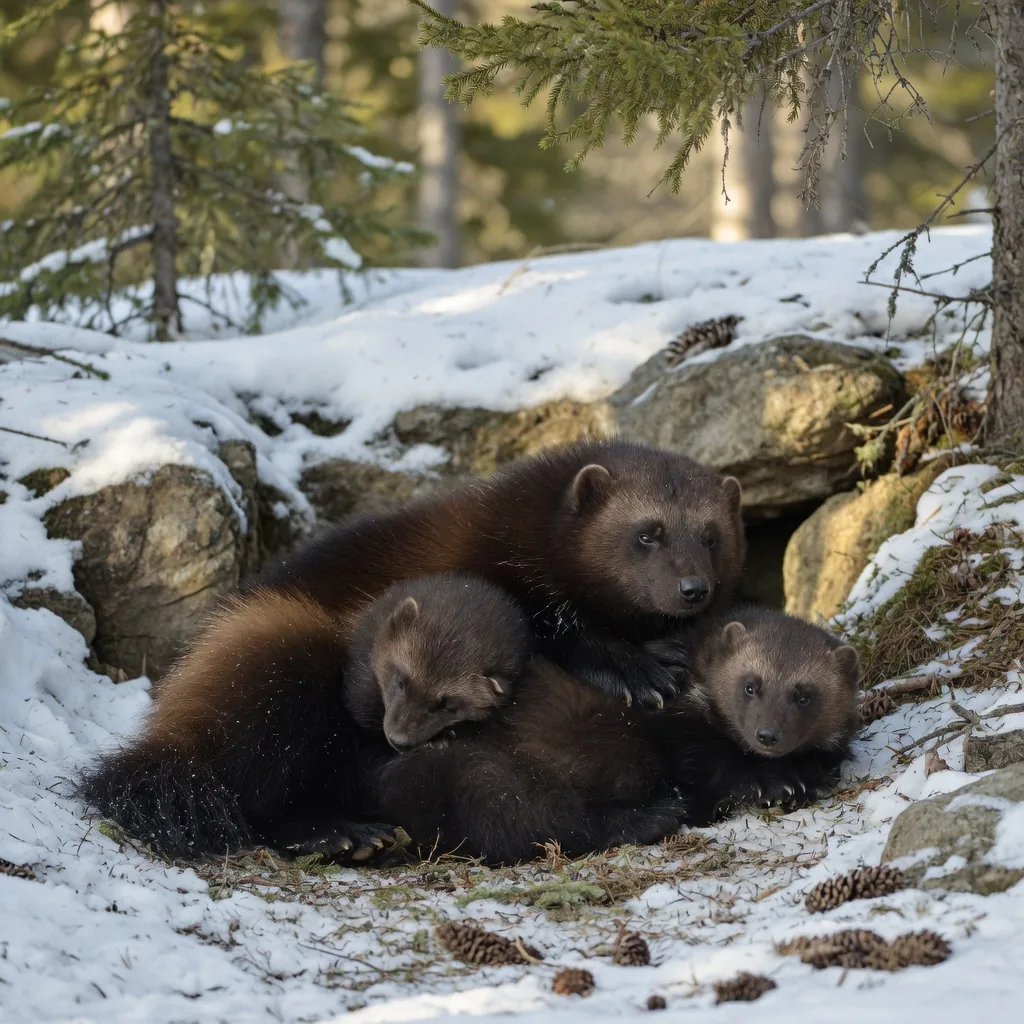
Female wolverines dig underground to give birth to their young, usually 2 to 3 at a time, either in early spring or late winter. The young stay with their mothers until they are two years of age, when they are mature enough to reproduce themselves.
A Survivor Built for the Cold
Wolverines manage to survive in tough conditions and reproduce at a good rate. In the past, they were hunted on a large scale for their beautiful coat, which was used as a lining for parkas. That has changed, the wolverine is now given protective status in several regions. On the basis of estimated population, it is listed as a 'Least Concerned' species by the International Union for Conservation of Nature (IUCN) today.
Explore More Animals
 Surprisingly Fantastic Facts About the Arctic FoxThe white fox or the arctic fox is found in the cold Arctic region, and can camouflage themselves well into their surrounding. Read on to know more facts about
 Facts about Coyote - Prairie WolfThe interesting facts about coyotes go well beyond the depiction of this species in popular culture. While there is no questioning that, what is even more inter
 Weasel FactsWeasels are the smallest carnivores on Earth, fast, fearless hunters found across North America, Europe, Asia, and Africa. Discover 17 species, their habits, d
 Gray Wolf Adaptations & HabitatThe complete kids' guide to the gray wolf: how its lean body, double-layered fur, powerful jaws, pack teamwork, and incredible senses help it survive, plus whe

 Fun fact for today!The wolverine's scientific name is Gulo gulo, Latin for "glutton." It was named for its habit of eating enormous amounts!