

An Honorable Mention
The largest eyes in the world belong to the colossal squid, the largest invertebrate on Earth. Fully-grown squids in the wild have eyes that are more than 30 cm (one foot) across! Those enormous eyes help the squid see in its deep, dark ocean home.
The human eye is said to have a resolution of 576 megapixels, which beats most animals. But when it comes to the best eyesight in the world, many animals leave us far behind.
Vision is probably the most important tool in the wild. Predators have sharp, powerful eyes to lock onto a single target and swoop in fast. Prey animals have developed wide-angle vision that is extra sensitive to movement, so they can spot danger coming before it is too late.
Birds (and birds of prey especially) depend on their eyes more than almost any other sense. Most birds have a weak sense of smell and hearing, so their eyes really do have to do the heavy lifting.
The sense of vision has developed in countless different ways across the animal kingdom. It is almost impossible to rank animals by eyesight alone, because every type of eye serves a different purpose. A chameleon's swiveling eyes and a cat's night-vision eyes are both extraordinary, they are just built to do completely different jobs.
Here is a list of animals with some of the most remarkable and finely tuned eyesight on the planet.
Animals with Incredible Eyesight
Birds of Prey
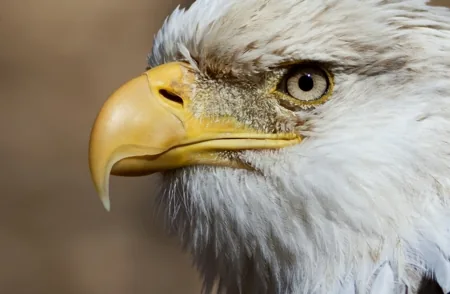
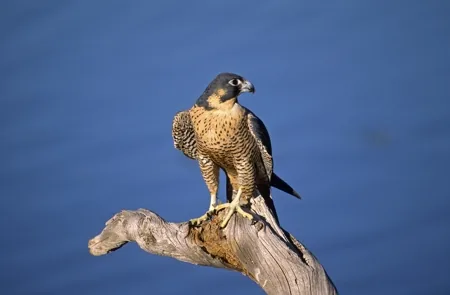
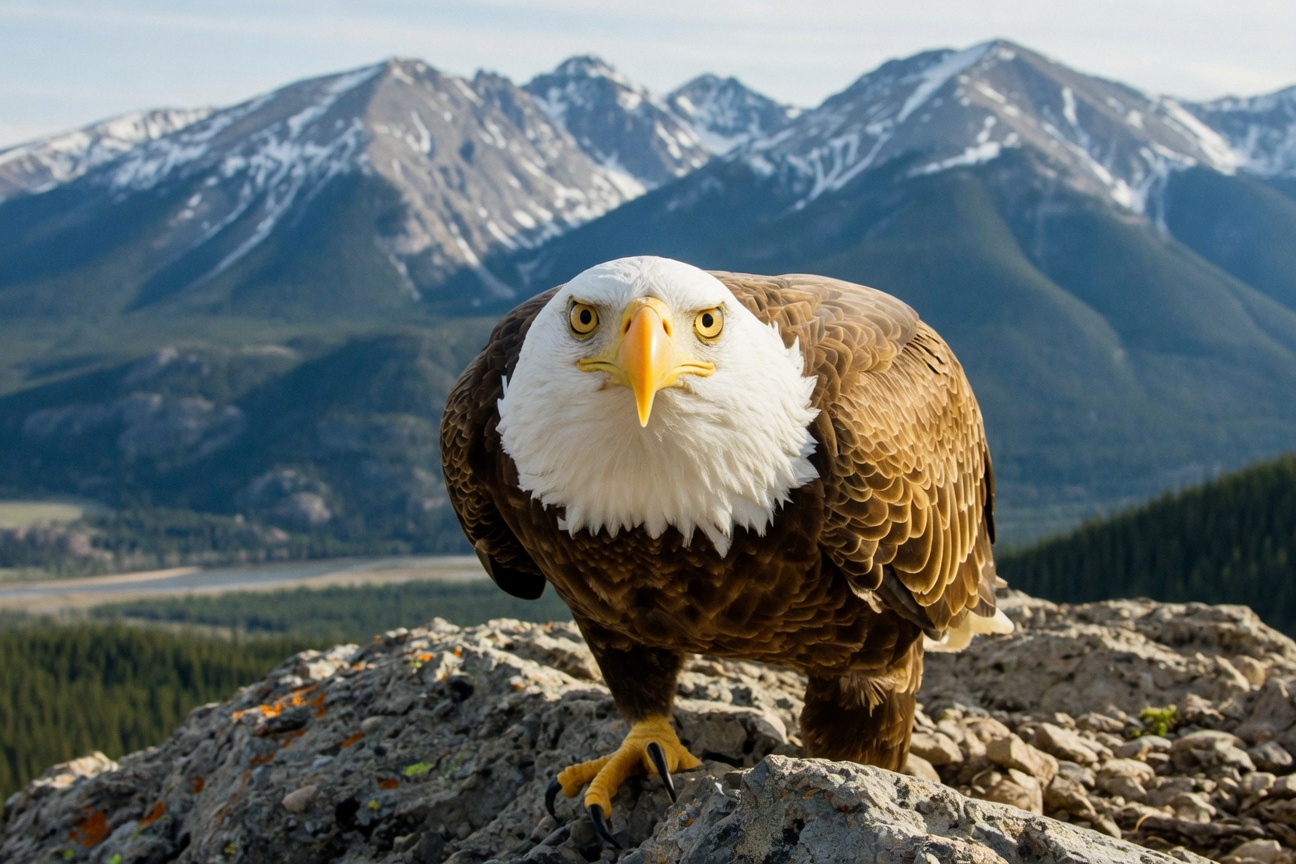
Birds of prey (such as eagles and falcons) have some of the best eyes in the animal kingdom. These birds are built to spot prey from high in the sky, then swoop down fast to catch it before the animal even knows what has happened.
Their eyesight is among the sharpest of any living creature. Some species can spot something as small as a rabbit from more than a mile away! Like most predators, their eyes face forward. This gives them excellent binocular vision, which is perfect for judging exactly how far away their prey is. Not all birds of prey use the "soar high, swoop low" style of hunting, but every single one depends heavily on those powerful eyes.
Owls
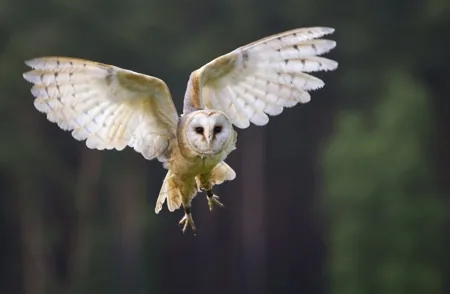
Owls are technically birds of prey too, but they are so special they deserve their own section. Owls have some of the largest eyes relative to body size of any animal. Unlike most nocturnal creatures, they do not use echolocation or the reflective layer called the tapetum lucidum to help them see in the dark. Instead, they rely on sheer eye size to soak up as much light as possible, those eyes are actually larger than the owl's brain!
Even so, the eyes themselves are not the whole story. Owls' brains are incredibly good at picking out tiny details from a blurry but bright image. Interestingly, owls do not actually rely on their eyes most when hunting, their hearing is so precise that it does most of the work in the dark.
Different owl species have been grouped together here, since the differences in eyesight between them are likely very small and mostly due to their different habitats.
Big Cats
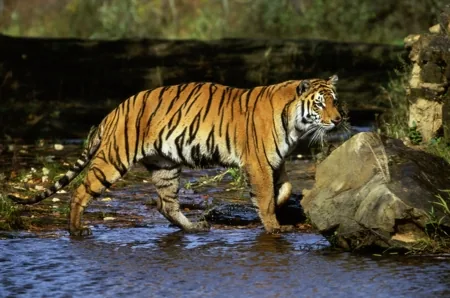
Cats have excellent night vision, and big cats (tigers, lions, jaguars, and leopards) take this to an extreme. They can hunt successfully under the cover of darkness thanks to a reflective layer behind their eyes called the tapetum lucidum. This layer bounces light back through the eye a second time, making the most of every tiny bit of available light.
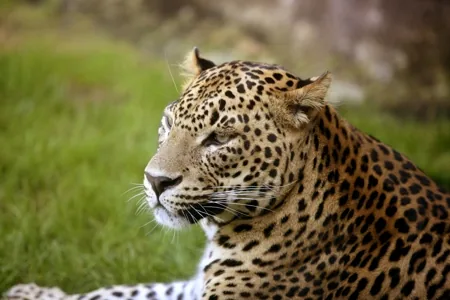
Big cats also have far more rod cells in their eyes than humans. Rod cells help detect light and movement, so big cats are much more sensitive to dim conditions than we are. However, they have fewer cone cells (the cells that detect color) so they can only tell apart a very limited range of colors. In a way, they trade color vision for night vision.
As with owls, differences between big cat species are grouped together here, since the eyesight adaptations are very similar across the group.
Prosimians
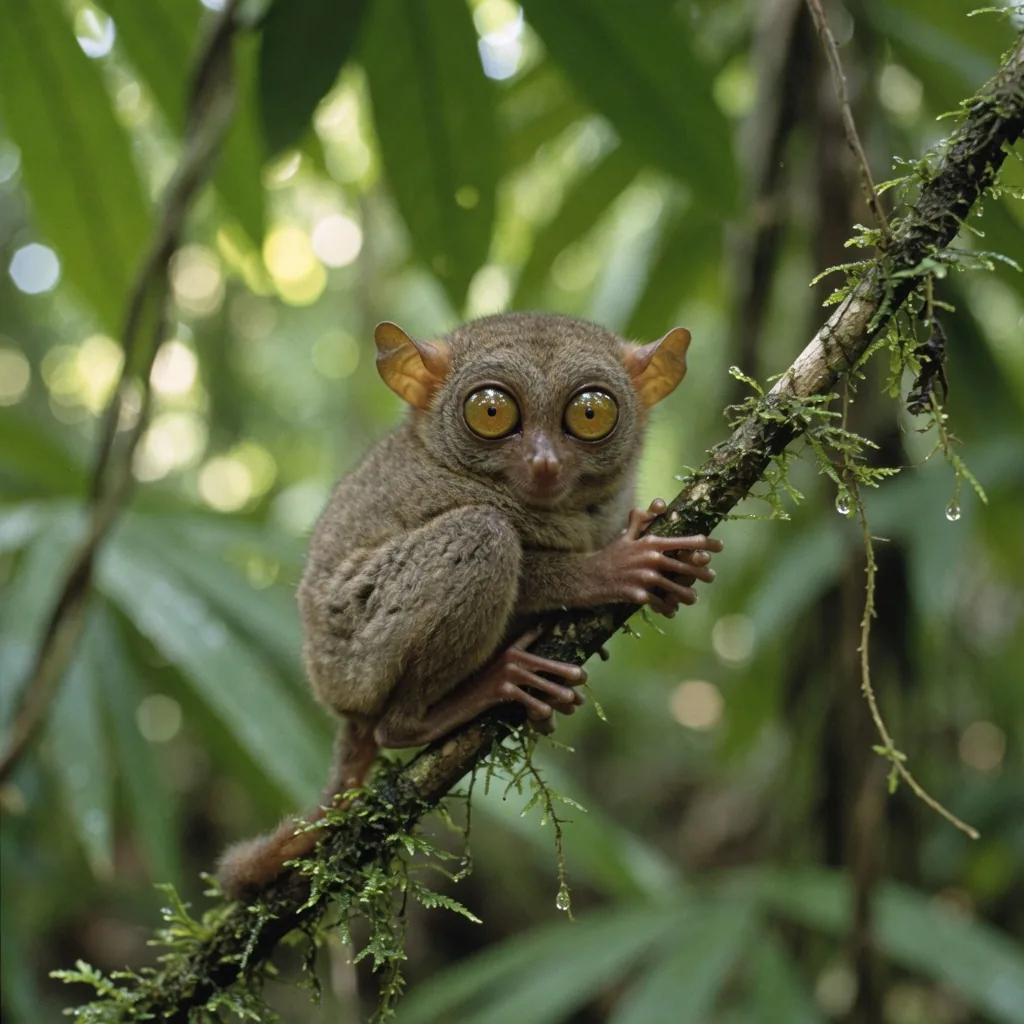
Prosimians (a group that includes lemurs, tarsiers, bushbabies, and lorises) are distant relatives of apes and humans. Most of them are active at night, and they have evolved huge eyes to help them see in low light. All prosimians except the tarsier also have the tapetum lucidum for extra help in the dark.
Dragonflies
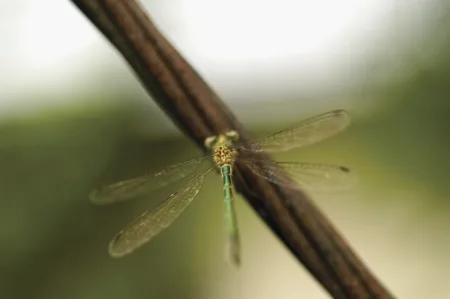
Dragonflies are expert hunters among insects, and their eyes are the most amazing found on any insect. They have large compound eyes that wrap around most of their head. On top of that, they have three smaller eyes called ocelli. The ocelli do not form detailed pictures, but they detect and react to motion incredibly fast, much faster than human eyes ever could.
This is why people say dragonflies see in slow motion. That is not quite right, but it is close. A dragonfly can track and intercept a small flying insect in mid-air with almost perfect accuracy, a hunting success rate that most animals can only dream of.
Want to learn more? See our full guide on dragonfly habitat and what dragonflies eat to discover how these vision superstars use their eyesight to hunt.
Frequently Asked Questions
Which animal has the best eyesight in the world?
Eagles and other birds of prey are considered to have the sharpest eyesight, capable of spotting a rabbit from over a mile away. Mantis shrimp have the most complex eyes, seeing 12 color bands and circular polarized light.
Do dragonflies really see in slow motion?
It's not entirely accurate, but close. Dragonflies have compound eyes plus three extra eyes called ocelli that react to motion much faster than human eyes. They can track and intercept fast-moving prey that humans would struggle to follow.
Are big cats colorblind?
Big cats like tigers, lions, and leopards are not fully colorblind but have far fewer cone cells than humans. They can distinguish a limited range of colors. What they excel at is night vision, their tapetum lucidum reflects light back through the eye for exceptional low-light sight.
What animal has the largest eyes in the world?
The colossal squid holds the record for the largest eyes in the world, up to 30 cm (about one foot) in diameter in fully grown adults.
Test Your Animal Vision Knowledge!
5 quick questions about the most incredible eyes in the animal kingdom. Ready?
Goats
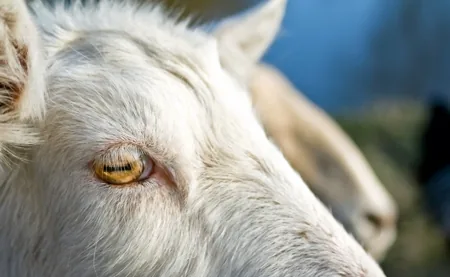
Goats might not look like vision champions, but their eyes are extraordinary. Their pupils are horizontal and almost perfectly rectangular, a very unusual shape among mammals. This gives goats a field of vision of 330°. That means they can see almost everything around them without turning their head at all! Since goats are hunted by big cats and other predators, this wide-angle warning system can be a life-saver.
Chameleons
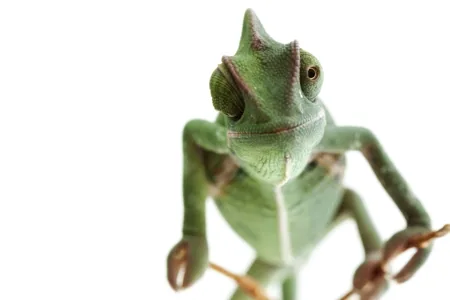
Chameleons probably have the most famous eyes in the animal kingdom. Each eye can swivel on its own, completely independently of the other. This means a chameleon can watch two totally different things at the same time, one eye looking forward, the other looking backward. Scientists have documented this clearly, though exactly how the brain processes two separate images at once is still not fully understood.
Chameleons are truly extraordinary animals, read more about the different species of chameleons and the other amazing adaptations that make them such unique reptiles.
Mantis Shrimp
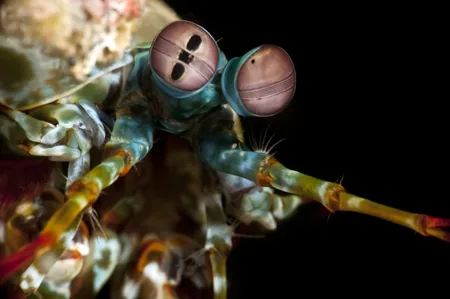
Despite their name, mantis shrimp are neither mantises nor shrimp, they are a completely separate type of crustacean. And their eyes may be the most extraordinary of any animal on Earth. Like dragonflies, they have compound eyes on movable stalks. Each eye is divided into three separate sections, giving each eye its own "trinocular" vision. Humans only have binocular vision (two eyes working together) so this is hard to imagine.
Most mind-blowing of all: mantis shrimp can see 12 color bands, compared to just 3 in humans. They can also detect circular polarized light, something like wearing 3D glasses permanently. Why they need this level of visual complexity, and how they actually use it, is still one of science's great mysteries.
When it comes to vision, animals have taken a very different path from humans. We may have advantages in many areas, but in the world of eyesight, we are clearly not at the top of the animal kingdom.
Explore More Animals
 Fun Facts About the Animal Kingdom That Kids Will EnjoyAre you looking for interesting facts about animals? Can you believe flies have five eyes; two large and three smaller ones? Here are some amazing facts about a
 Animals With an Amazing Sense of TasteWe think that, as humans, we have a highly developed gustatory modality that helps us enjoy and relish a number of dishes. Think again, as some animals have an
 Nocturnal Animals List: Creatures of the NightMeet the bats, owls, lemurs and big-eyed mammals that hunt and survive in the dark. A complete nocturnal animals list, plus how night creatures find food withou
 Truly Incredible Facts about CuttlefishThe cuttlefish is not a fish. In fact, it is a mollusk, and is well-known for its chameleon-like behavior. Discover the anatomy, camouflage, ink, diet, mating,

 Fun fact for today!The colossal squid has eyes bigger than a dinner plate, up to 30 cm (1 ft) across!