

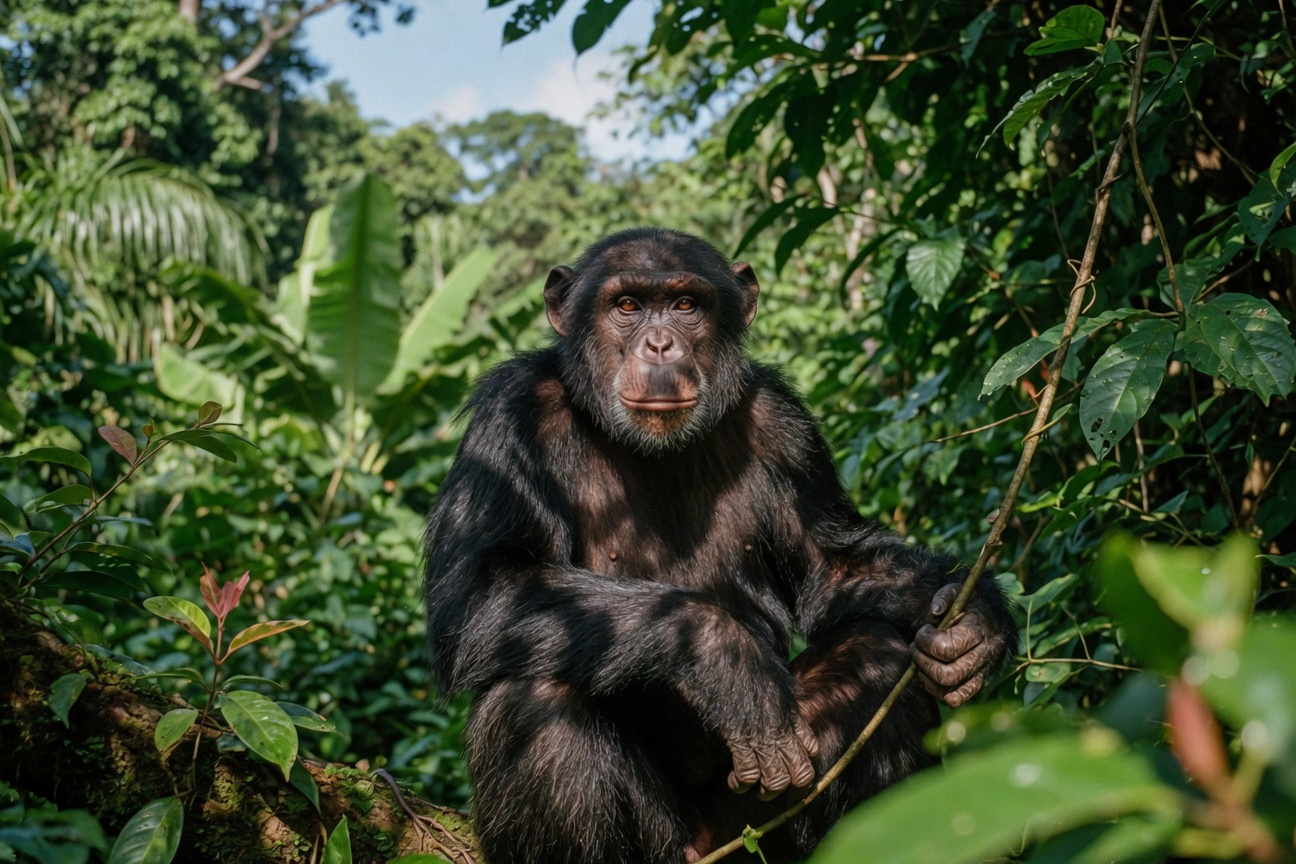
According to some estimates, chimpanzee populations have dropped to one tenth of what they were at the start of the 20th century.
Chimpanzees (commonly called chimps) belong to the Hominidae family. Their scientific name is Pan troglodytes. They are in the same family as Gorilla (gorillas), Homo (humans), and Pongo (orangutans).
The tropical rainforests of western and central Africa are the best natural home for chimpanzees. Chimps are known to have evolved in that same region, just like us. Inside those forests, they mainly live in open savanna woodlands, grasslands, and rainforests. Bonobos (Pan paniscus) are closely related to both chimps and humans. They share the same habitat and face the same threats.
Based on where they live, chimps are split into three subspecies. Central chimpanzees (P. troglodytes troglodytes) come from central Africa. Western chimpanzees (P. t. verus) live in west-central Africa. Eastern chimpanzees (P. t. schweinfurthii) live in east-central Africa. All three subspecies are in serious danger and could face extinction if we do not act.
Why are Chimps Endangered?
The three biggest threats facing chimps are destruction of their natural habitat, illegal capture for the pet trade, and hunting for bushmeat. Let's look at each one.
Destruction of Habitat
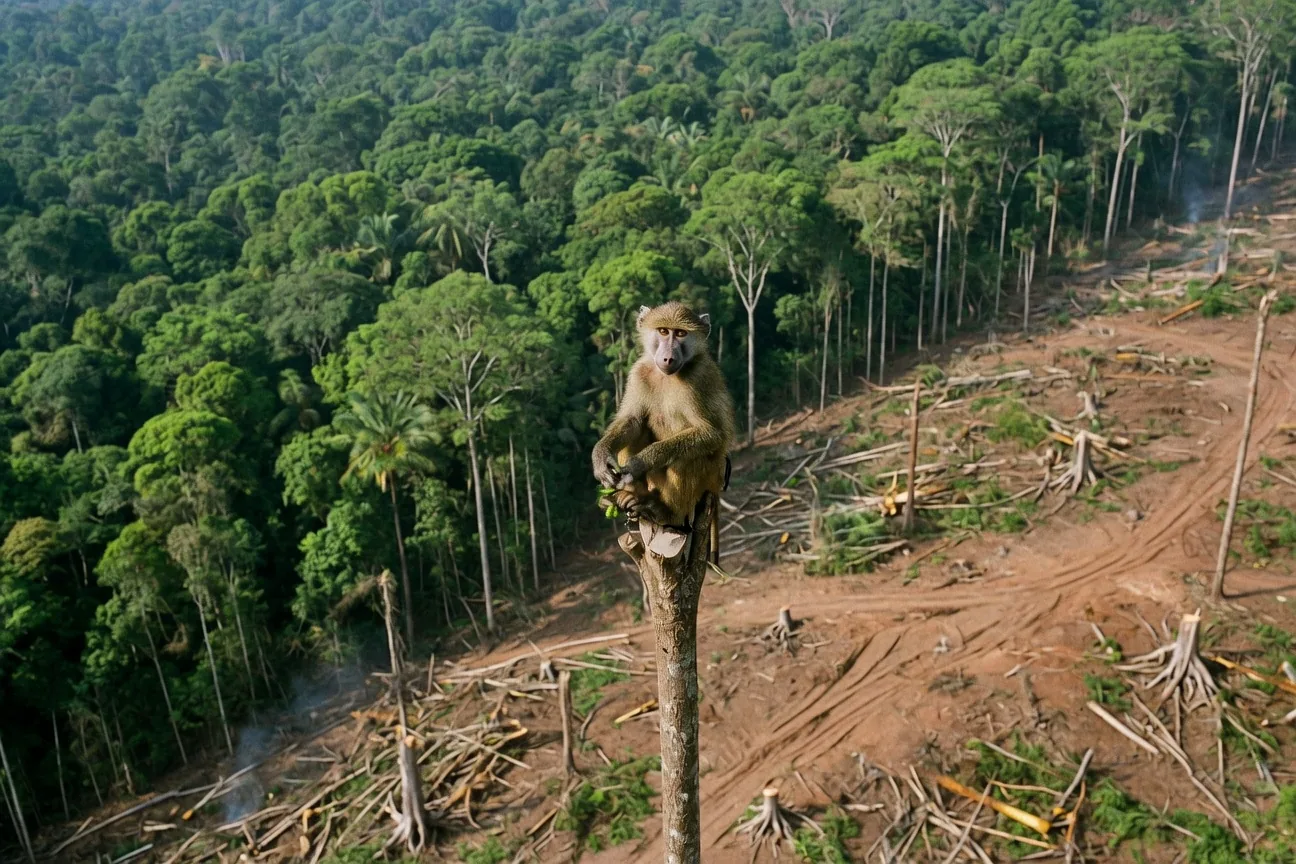
There was a time when more than one million chimpanzees used to live in the forests of at least 25 countries in Africa. Today, that figure has fallen to below 200,000.
This sharp drop began in 1960. Today, only 6 countries in Africa still have healthy chimp populations. The rest of the continent can no longer support large numbers of these apes.
Human populations keep growing, and their need for land keeps growing too. Forests are cut down to make room for farms. Roads push deeper into the jungle. Towns and villages keep expanding at the forest edge. Each day, more chimpanzee habitat disappears.
Continuous loss of habitat is without doubt the single most important reason for the chimpanzees becoming endangered.
Unlawful Captivation
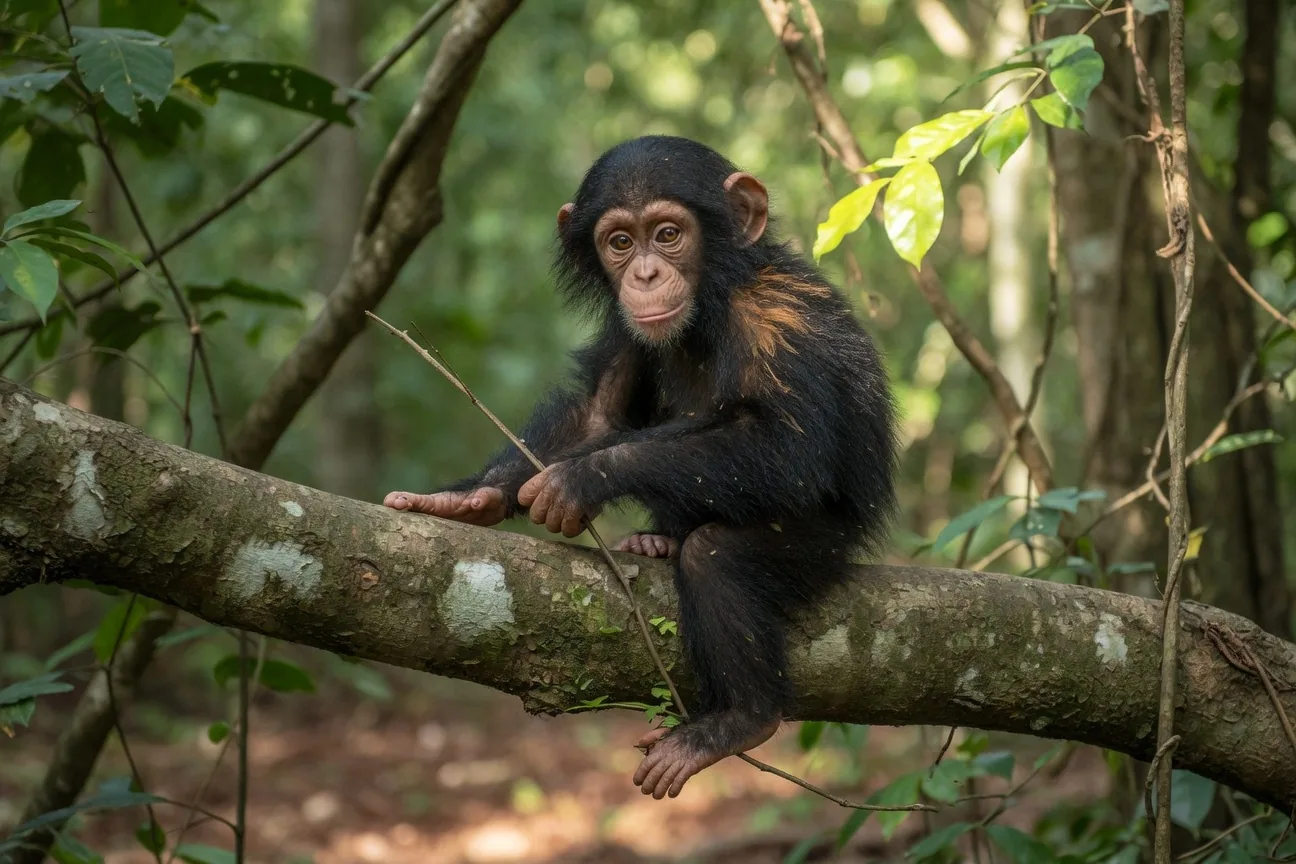
Chimps are frequently caught illegally and sold as pets. People often want young chimps because of their cute appearance, and they will pay a very high price for them. However, it is unethical, unsafe, and often illegal to keep them in our homes.
Chimpanzees are wild animals. They are not like dogs or cats. They need to live in their natural environment. An adult chimp is far stronger than any human. If not treated properly, a chimp can easily overpower its owner and cause very serious injuries. Several people have died from chimp attacks, and the animal often has to be put down as a result.
Sadly, most chimps are captured before they grow up. They spend the rest of their lives cooped up in miserable conditions. Conservationists have estimated that, even though protection is much better than it used to be, only one in ten pet chimps is ever rescued.
Take the Chimp Endangered Quiz!
5 quick questions. How much do you know about why chimps are at risk?
Hunting for Meat
This threat does not come from the chimps' natural predators. It comes from people who live in and around forests. Chimpanzees are prized bushmeat, and their meat is also exported to Western countries such as France and England. It is estimated that at least 4,000 chimps are killed every year.
Pathogens
Chimps can also be killed by human diseases. This means diseases that we carry and pass on to them. Chimpanzees can catch many illnesses from humans, and many have died from human-borne diseases, in particular, the Ebola virus.
Many conservationists are working hard to raise awareness and save these endangered animals from extinction. Chimpanzees are our closest evolutionary relatives. The DNA of chimpanzees and humans is about 98% alike! Studying them can tell us a great deal about our own history and development. Sadly, that connection to our past is slowly being destroyed by our own harmful actions in the chimps' forest home.
Frequently Asked Questions
Why are chimpanzees endangered?
The three main causes are destruction of their forest habitat, illegal capture for the pet trade, and hunting for bushmeat. Habitat loss is the single most important reason.
How many chimpanzees are left in the wild?
Below 200,000, down from more than one million at the start of the 20th century.
What is the scientific name for the chimpanzee?
Pan troglodytes. They belong to the family Hominidae, the same family as humans, gorillas, and orangutans.
How similar is chimp DNA to human DNA?
About 98%, making chimpanzees our closest evolutionary relatives.
Explore More Animals
 Chimpanzee AdaptationsAnimals are found to be adapted to their surroundings in many different ways. This article will provide you with information about adaptations of chimpanzees.
 Chimpanzee Diet: Facts About How They Hunt and What They EatAmong all the apes, only chimpanzees and humans prefer an omnivorous diet. The following AnimalSake article on chimpanzee diet will help you to know more about
 Endangered Gorillas: Why They're Disappearing & Amazing FactsMeet the gorilla, the largest ape on Earth. Discover the two species, how they live, what they eat, why they are endangered, and what is being done to save the
 Endangered Rainforest Animals That Will Really Shock YouThough rainforests hold 40-75% of all organisms on Earth, many species face extinction. Meet the gorilla, Javan rhino, giant panda, and more, with IUCN status

 Fun fact for today!Chimp populations have dropped to one-tenth of what they were at the start of the 20th century.