

Interesting Facts about Blobfish
The blobfish (Psychrolutes marcidus) is a deep-sea fish that belongs to the Psychrolutidae family.
These fish live in the deep waters off the coasts of Australia and Tasmania, and also around New Zealand.
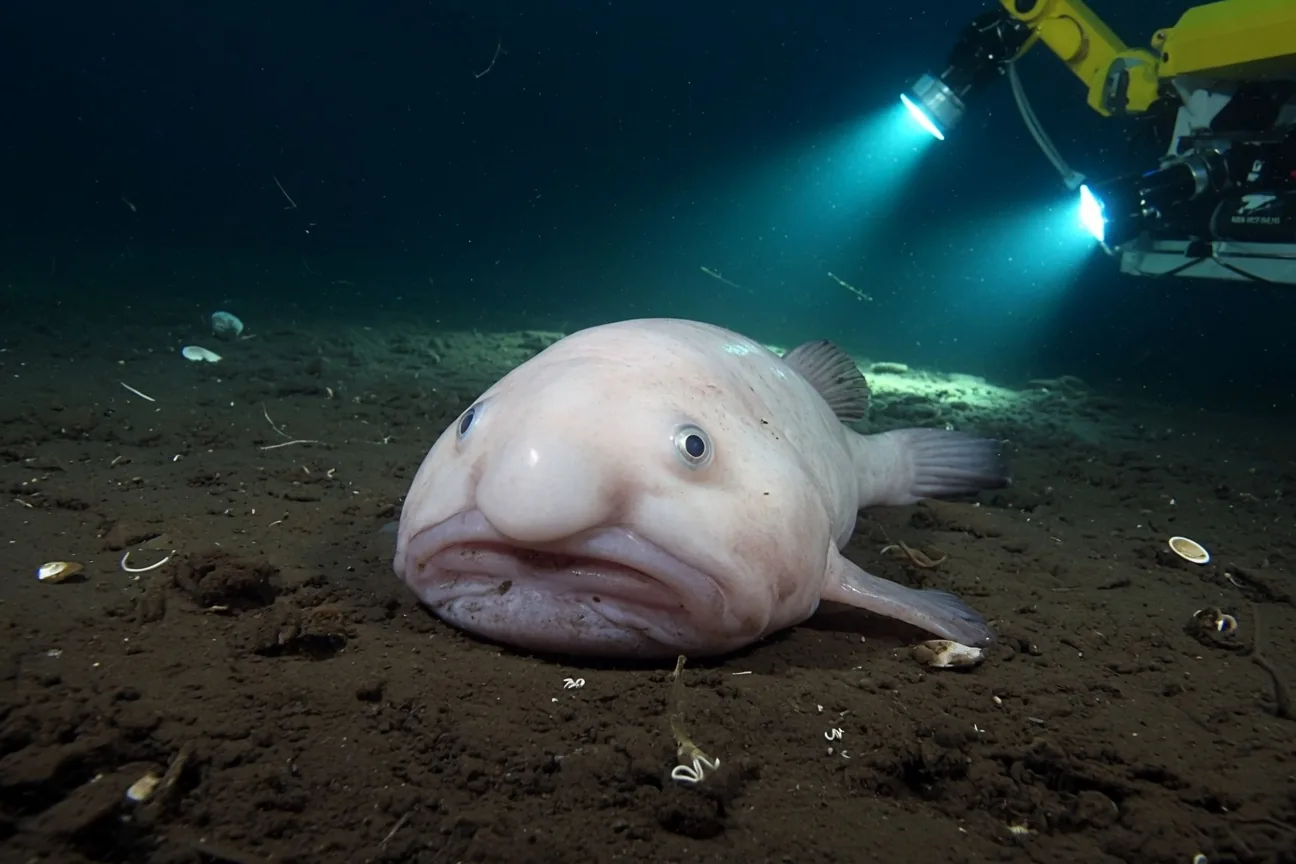
Blobfish are found at depths between 600 and 1,200 meters, where the pressure is far greater than at sea level. That is why they are very rarely spotted.
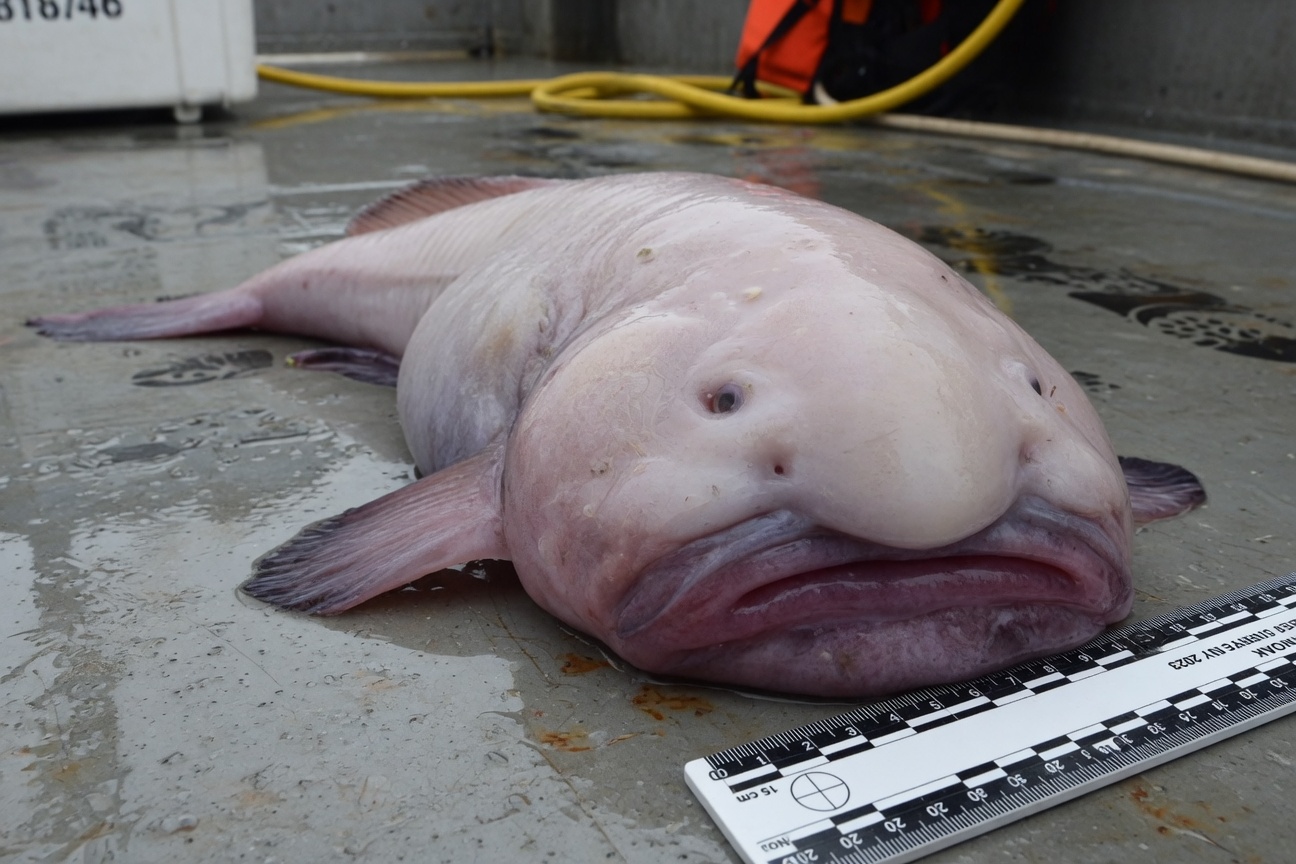
Without muscles in its body, the blobfish looks like a flesh-colored, jelly-like blob floating just above the sea bed. It can look surprisingly like a grumpy human face, complete with eyes, lips, and a very large nose.
The blobfish is one of those deep-sea fish that has developed some truly remarkable traits in order to survive down there.
Unlike most fish, the blobfish has no gas bladder to help it float. Instead, its jelly-like body has a very low density (lower than the water around it) so it floats effortlessly near the seafloor. Its near-boneless, gelatinous body is the only thing that keeps it alive under the enormous pressure of the deep sea.
Because it has no muscles, the blobfish almost never moves. Like many deep-sea creatures, it saves every bit of energy it can, which is essential in such a harsh place.
The blobfish does not hunt for food. It simply hovers in place and opens its mouth to swallow tiny food particles that drift past. Its diet is made up mainly of deep-ocean crustaceans.
Nobody fishes for blobfish, they are not good to eat. Even so, they are in danger because they live in the same areas as crabs and lobsters. Fishing boats accidentally scoop them up in their nets while targeting those other creatures.
Scientists do not yet know very much about the blobfish's life. Based on what we know about similar deep-sea animals, blobfish may live for tens of years, as long as they are not accidentally caught.
Take the Blobfish Quiz!
5 quick questions. How much do you know about the world's ugliest fish?
Fun Facts about Blobfish
The blobfish became famous because of its truly unusual looks, it seems to have the face of a very unhappy person.
Its odd body shape, giant drooping nose, and permanently frowning mouth, paired with its small sad-looking eyes, make it one of the strangest-looking creatures in the ocean.
Because its body is so low in density, the blobfish looks very strange once it is pulled out of the deep water, it turns into a sagging, jelly-like blob rather than a normal-looking fish. To put things in perspective: if a human were placed in that same deep-sea environment, the crushing pressure would be fatal.
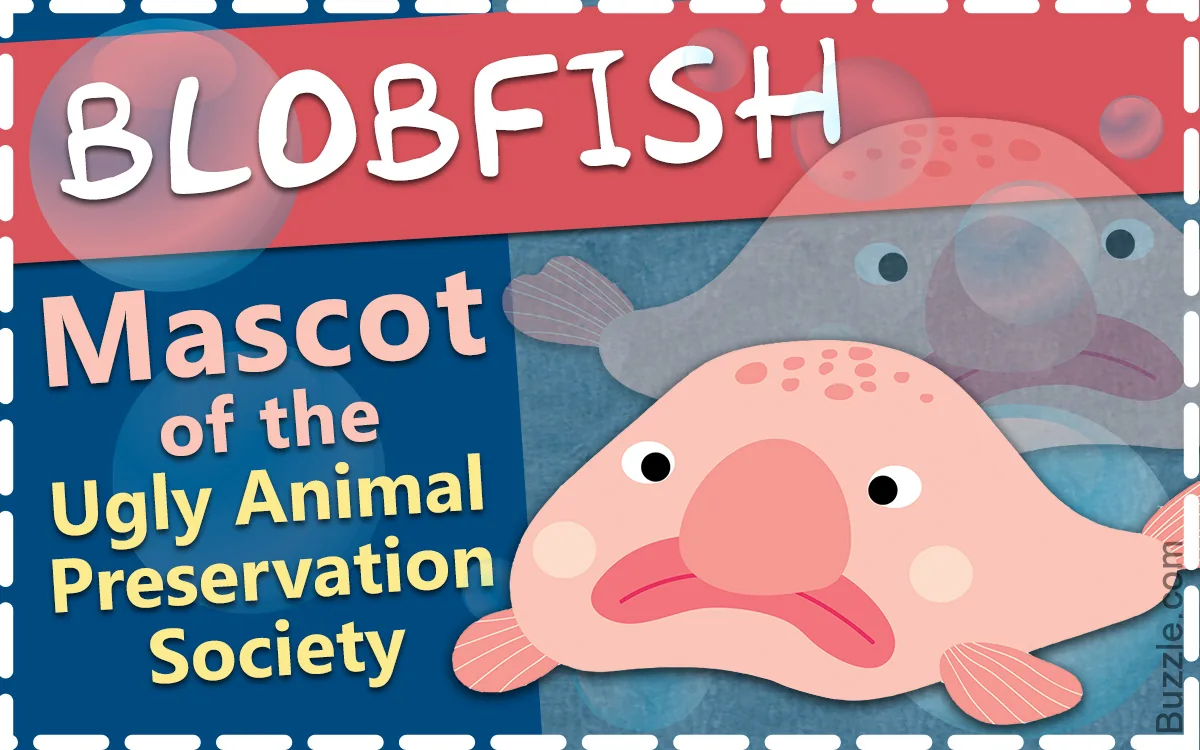
In 2013, the blobfish was voted the "World's Ugliest Animal" and became the mascot of the Ugly Animal Preservation Society, a group dedicated to raising awareness for animals that are too strange-looking to attract the conservation attention they deserve.
Here is the thing though: the blobfish is only "ugly" when it has been pulled out of the water. In the deep sea, it looks like a perfectly ordinary fish, and certainly does not deserve its "ugliest animal" title down there.
Frequently Asked Questions
What is the scientific name of the blobfish?
Psychrolutes marcidus, belonging to the family Psychrolutidae.
How deep does the blobfish live?
Between 600 and 1,200 meters below the ocean surface, off the coasts of Australia, Tasmania, and New Zealand.
Why does the blobfish look so different out of water?
At depth, the blobfish looks like a normal fish. When brought to the surface, the sudden drop in pressure causes its jelly-like body to sag and droop, creating its famous 'blob' appearance.
Is the blobfish endangered?
The blobfish is not commercially fished, but it is threatened by deep-ocean trawling. It is often caught accidentally as bycatch when fishermen target crabs and lobsters in the same habitat.
Explore More Animals
 Interesting Facts About the Beautiful Blowfish (Puffer Fish)Also known as puffer fish, blowfish can inflate themselves to scare away their predators, hence the name. They are believed to be the second most poisonous vert
 Gulper Eel FactsThe gulper eel hides miles below the ocean surface, with a jaw one-fourth the length of its body, a stretchy stomach, and a glowing tail tip that lures prey in
 Surprisingly Not-so-dumb Facts About the Dumbo OctopusThe Dumbo octopus gets its name from Walt Disney's famous cartoon character, Dumbo the Flying Elephant, because of its ear-like fins that resemble the ears of t
 14 Animals With Really Strange Noses You Won't Believe are RealWe always wonder what was Mother Nature thinking when she decided to make certain animals look weird, and sometimes even creepy, especially their noses. In this

 Fun fact for today!The blobfish only looks like a blob out of water. In its deep-sea home, it looks like a perfectly normal fish!