

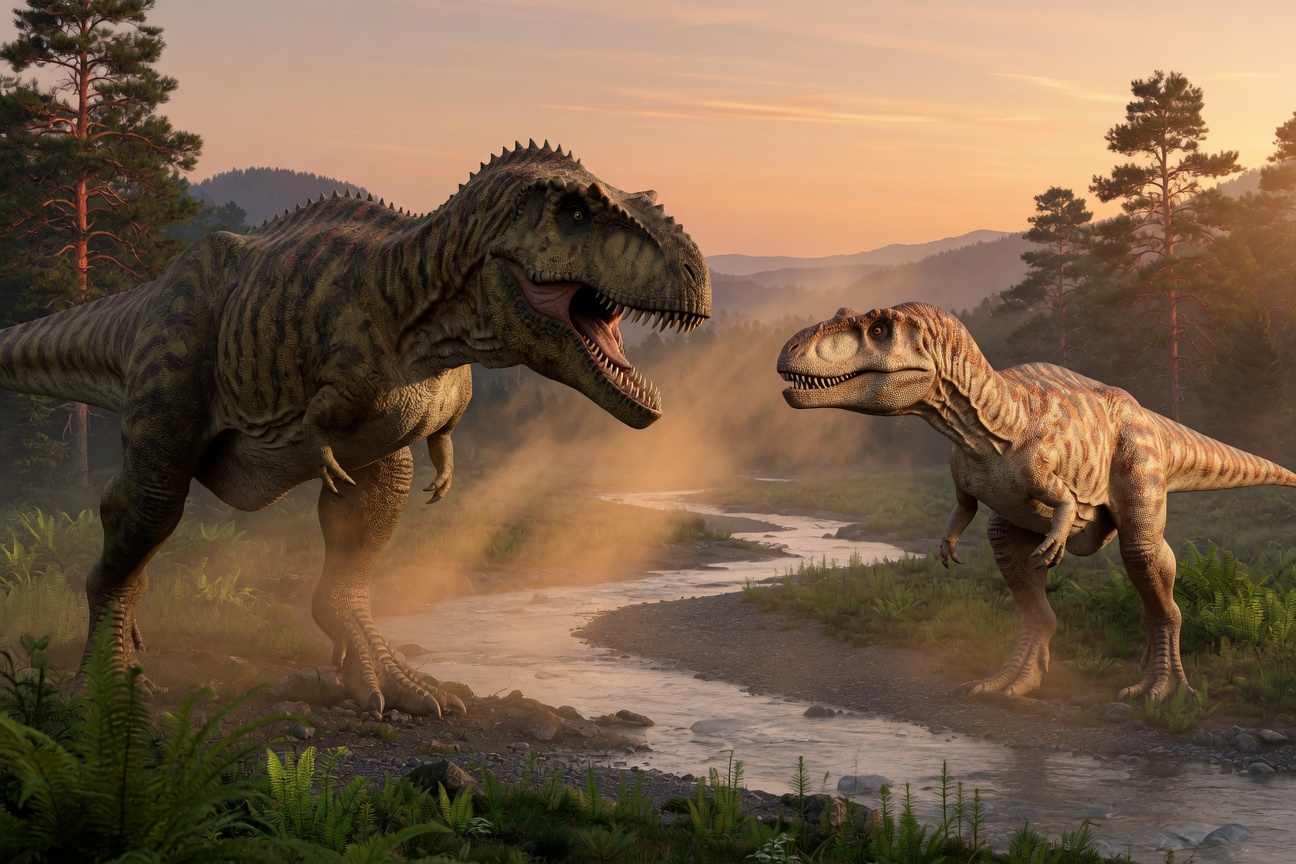
Two Legendary Carnivores
Before the 1820s, very little was known about creatures that lived millions of years before us. As scientists started digging up fossils and studying them, an amazing picture began to form, and with it came a flood of questions. Which dinosaur was the biggest? Which was the most fearsome?
Dinosaurs are one of the greatest discoveries in all of science. There is still so much more to find out, but we already know enough to have some really exciting comparisons. Here we look at two legendary meat-eaters: the Megalosaurus and the Giganotosaurus.
Meet the Two Giants
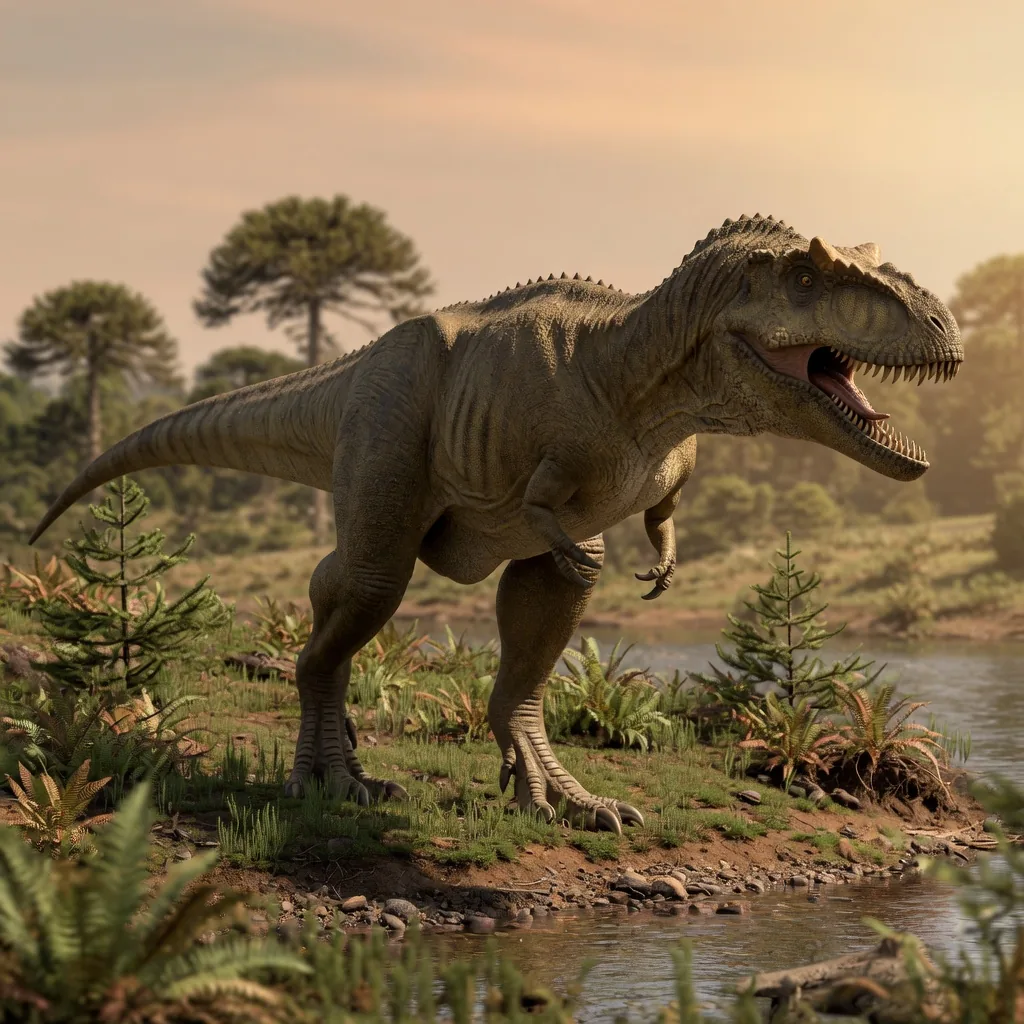
The "Giant Southern Lizard", one of the largest meat-eaters ever to walk the Earth.
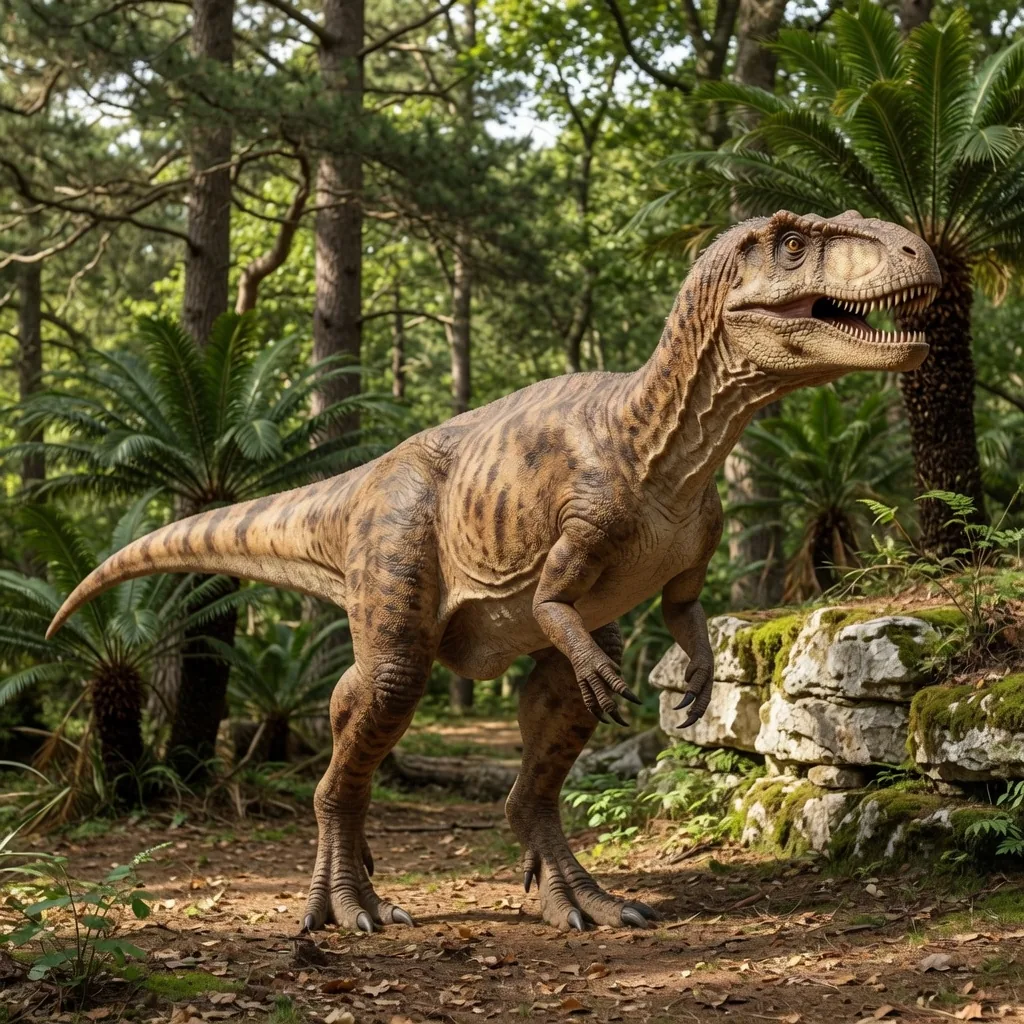
The "Great Lizard", smaller, but smart, and famous as the first dinosaur ever named.
Giganotosaurus
The name is derived from the Greek words 'gigas' meaning 'giant', 'notos' meaning 'Southern', and 'sauros' meaning 'lizard', thus translated as the 'Giant Southern Lizard'.
It's from the Cenomanian age of the Late Cretaceous period, which is approximately 112 to 97 million years ago.
The first fossils were found by an amateur hunter named Rubén Dario Carolini on July 25, 1993, in the Candeleros Formation in Patagonia, South Argentina.
The discovery was reported in 1994, and scientists Rodolfo Coria and Leonardo Salgado published their full description in the journal Nature in September 1995.
Only 70% of the skeleton has been found so far. It is believed to have died out at the end of the Mesozoic Era.
Megalosaurus
The name is derived from the Greek words 'megas', meaning 'great', and 'sauros', meaning 'lizard', thus translated as 'Great Lizard'.
It is from the Bathonian age of the Mid-Jurassic Period, approximately 168 to 166 million years ago.
The earliest possible fossils were found around 1676 in Oxfordshire, southern England, in the Taynton Limestone Formations.
Sir Thomas Pennyson gave a bone fragment to Robert Plot, who published it in his book Natural History of Oxfordshire (1676), making it the first image of a dinosaur bone ever printed.
For many years scientists weren't sure what the bones belonged to. Eventually, William Buckland studied new findings and named the animal "Megalosaurus" in 1824. It was later given its full official name (Megalosaurus bucklandii) by Gideon Mantell in 1827.
Comparing the Mega Predators
So how do these two giants stack up head to head? Here they are side by side, period, home, size, weight, teeth, and brains all in one place.
| Feature | 🦖 Giganotosaurus | 🦕 Megalosaurus |
|---|---|---|
| Period | Late Cretaceous Period | Mid-Jurassic Period |
| Habitat | Southern America, Argentina | Europe, Southern England, France, and Portugal |
| Type | Carnivore (Predator/Scavenger) | Carnivore (Predator/Scavenger) |
| Height | 18-23 ft (ground to head) | 8-12 ft (ground to head) |
| Weight | 6-8 tons (approx.) | 1-2 tons (approx.) |
| Length | 39-43 ft (head to tail) | 23-32 ft (head to tail) |
| Diet | Meat | Meat |
| Skull & Brain | One of the longest known skulls at approximately 1.64 meters, with a comparatively small brain. | A long, narrow skull with a relatively larger brain, considered one of the more intelligent dinosaurs. |
| Teeth | Knife-like, serrated 8-inch teeth. | Blade-like teeth. |
| Legs | Walked on two powerful hind legs; forearms had three fingers with sharp claws on each. | A shorter body with strong hind legs, and three fingers with hook-like claws. |
Dino Showdown: Test Your Knowledge!
5 quick questions. Can you crown the king of the carnivores?
Battle of the Beasts
So if these two giants had ever met in battle, who would win? In pure size, Giganotosaurus has the edge, it was far heavier and longer. But Megalosaurus had a larger brain, which could mean sharper hunting instincts. Does brain beat brawn? We can only imagine! If giant predators are your thing, you'll love these other prehistoric heavyweights too.
Both are remarkable in their own right. Each was a top predator of its time and place, and together they show just how wide and wild the age of the dinosaurs really was.
Frequently Asked Questions
Which was bigger, Giganotosaurus or Megalosaurus?
Giganotosaurus was far bigger. It reached 6 to 8 tons and 39 to 43 feet long, while Megalosaurus weighed about 1 to 2 tons and grew 23 to 32 feet long.
Did Giganotosaurus and Megalosaurus ever fight each other?
No. They lived millions of years apart. Megalosaurus lived in the Mid-Jurassic (about 168 to 166 million years ago) and Giganotosaurus in the Late Cretaceous (about 112 to 97 million years ago), so a real battle could never have happened.
Why is Megalosaurus so important in science?
Megalosaurus was the first dinosaur to be discovered and scientifically named. It was named by William Buckland in 1824, and that discovery helped create the science of paleontology.
What do the names Giganotosaurus and Megalosaurus mean?
Giganotosaurus means 'Giant Southern Lizard' (from the Greek gigas, notos, and sauros). Megalosaurus means 'Great Lizard' (from megas and sauros).
Which dinosaur was smarter?
Megalosaurus had a relatively larger brain and is considered one of the more intelligent dinosaurs, even though Giganotosaurus was much bigger and had one of the longest known skulls.
Explore More Animals
 Tyrannosaurus Rex vs. AllosaurusHave you ever wondered what it would be like if two dinosaurs had a duel? We compare the T-Rex and Allosaurus head-to-head: size, bite force, speed, vision, and
 Facts About the Spinosaurus That'll Make Your Head SpinThe Spinosaurus facts presented in this article should provide an overview of details about this huge dinosaur from the Cretaceous period.
 Long-Necked Dinosaur Species: An OverviewDinosaurs, the gigantic creatures that existed on Earth millions of years ago, have always fascinated us ever since we knew of their existence. AnimalSake prese
 Mysteriously Amusing Facts about the Meganeura (Giant Dragonfly)Many would be surprised to know about a gigantic creature that once existed and was similar in appearance to a dragonfly. This post enlists some facts about thi

 Fun fact for today!These two giants never actually met, they lived millions of years apart!