

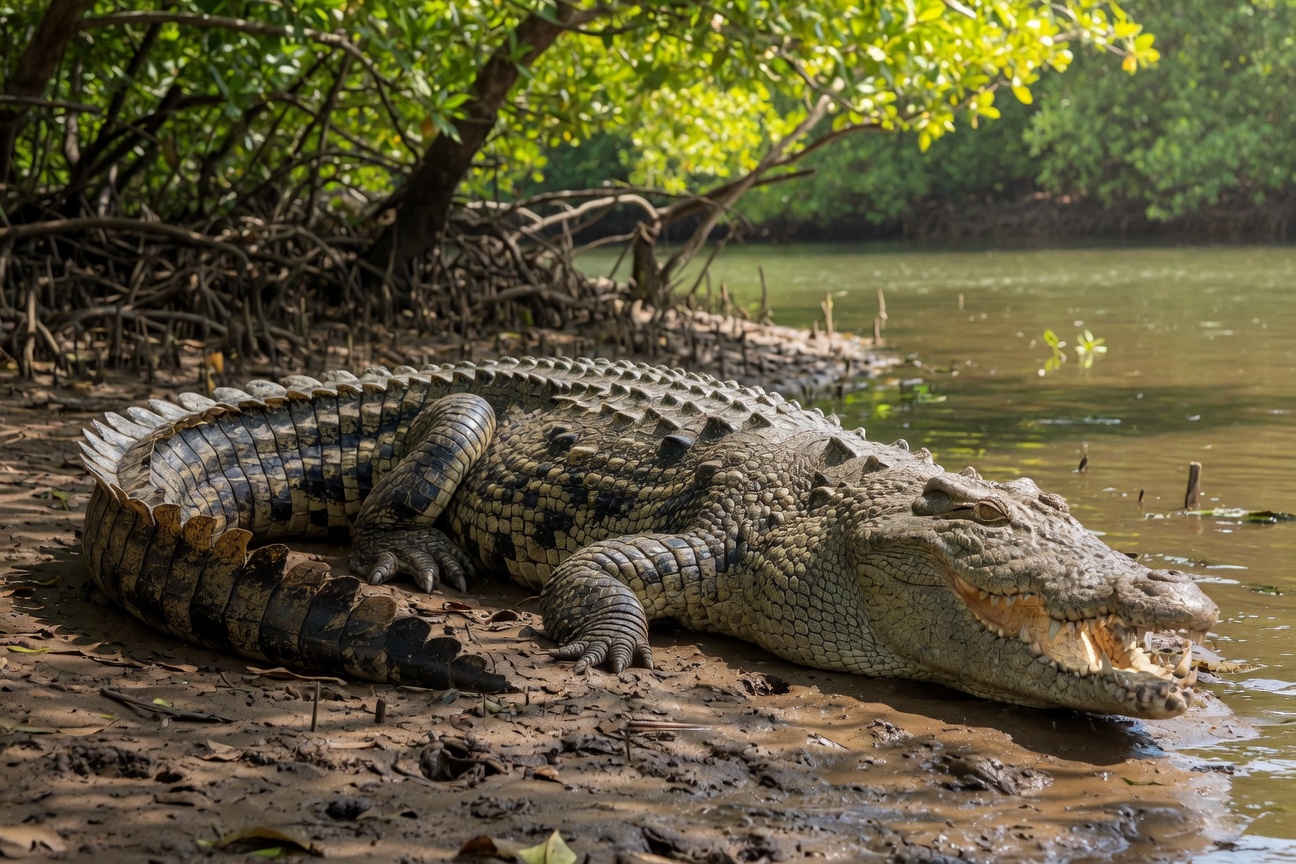
It is believed that the largest crocodile ever recorded in the world was 7 m or 23 ft long. It was caught in India in 1926.
Of all the amazing things about crocodiles, their size stands out the most. There are many species, and they vary enormously. At the small end, the dwarf crocodile seldom grows beyond 1.5 m (5 ft). At the other extreme, the saltwater crocodile reaches 4-5.5 m (13-18 ft) at full growth. The second largest living species is the Nile crocodile, with an average length of 4-5 m.
While 4-5.5 m is the average for saltwater crocodiles, sightings of individuals measuring 6 m are relatively common in the wild. Even so, several sources claim the largest specimen ever measured a whopping 7 m or 23 ft. But is it possible for such a huge crocodile to exist?
The Size of the Largest Crocodile Ever Recorded
There are many claims of crocodiles measuring 7 m and more, but none of them have enough evidence to back them up. So we can't say for certain whether those allegedly enormous crocodiles were truly as large as claimed. One widely repeated story describes a crocodile measuring 10.1 m (33.1 ft) found dead in the Bay of Bengal in South Asia, but without concrete evidence, this is considered an exaggeration.
If a 7 m crocodile sounds astonishing, the extinct animals of the prehistoric past put that in perspective. If the fossil evidence is to be believed, the largest crocodile ever to inhabit the planet was Rhamphosuchus, estimated at 18 m (60 ft) long. Other ancient giant species included Deinosuchus, Sarcosuchus imperator, and Purussaurus, all with average lengths around 12 m (40 ft).
Based on Assumptions
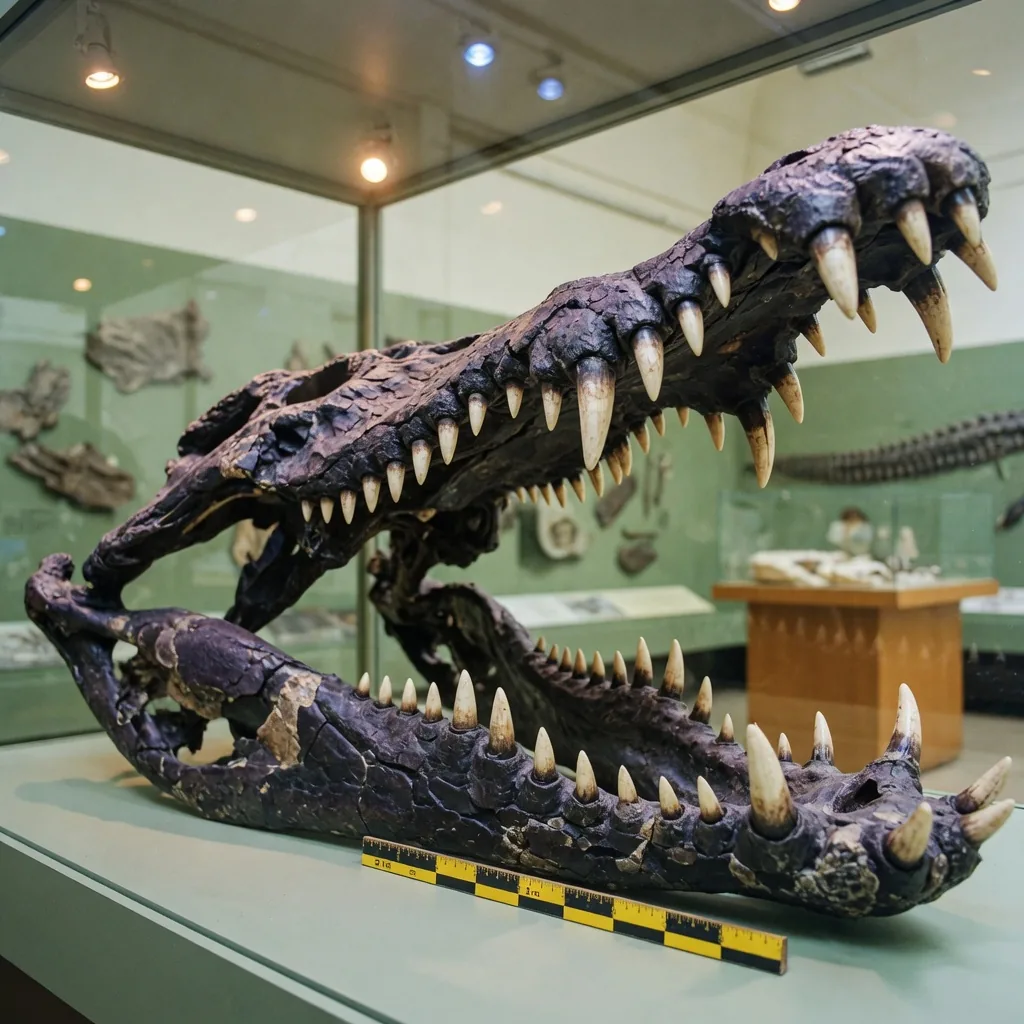
Even without a confirmed measurement, many wildlife experts believe the largest crocodile was 7 m (23 ft) long. It was found at the Bhitarkanika Mangroves, a mangrove wetland in India, in 1926. It is thought this giant was shot by the then-ruler of the region, who preserved its skull.
Because a crocodile's skull is about one-ninth the size of its body, experts used the recovered skull to estimate the animal's length. Critics point out that going by the skull kept by the Kanika Royal Family, the crocodile could have been anywhere between 6.1 and 7 m long, not necessarily the full 7 m. Even so, the Guinness Book of World Records has accepted it as the largest specimen ever recorded.

How Big Can Crocodiles Really Get? Take the Quiz!
5 quick questions about records, species, and prehistoric giants.
Based on Concrete Evidence
When only claims backed by hard evidence are considered, the record is shared by two crocodiles both measuring 6.20 m (20 ft). The first was shot by poachers on the banks of the River Mary in northern Australia in 1974. The second was killed on the banks of the River Fly in Papua New Guinea in 1983.
Interestingly, only the skin of the Papua New Guinea crocodile was measured. Since crocodile skins tend to underestimate actual length, it is thought this animal was closer to 6.3 m long. As for captivity, the record belongs to Yai, an Estuarine-Siamese hybrid held at the Samutprakarn Crocodile Farm and Zoo in Thailand. Yai measures 6 m (19 ft 8 in) in length and weighs approximately 2,456 lb.
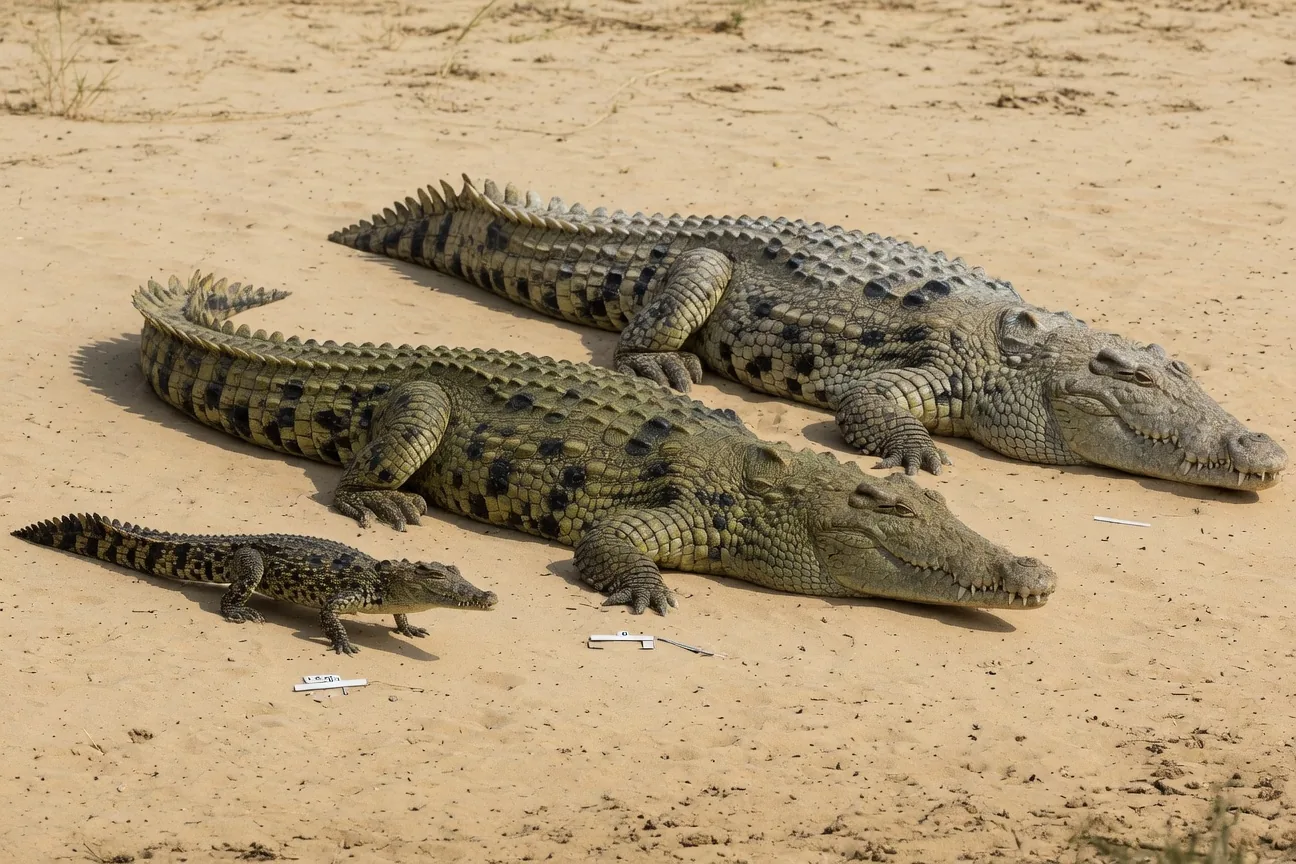
So what is the final verdict? If the Guinness Book of World Records is the authority, the largest crocodile based on skull evidence is the Bhitarkanika crocodile from India. But if actual measured specimens are required, the title goes to the two crocodiles found in Australia and Papua New Guinea, both confirmed at 6.20 m.
Frequently Asked Questions
What is the largest crocodile ever recorded?
A crocodile found at the Bhitarkanika Mangroves in India in 1926, estimated at 7 m (23 ft) long, is accepted by the Guinness Book of World Records as the largest ever.
What is the biggest crocodile confirmed by concrete measurements?
Two crocodiles both measuring 6.20 m (20 ft) (one shot in northern Australia in 1974 and one in Papua New Guinea in 1983) share the record based on actual measurements.
What was the largest prehistoric crocodile?
Rhamphosuchus is believed to have been the largest, with an estimated length of 18 m (60 ft). Other giant prehistoric species include Deinosuchus, Sarcosuchus imperator, and Purussaurus.
Explore More Animals
 Facts About the Largest Alligator Ever Recorded That'll Blow You AwayLouisiana has the highest population of alligators in the United States, and it is no surprise that the largest alligator ever recorded was also found here. An
 Where Do Crocodiles Live? Habitat, Species & Amazing FactsCrocodiles live near swamps, marshlands, brackish waters, lakes, and rivers across five continents. Meet all the species, learn where each one lives, and discov
 A List of the World's Biggest Snakes With Stunning PicturesMeet the biggest snakes on Earth, from the record-setting reticulated python (and Medusa, the longest in captivity) to the heavyweight green anaconda and the b
 Alligator vs. Crocodile: How to Tell Them ApartAlligator or crocodile? Learn the quick clues (snout shape, teeth, color, and habitat) that tell these two reptiles apart, with a side-by-side chart, photos,

 Fun fact for today!A crocodile's skull is about one-ninth the length of its whole body, scientists can estimate total size just from the skull!