

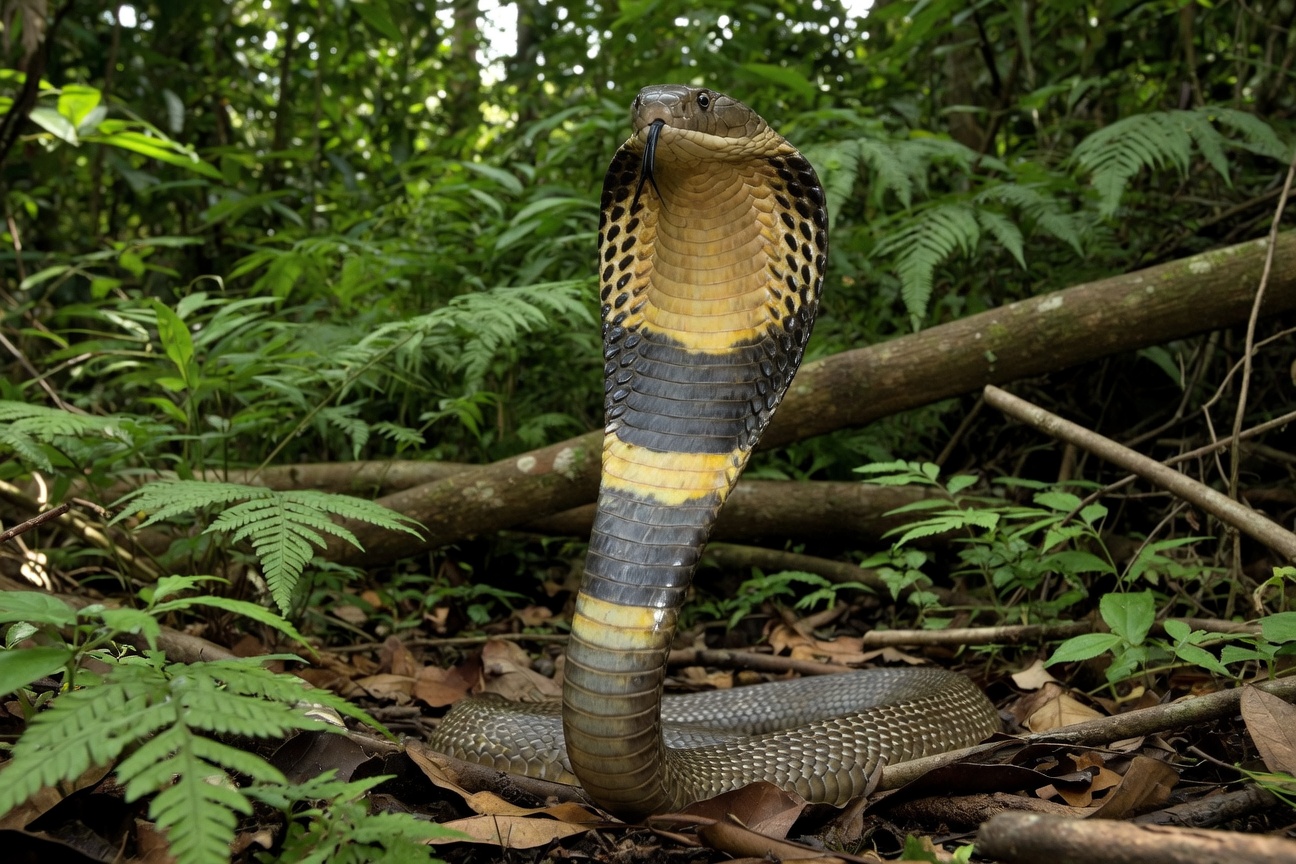
Snakes are found all over the world, except in Antarctica. About 2,900 species of snakes have been identified so far. They belong to the order Squamata and the suborder Serpentes. Evidence suggests that these legless, elongated reptiles evolved from either the burrowing lizard or the water lizard. Unlike other legless lizards, however, snakes lack movable eyelids and external ears. Their loosely jointed skulls, overlapping scales, and flexible lower jaw for swallowing prey whole are some of their most distinctive traits.
Snake Life Cycle
Sexual dimorphism (obvious physical differences between males and females) is almost absent in snakes. It is very difficult to tell a male snake from a female by looks alone. The mating season varies depending on climate. In colder regions, snakes mate in spring. In tropical regions, they can mate at any time of year.
Females release pheromones as they move, leaving a chemical trail that attracts males. A male that picks up the signal will follow the female for courtship. Only very rarely do male snakes fight one another for the chance to mate with a female.
During courtship, the male lifts the female's tail with his own to allow mating. He deposits sperm by inserting one of his two hemipenes (small paired organs on the underside of the tail) into the female's cloaca. In some species, the hemipenes have fine spines to help hold the pair together during mating. Mating can last from a few minutes to several hours. A female can mate with the same male or different males several times in a single season.
When it comes to reproduction, there are three types of snakes: oviparous (egg-laying), viviparous (live-bearing), and ovoviviparous (eggs hatch inside the mother). Most snakes lay eggs. The sections below focus on the oviparous snakes, whose life cycle follows three clear stages: eggs, juvenile snakes, and adult snakes.
Stage 1: Eggs
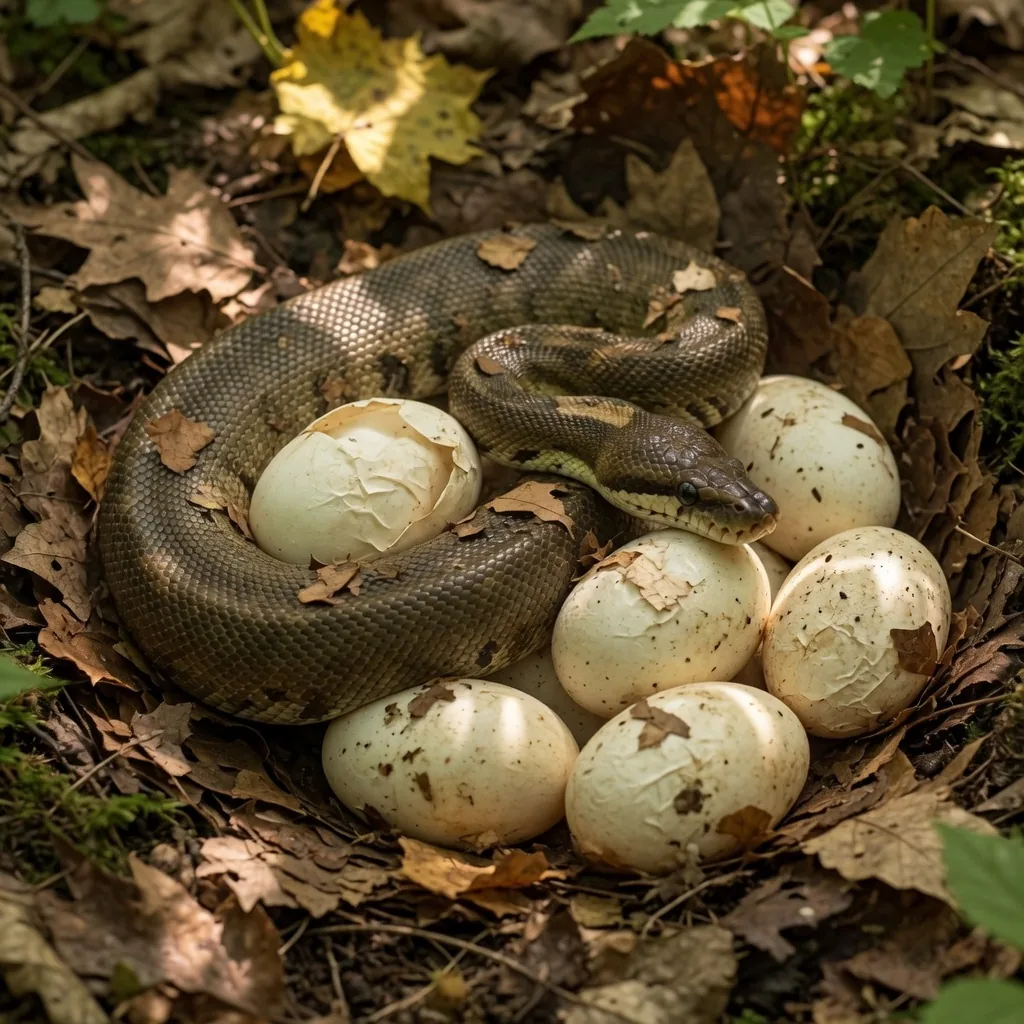
After mating, the female stores the sperm in her oviduct for about 1 to 2 months. She then produces large eggs: once they are released from the ovary, the stored sperm fertilises them in the oviduct. She lays the fertilised eggs (about 10 to 15 in number) in shallow holes or under rocks. The outer covering of a snake's egg is not hard like a bird's egg; instead it resembles soft leather. The female guards the eggs until they hatch.
Stage 2: Young Snakes
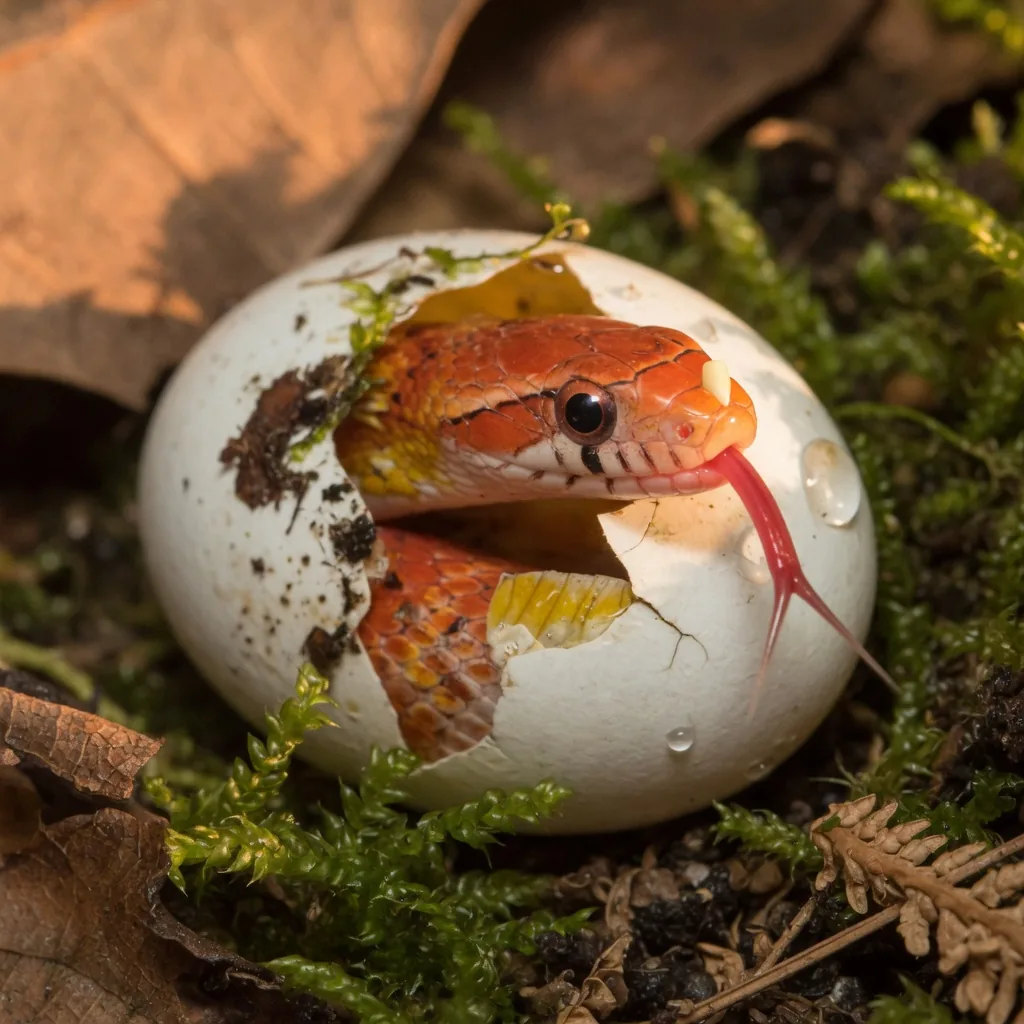
Some snake species speed up hatching by twitching their muscles to warm the eggs. The juvenile snake breaks out of the egg by biting through the shell with a tiny egg tooth on its snout. Until that moment, it gets all its nutrition from the egg yolk. A young snake is called a snakelet; one that has just hatched is called a hatchling. Baby snakes feed on small reptiles and rodents. A young snake may shed its skin up to 4 times a year.
Some female snakes can even lay eggs without fertilisation, a rare process called parthenogenesis.
Take the Snake Life Cycle Quiz!
5 quick questions. How much do you know about how snakes grow up?
Stage 3: Adult Snakes
After leaving the egg, juvenile snakes reach full maturity within 2 to 4 years. One of the clearest differences between a young snake and an older one is how often they shed their skin. A juvenile sheds about four times a year, while an adult sheds only once (or at most twice) per year. Unlike insects, where molting drives growth, skin shedding in snakes does not play a significant role in how large they get.
Types of Snakes
All snakes are carnivores. They eat a wide range of animals including insects, birds, frogs, snails, lizards, eggs, and even other snakes. They vary a great deal in size, color, and length. The smallest snakes are only about 10 cm long, while the huge anaconda can reach about 25 ft (7.6 m). Snakes are classified partly by the shape of their body and the number of scales on the head.
In general, snakes fall into two broad groups: venomous and non-venomous. Venomous snakes use their venom to kill prey and for self-defense. Among venomous snakes, those capable of biting and causing serious injury (or death) to humans are often called poisonous snakes.
Explore More Animals
 Mind-blowing Facts About Snakes That Will Leave You DumbfoundedThere's a lot more to snakes than most of us know. They are as intriguing as they are scary. An insight into the world of these fascinating reptiles proves why.
 Snake Eggs: Amazing Facts and Easy Identification TipsSnake eggs are leathery and oblong, quite unlike a bird's egg. Learn how snake eggs are laid and hatched, how to tell a snake egg from a bird egg, and simple t
 How Snakes Digest Their FoodSnakes can go weeks or even years without eating, and when they do eat, something amazing happens inside their bodies. Find out how snakes digest their food.
 Your Complete Guide to Snake IdentificationIdentify any snake by its length, girth, pupils, pattern, head shape, and tail plates, then learn the warning signs of a venomous one. A clear photo field guid

 Fun fact for today!Snake eggs have a soft, leathery shell, not a hard one like a chicken egg!