

Similar, but Different!
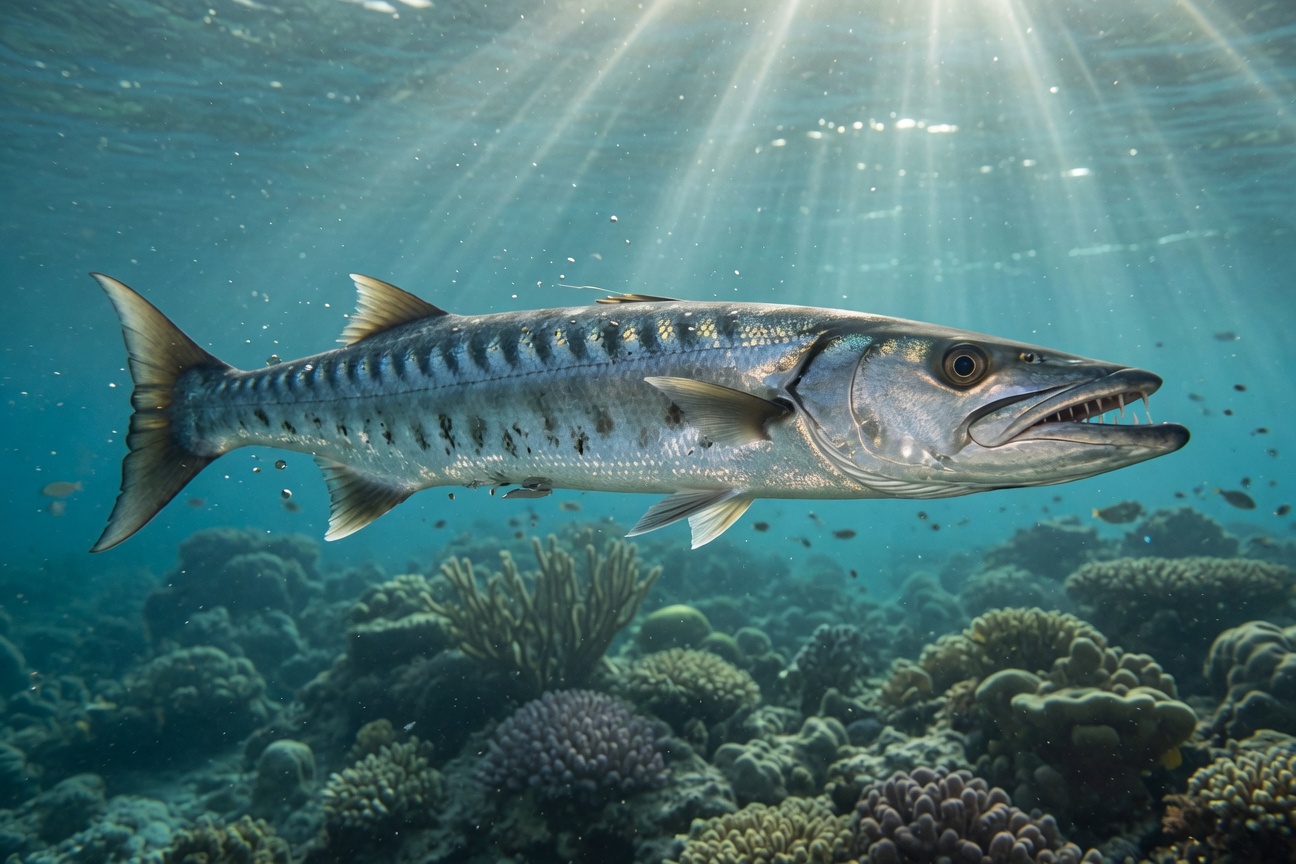
Except for a difference in color and size, all types of barracuda fish have the same elongated appearance. Every one of them is built the same way: a long, narrow body and long, pointy, powerful jaws.
The barracuda may have gotten its name from the Spanish word barraco, which means 'overlapping tooth'. It is found in oceans all around the world. Its natural habitat includes coastal regions, which are comparatively warmer. It prefers a habitat of tropical and subtropical oceans where food is plentiful. In fact, the number of barracuda fish found near coral reefs and ocean coasts is greater than the number found in deeper oceans.
The barracuda is a saltwater fish of the genus Sphyraena — the one and only genus in the family Sphyraenidae. It is a huge ray-finned fish with smooth scales and a long, narrow body. There are more than 20 known species of this genus. Some species, like the Great Barracuda, grow up to 7 feet long and 12 inches wide. All types of barracuda are elongated and look a lot like a pike, so they are sometimes also called 'Sea Pikes'.
What Does a Barracuda Look Like?
The barracuda fish (genus Sphyraena) is a saltwater bony fish that belongs to the family Sphyraenidae. Its habitat spreads across the tropical and sub-tropical oceans of the world. All species in this genus have an elongated body, with a large mouth and sharp, pointed teeth. And if you thought piranhas were the only fish with teeth, think again!
To spot these voracious predators of the deep, look for a large fish that is dark blue, green, or gray in color. It has a long, pointed head, a large mouth, and a lower jaw that sticks out. Some species have prominent dark stripes on both sides of their body.
Scientific Classification of Barracuda
| Kingdom | Animalia |
|---|---|
| Phylum | Chordata |
| Class | Actinopterygii |
| Order | Perciformes |
| Family | Sphyraenidae |
| Genus | Sphyraena |
Types of Barracuda Fish
A few barracuda species are especially well known. Here are five of them, each with its scientific name — remember, every barracuda's name begins with Sphyraena, because they all share that one genus.
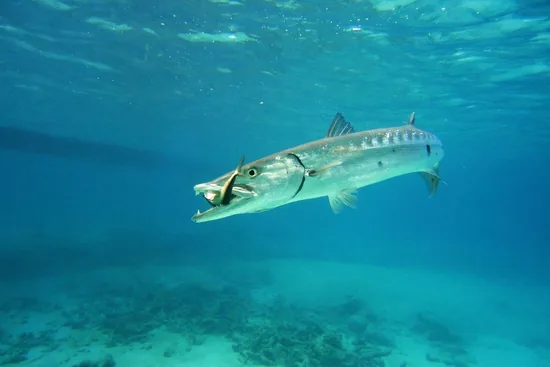
Great Barracuda (Sphyraena barracuda)
The giant of the group. The Great Barracuda is the largest type, and some grow up to 7 feet long and 12 inches wide. With its silver body and dark markings, it is the barracuda most divers picture when they hear the name.
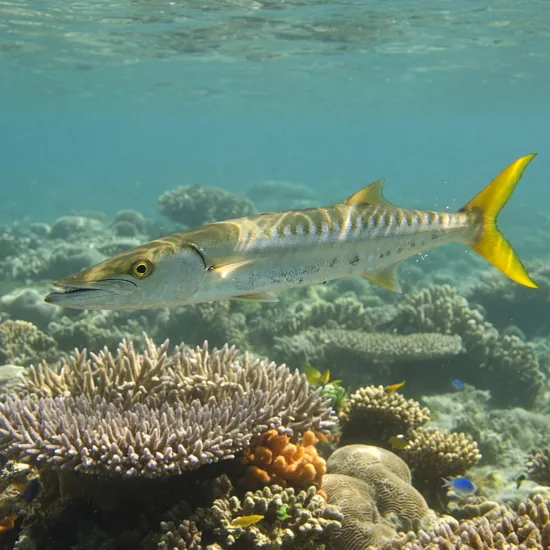
Yellowtail Barracuda (Sphyraena flavicauda)
A smaller, reef-loving barracuda named for its bright yellow tail. It often gathers in tidy schools over coral reefs in the Indian and Pacific Oceans.
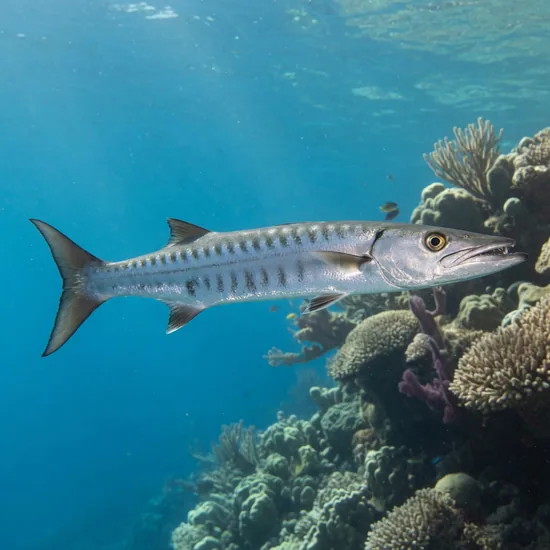
Blackfin Barracuda (Sphyraena qenie)
Easy to spot by its dark-edged tail and fins. Blackfin barracudas are famous for forming huge, spiralling schools by day, then splitting up to hunt alone at night.
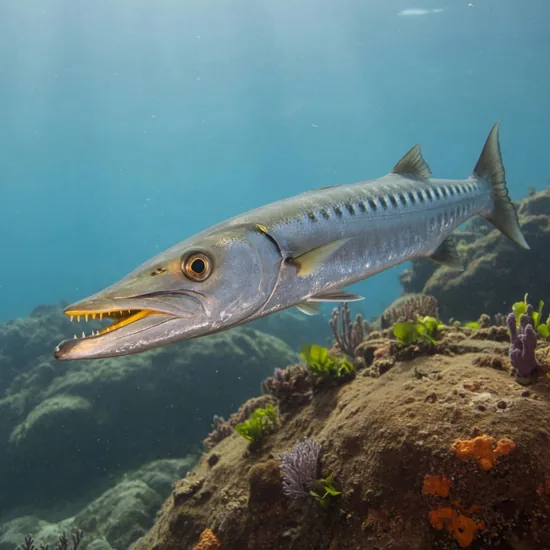
Yellowmouth Barracuda (Sphyraena viridensis)
Named for the yellow tint inside its mouth. This species lives in the warm waters of the eastern Atlantic and the Mediterranean Sea.
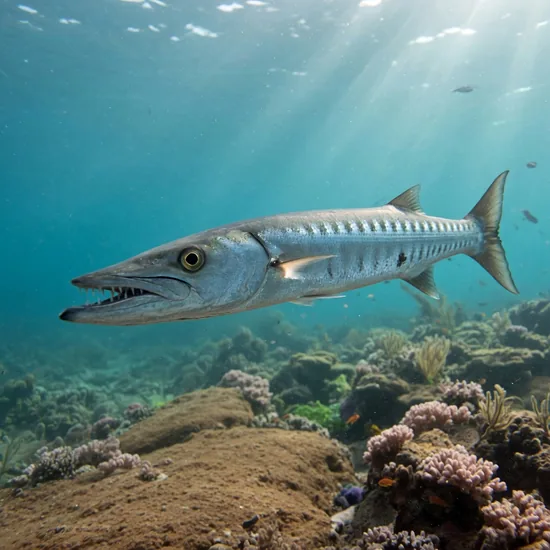
Mexican Barracuda (Sphyraena ensis)
A slender silver hunter of the eastern Pacific, found along the coasts from Mexico southward. Like its cousins, it is a fast, ambush-style predator.
A Body Built Like a Torpedo
The barracuda has a slender body shaped like a torpedo. This design makes it incredibly fast in the water.
It can also inflate and deflate its swim bladder. This lets the fish quickly move up and down, allowing it to swim through narrow gaps in coral reefs that other fish can't reach.
How the Barracuda Hunts
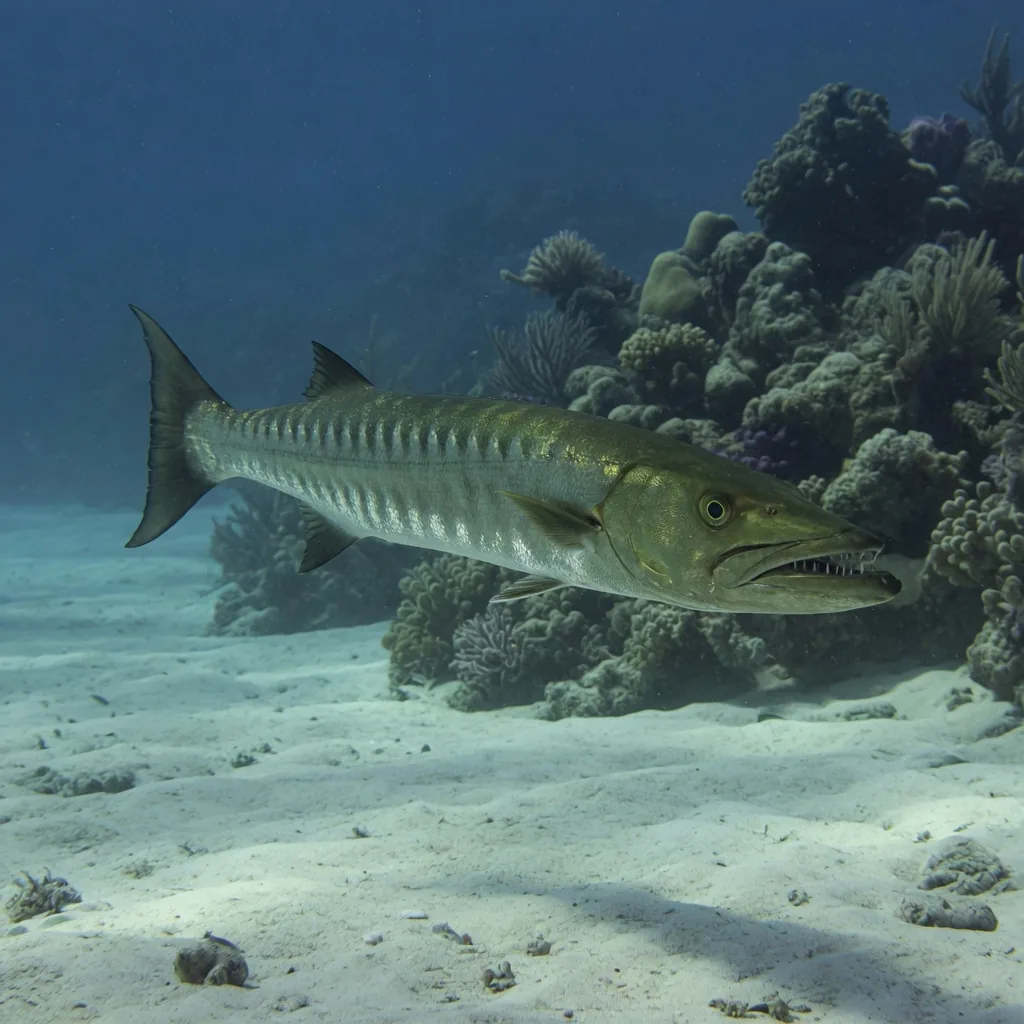
The barracuda is an opportunistic feeder and a fierce night-time hunter. It catches its prey mostly at night, by surprise, using sudden bursts of attack. It feeds mainly on different kinds of fish and other sea creatures. Although barracudas primarily hunt for their prey, they are also scavengers — they follow larger predators and eat after them.
Have you ever seen how lions and tigers hide in bushes, waiting to pounce on an unsuspecting animal? The barracuda uses very similar tactics. This large fish stays perfectly still and motionless for hours until a prey swims by. When it does, the barracuda attacks with lightning speed.
When darting toward prey, the great barracuda can reach speeds of up to 36 mph. Unlike most other fish that use their sense of smell to find prey, this fish relies on its sense of sight. And to make sure its prey doesn't slip away once seized, the barracuda has a few teeth that point backwards.
Living Alone, Growing Up Together
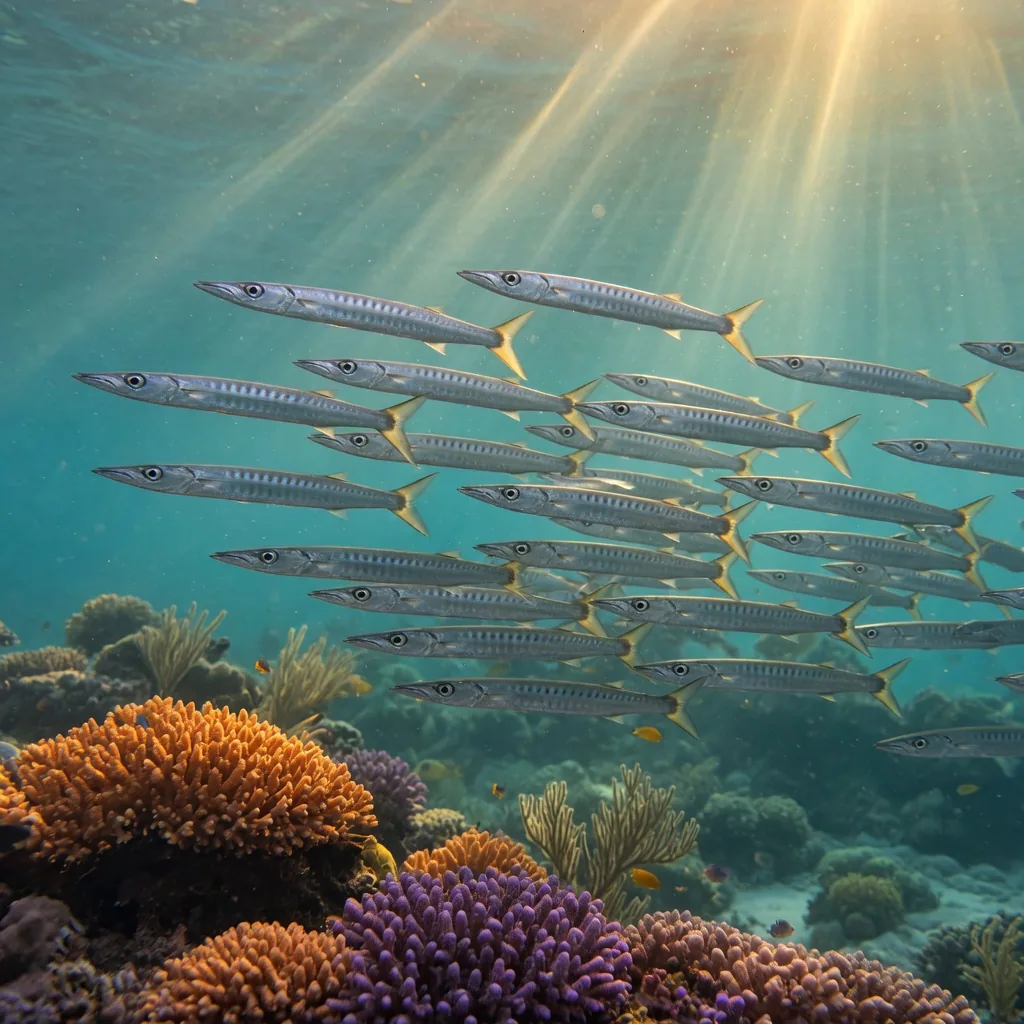
An adult barracuda lives alone, except during the mating season. Young barracuda fish swim together in groups called a 'school of barracudas', or a 'battery of barracudas'. Adult barracudas are solitary creatures, while juveniles move together in groups known as a school. A group of adult barracudas has its own special name — it's called a battery.
Spawning — the release of eggs into the water by the female — mainly happens in spring. The eggs are fertilized externally. A female barracuda can release 3,000 to 5,000 eggs at a single time.
Where Young Barracudas Live
Young barracudas love to hang out around coral reefs, mangroves, and seagrass. You'd rarely encounter a barracuda in the open ocean. Juveniles also like brackish water — a mix of fresh and salt water.
Juvenile barracudas can change their color to blend in with their surroundings. This smart trick makes it hard for predators to spot them.
Take the Tiger of the Sea Quiz!
9 quick questions. Find out how much you really know about the barracuda.
Size, Weight, and Lifespan
Some species of barracudas, like the great barracuda (Sphyraena barracuda), can grow as long as 2.1 meters or 6.9 feet in length. Barracudas can weigh up to 100 pounds.
The great barracuda has a minimum lifespan of 14 years — very high compared to most other species of fish. You can even calculate a barracuda's age by the number of rings on its scales. Every year the barracuda lives, it gets a new ring added.
Frequently Asked Questions
How many species of barracuda are there?
There are more than 20 known species of barracuda, and all of them belong to a single genus called Sphyraena.
Why is the barracuda called the 'Tiger of the Sea'?
The barracuda earns the nickname from its beastly appearance and its fierce, ambush-style hunting behavior, along with its sharp, pointed teeth. It is also sometimes called a 'Sea Pike'.
What is the largest type of barracuda?
The Great Barracuda (Sphyraena barracuda) is the largest. Some grow up to 7 feet long and 12 inches wide, as long as 2.1 meters (6.9 feet), and can weigh up to 100 pounds.
How fast can a barracuda swim?
When darting toward prey, the great barracuda can reach speeds of up to 36 mph.
How long do barracudas live?
The great barracuda has a minimum lifespan of 14 years, which is very high compared to most other species of fish. You can even tell a barracuda's age by counting the rings on its scales.
Where do barracudas live?
Barracudas are found in oceans all around the world, but they prefer warm tropical and subtropical waters. More are found near coral reefs and coasts than in the deep ocean. Young barracudas like coral reefs, mangroves, seagrass and brackish water.
Are barracudas dangerous to humans?
Contrary to popular belief, the barracuda is not a real threat to humans, and attacks on divers and snorkelers are very rare. Even so, its strong jaw and forward- and backward-facing teeth mean snorkelers and deep-sea divers should be careful around it.
More Surprising Barracuda Facts
A barracuda has no eyelids and moves slowly when asleep. There is no known way to tell a male and a female barracuda apart just by looking at them.
Barracudas sometimes feed on juveniles of their own species — which makes them cannibalistic. The barracuda also has a few natural predators of its own: sharks, dolphins, and killer whales all feed on them.
Due to their large size and aggressive nature, barracudas are also popular as game fish. Barracudas tend to get attracted to shiny and gleaming objects, which is why snorkelers and scuba divers are advised to remove their jewelry and watches before entering the water.
Eating a barracuda can result in ciguatera poisoning. This is caused by ciguatoxins that build up in the tissues of large fish found in tropical seas. These toxins come from marine dinoflagellates — tiny organisms eaten by small fish. Since barracudas are high up in the food chain, their tissues hold very high amounts of these toxins.
Other Types of Barracuda Fish
Those five are just the start. Below is the wider family — each common name next to its scientific name. A few species have no common name yet, so they are simply marked "NA".
Common Name vs. Scientific Name — Genus Sphyraena
Many more speciesEvery barracuda shares the genus name Sphyraena. Here is the rest of the list, grouped to make it easy to read.
- Australian Barracuda — Sphyraena novaehollandiae
- Bigeye Barracuda — Sphyraena forsteri
- European Barracuda — Sphyraena sphyraena
- Guachanche Barracuda — Sphyraena guachancho
- Guinean Barracuda — Sphyraena afra
- Heller's Barracuda — Sphyraena helleri
- Japanese Barracuda — Sphyraena japonica
- Lucas Barracuda — Sphyraena lucasana
- Northern Sennet — Sphyraena borealis
- Obtuse Barracuda — Sphyraena obtusata
- Pacific Barracuda — Sphyraena argentea
- Pelican Barracuda — Sphyraena idiastes
- Pickhandle Barracuda — Sphyraena jello
- Red Barracuda — Sphyraena pinguis
- Sawtooth Barracuda — Sphyraena putnamae
- Sharpfin Barracuda — Sphyraena acutipinnis
- Southern Sennet — Sphyraena picudilla
- Yellowstripe Barracuda — Sphyraena chrysotaenia
- NA — Sphyraena iburiensis
- NA — Sphyraena intermedia
- NA — Sphyraena tome
- NA — Sphyraena waitii
Explore More Animals
 Types of FishThere are over 32,000 species of fish, more than all other vertebrates combined. Discover how fish are classified by species and habitat, plus the fish we keep
 A Visual Guide on How to Identify Various Types of Snapper FishSnappers are one of the most popular fish in the seafood industry. Learn how to identify all 17 commonly known snapper varieties by their colors, fins, stripes,
 Types of Snakes With PicturesMeet every type of snake, from the deadliest venom-injecting cobras and vipers to record-breaking constrictors, tiny thread snakes, and ocean-going sea snakes.
 Habitat of a Tiger Shark: Where Does It Live?The tiger shark lives in warm tropical and subtropical seas worldwide. Discover its habitat, range, physical features, diet, and reproduction, plus a quiz!
A Predator to Respect
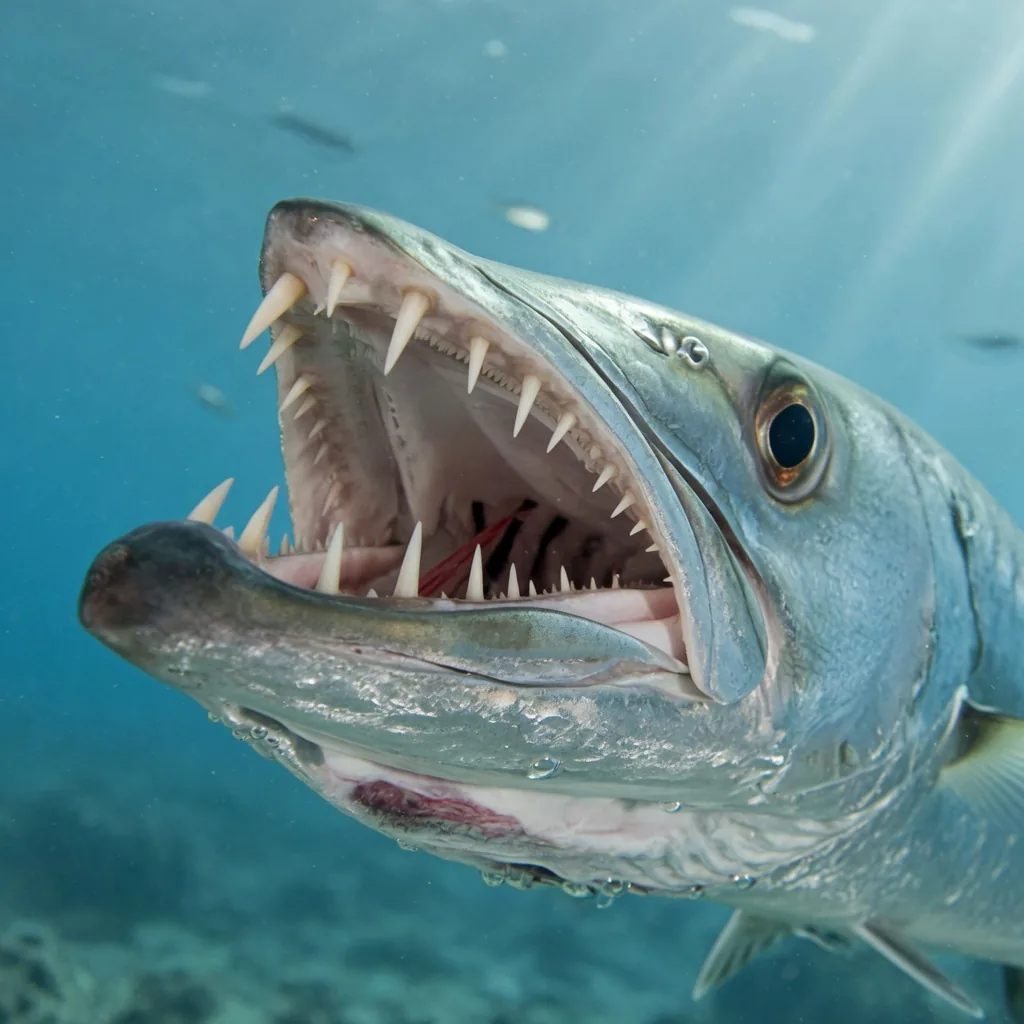
A barracuda fish is considered one of the most dangerous predators underwater. Its strong jaw, and the peculiar way its teeth are placed — facing both forward and backward — stop its prey from escaping its strong and painful hold. This is one fish that snorkelers and deep-sea divers need to be careful of.

 Fun fact for today!A barracuda can launch at its prey in a short, explosive burst of speed — reaching around 35 miles per hour, faster than any car is allowed to drive in town!