

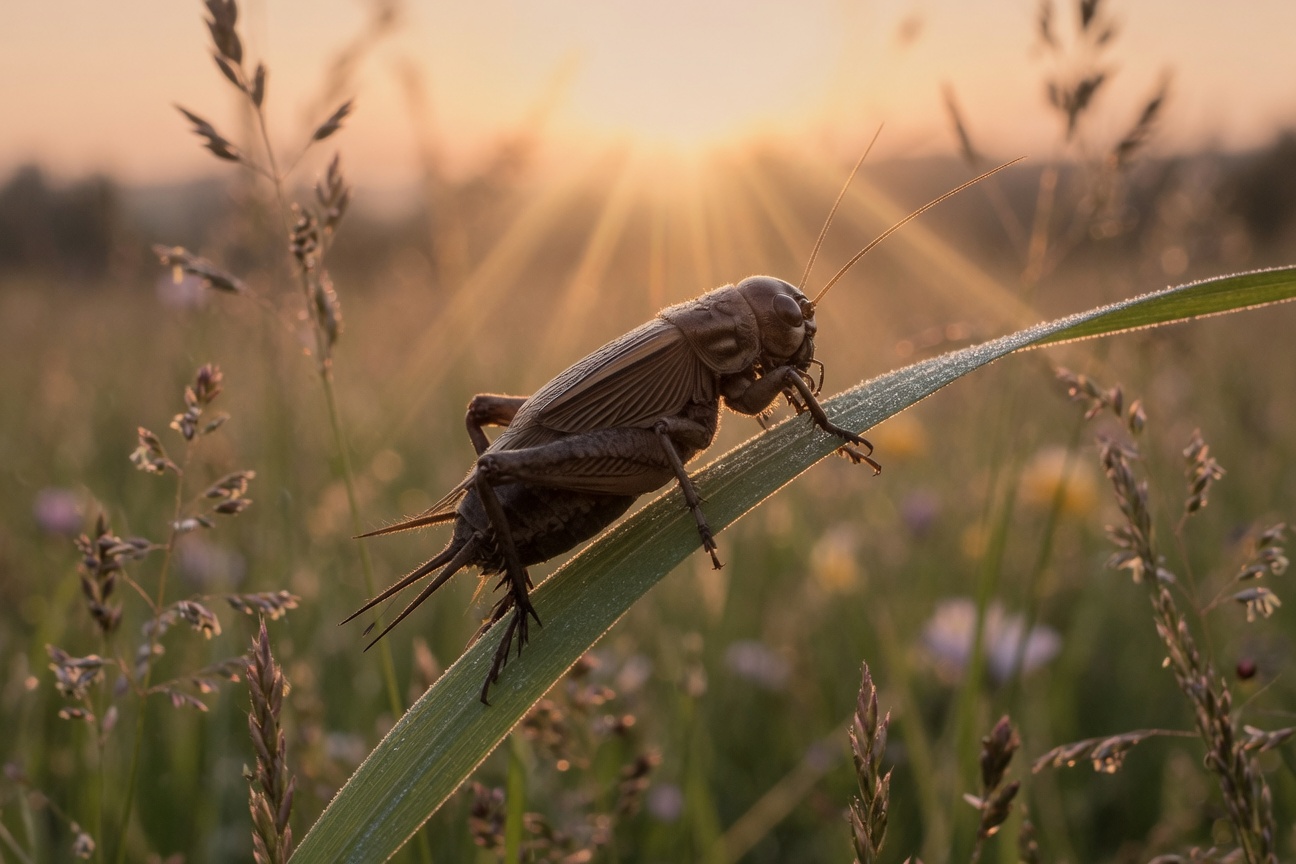
Crickets in Folklore and Culture
Crickets are a part of folklore and mythology in many cultures. In Brazil, the singing of crickets is believed to be a sign of impending rains. In Barbados, a cricket is not killed or evicted if it chirps inside a house, as it is believed that a loud cricket means money is coming in. In some cultures, a cricket announces death, and so it is killed if it chirps in a house. In some countries in Asia, crickets are believed to bring good luck. They are often kept in cages as house pets.
Classification
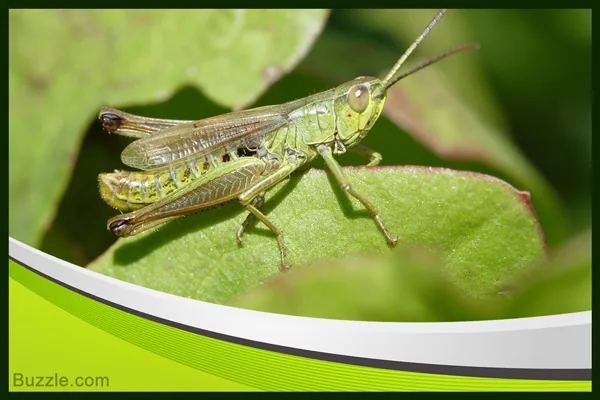
Crickets belong to the animal kingdom (Animalia), phylum Arthropoda, class Insecta, order Orthoptera, superfamily Grylloidea, and family Gryllidae. Also known as "true crickets," they have flattened bodies and long antennae on their head. These antennae are called feelers. Their overall appearance is somewhat similar to grasshoppers.
Description

Length varies from 15mm to 26mm (1 inch). The common house cricket is not bigger than about ½ inch. The field cricket is on an average 1 inch in length.
Crickets are related to the grasshopper and katydid, but do not belong to the same family. They have good vision and excellent hearing ability. Their compound eyes let them see in many different directions at the same time.
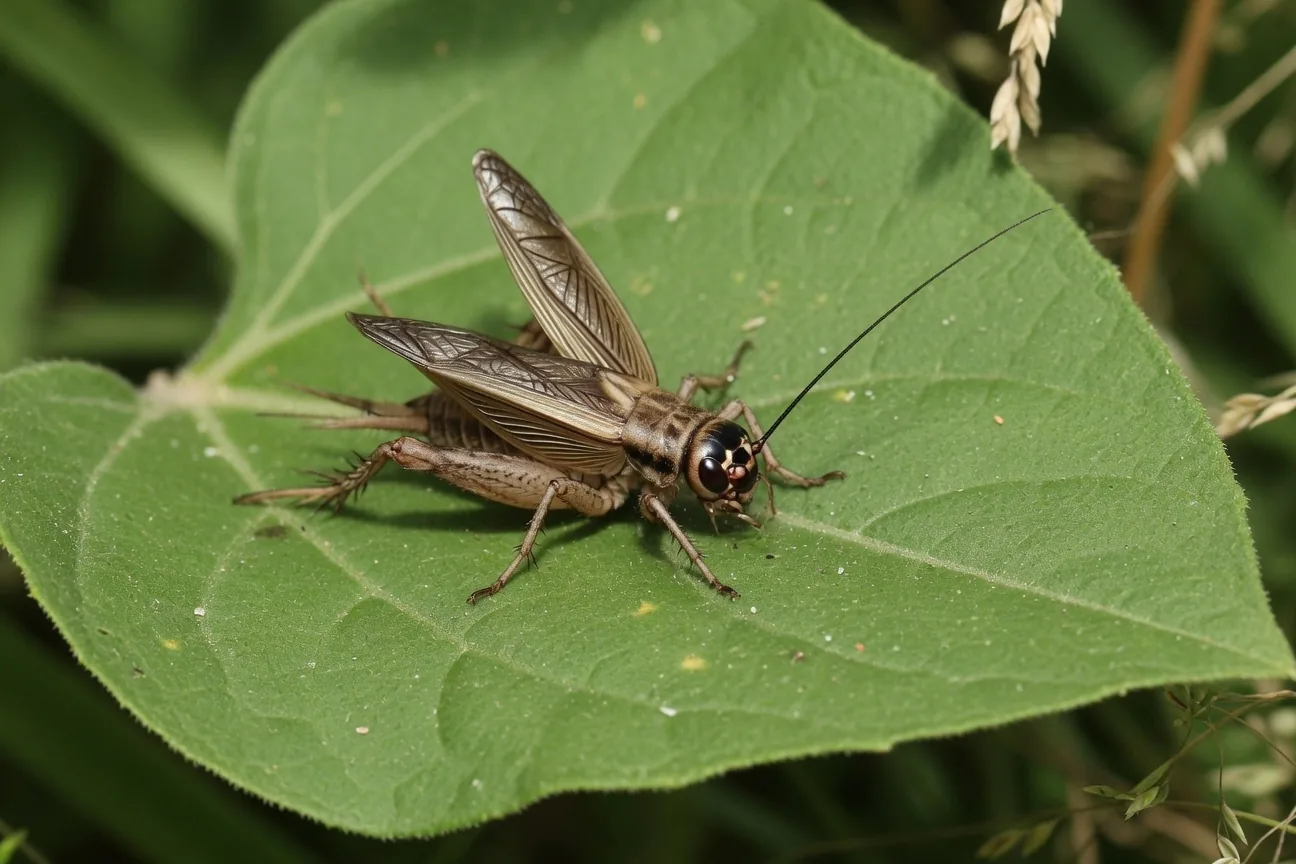
Crickets have visible external wings, but most species do not fly. They are usually black in color, though they are also found in red, brown, and green. Their front wings vary in length depending on the species and cover the abdomen entirely or partially.
Young crickets look like the adults but do not have fully developed wings. Only after shedding the skin several times do the young ones grow new wings.
Diet

The primary diet of crickets includes decaying plant material, fungi, and some seedling plants. Some species of crickets are also known to eat their own dead and will predate on other weak crickets when there are no other sources of food available.
Habitat

Crickets survive in almost every type of environment, from grasslands, forests, and bogs to seashores and marshes. During the warm summer months they are mostly found in fields or under debris. Most species are nocturnal. Crickets are found throughout the world.
The black field crickets are the most common variety in the United States. Only male crickets chirp, and they mainly do so to attract a female mate.
The Science of Chirping
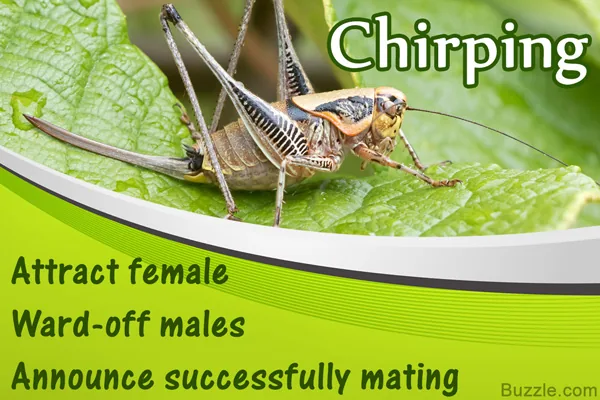
Male crickets make their chirping noise by rubbing their wings together. This sound-making action is called stridulation. Male crickets chirp to attract females and repel other males. This is known as the calling song and is very loud.
Male crickets also chirp when a female cricket is nearby, this is known as the courting song. After successfully mating, crickets chirp a copulatory song.
A cricket's frequency of chirping varies according to temperature. The higher the temperature, the higher the chirp rate. It is also believed that one can calculate the exact temperature of the environment by counting the number of chirps.
Take the Cricket Facts Quiz!
5 quick questions about one of nature's most musical insects.
Interesting Facts about Crickets
Crickets in the wild have a lifespan of less than a year. Cricket's ears are located on the knees of their front legs. Crickets are popular as a live food source for pets, they are often dusted with a mineral supplement powder to ensure complete nutrition.
Crickets are also enjoyed by humans in Cambodia and Vietnam and are considered a delicacy. Female crickets can lay up to 200 eggs at a time.
The most famous cricket characters in popular culture are Jiminy Cricket and Cri-kee, from the Disney movies Pinocchio and Mulan. Some species of crickets are known to bite humans, they have relatively powerful jaws. Predators of crickets include the tortoise, salamander, frogs, lizards, and spiders.
Frequently Asked Questions
What sound does a cricket make and how?
Only male crickets chirp, by rubbing their wings together, a process called stridulation.
Where are cricket ears located?
Cricket's ears are located on the knees of their front legs.
How many species of crickets are there?
Crickets are part of the family Gryllidae which has approximately 900 species.
Can crickets tell the temperature?
Yes, cricket chirp rate varies with temperature. The higher the temperature, the higher the chirp rate.
Role in the Ecosystem
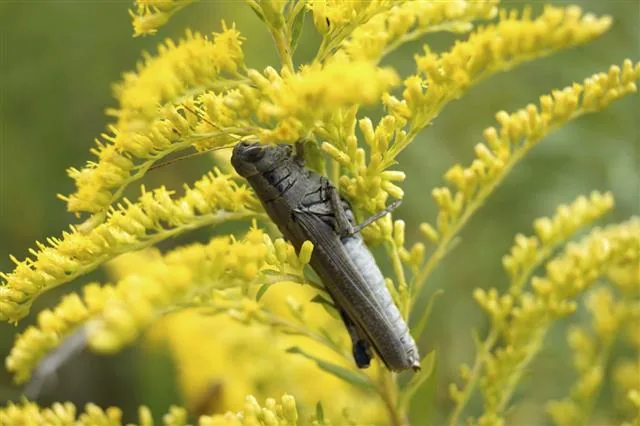
Like all living organisms, crickets play an important role in maintaining the balance of the ecosystem. They break down plant material, renewing soil minerals. They are also an important source of food for other animals.
Crickets can also have a negative impact on the ecosystem. They can injure seedlings, and large numbers of crickets can be very destructive to crops and gardens. Black field crickets are especially known for this, and of course, the chirping can be quite loud and irritating!
Explore More Animals
 Why Do Crickets Chirp? These Reasons Will Simply Amaze You!Chirping is an essential part of a cricket's communication repertoire. Although the sound is very common, especially in rural areas, very few people actually kn
 What Do Crickets Eat? The Answer Will Surprise You for SureCrickets are insects that are very famous for the chirping sound that they make. This article provides some information on what crickets eat.
 Grasshoppers: Habitat, Facts, Anatomy & Life CycleThe complete kids' guide to grasshoppers: where they live, what they eat, their 5 eyes and no ears, super-tough mandibles, record-breaking jumps, singing, and w
 Insanely Interesting Facts About the Camel CricketCamel crickets are known to invade houses and eat up fabrics and houseplants. AnimalSake will give you some interesting camel cricket facts.

 Fun fact for today!Crickets can be used as natural thermometers, count their chirps to estimate the temperature!