

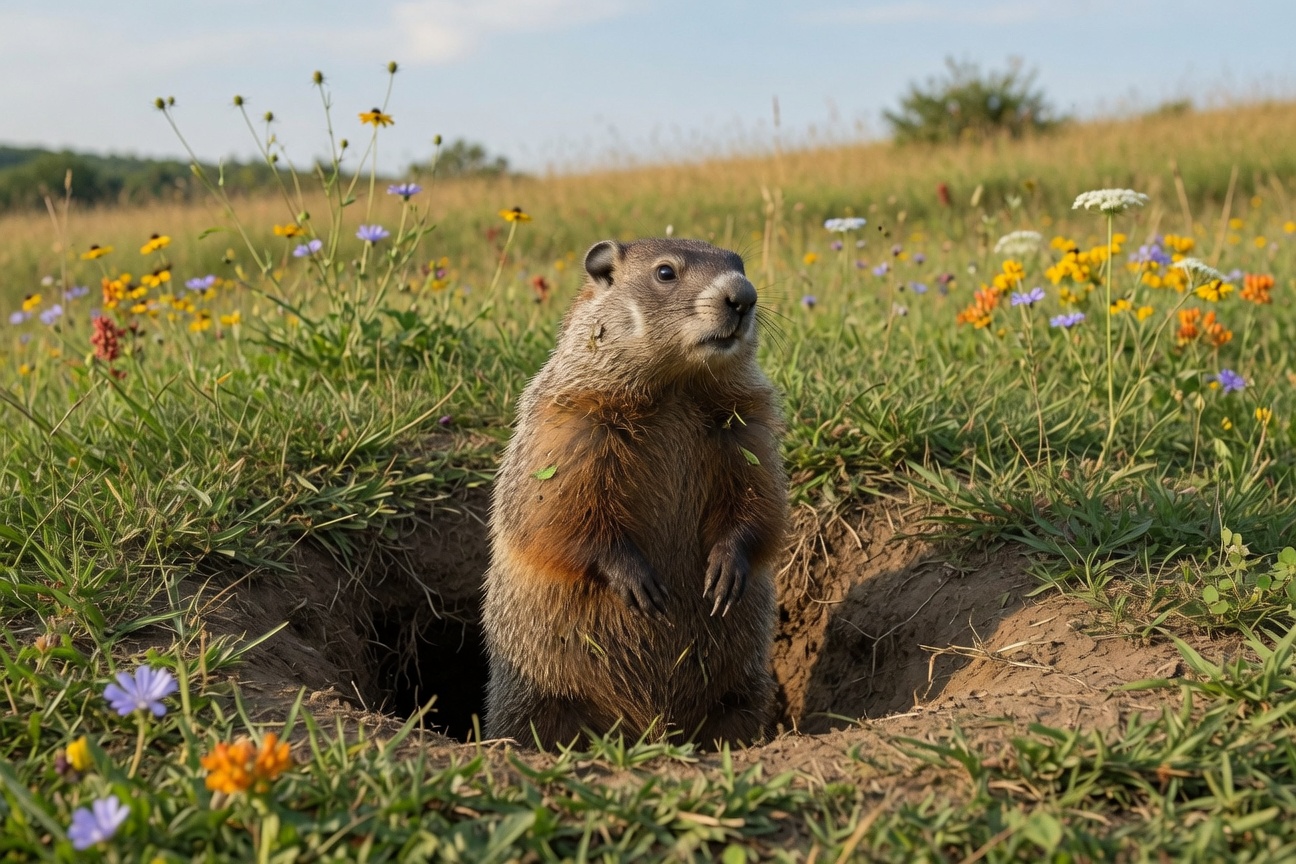
Groundhogs are land-dwelling rodents that live in burrows during winter. They are at home in rocky and mountainous areas. A groundhog's body clock changes with the seasons. Its body produces more melatonin (a sleep-causing hormone) as winter approaches, and that same hormone tells the groundhog when to wake up again in spring. The whole life cycle of this animal is very interesting, and the facts below should prove to be just as fascinating.
Groundhogs may be small creatures, but they are surprisingly influential. They have a special day dedicated to them (Groundhog Day), a band named after them (The Groundhogs), a movie made about them (again, Groundhog Day), and countless songs written about them as well!
Body and Appearance

Groundhogs are the only members of the Sciuridae family with curved spines. They are at home both on land and in water.
They are good swimmers as well as excellent tree climbers. Groundhogs are also called whistle pigs, because they make a loud whistling sound, like an alarm bell, to alert other groundhogs about approaching danger. They have four toes on their feet and five on the back.
They can grow to a maximum of 2 feet when measured from head to toe and weigh between 6 - 14 pounds. They have grayish brown fur and bushy tails, which are pretty short compared to the rest of their body.
They generally have two layers of fur, the outer layer for waterproofing, and the inner layer for maintaining body heat. They dig their burrows with the help of their powerful limbs and thick claws.
Burrow Engineering
Groundhogs are expert diggers. They can remove up to seven hundred pounds of soil and dig burrows almost 40 feet long. The burrows have many chambers and more than one entrance. If a predator comes along, the groundhog has plenty of hiding spots, and another exit to escape from. They refuse to be caught!

Deep Hibernation
Groundhogs are herbivores. They eat plants like grass, clover, and alfalfa, as well as strawberries, peas, pansies, and garden beans. To stay warm in winter, they dig burrows below the frost line, where the temperature stays stable. These are called winter burrows, and they are specially made for hibernating in.
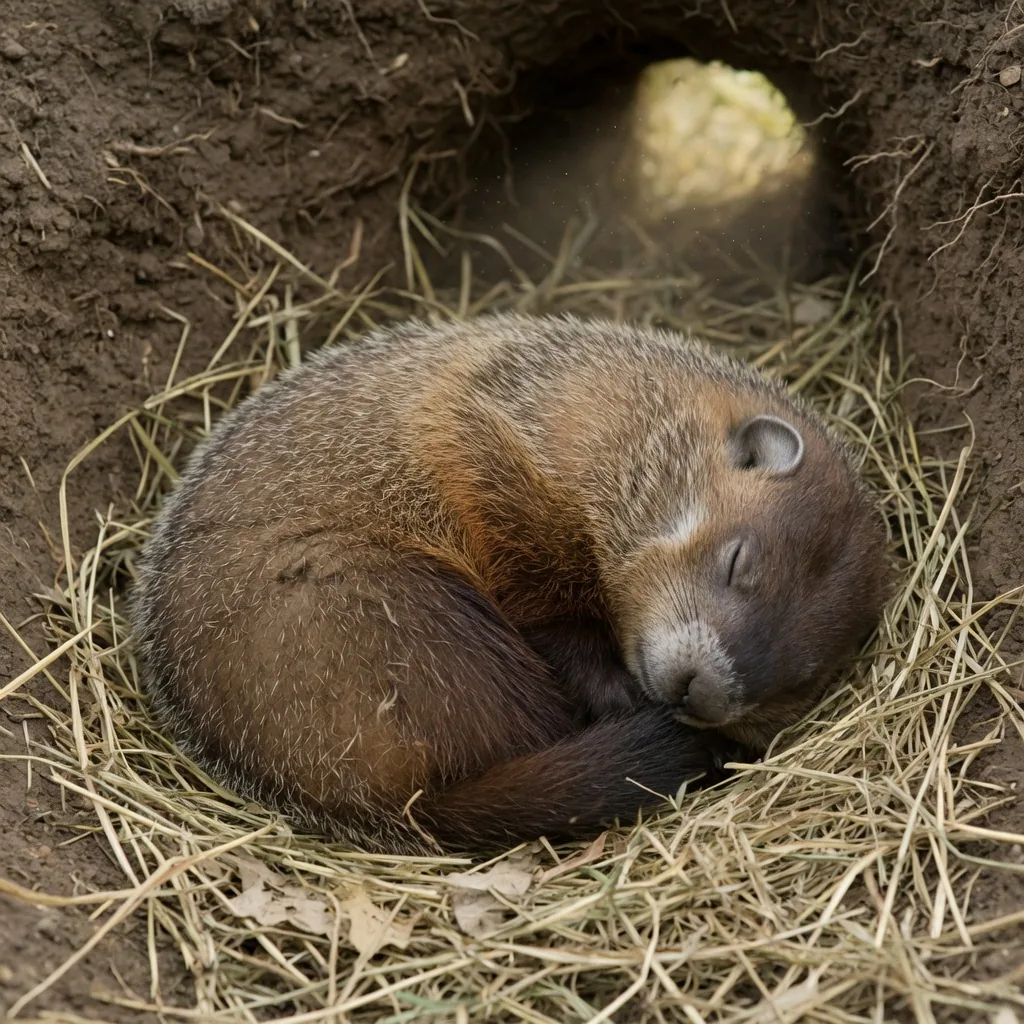
What happens inside a hibernating groundhog is remarkable. Its body temperature drops from 99°F to approximately 40°F. Its heartbeat slows from 80 beats per minute to just 4-5 beats per minute. And its breathing drops from 12 breaths a minute to as little as 1 breath per 5 minutes! That's just a whisker away from death!
Take the Groundhog Facts Quiz!
5 quick questions. How much do you really know about these amazing diggers?
The breeding season runs from March to mid or late April, sometimes right after hibernation ends. The gestation period is about 28 to 32 days. The male groundhog leaves before the young are born, and the little ones are raised by the mother alone for around 5-6 weeks.
Domestic groundhogs live between 10-14 years, while wild groundhogs live for 4-6 years. A groundhog's front teeth grow throughout its life. They are kept to a good size by the constant gnawing.
Groundhogs binge eat during the summer and put on a lot of weight. That stored fat gets them through the long months of hibernation. The groundhog loses more than half its body weight during hibernation!
Groundhogs are naturally aggressive animals. It takes a lot of patience and training to teach them any social skills, and even then there is no guarantee they will behave. They are solitary creatures and usually find mates only for reproduction. Groundhogs are very particular about cleanliness. They line their sleeping areas with fresh grass frequently, and old, smelly grass is not tolerated. They also molt annually, shedding their old coat and growing a brand new one!
Teeth, Diet & Habits


Groundhog Day & Famous Groundhogs

The most famous groundhog is Punxsutawney Phil, who lives with his wife Phyllis. It is believed that he is given an elixir which prolongs his life by 7 years. He has been prognosticating for more than 120 years! He has been given a pretty long title - Punxsutawney Phil, Seer of Seers, Sage of Sages, Prognosticator of Prognosticators and Weather Prophet Extraordinaire! It was bestowed on him in 1886!
Archaeology, Water & Farmers

The archeological Ufferman Site in Ohio, U.S., was discovered due to the extensive diggings of the local groundhogs! These creatures have unknowingly unearthed many human and animal remains, as well as a few artifacts. Groundhogs prefer to eat to keep themselves hydrated! That's right. Rather than drink water, they feed on leafy plant matter for getting water!
Groundhogs are not loved by farmers, since they are known to destroy crops. Besides, many a farmer has complained that his bull or horse fractured a leg because they stepped into a groundhog burrow. Also, another problem is their ability to reproduce rapidly, which causes their population to increase almost exponentially. Due to this reason, groundhogs have become a nuisance to many households.
Explore More Animals
 What Do Groundhogs Eat? Not What You ThoughtGroundhogs eat one-third of their body weight every day! Find out what plants, vegetables, and flowers they love, and why they eat so much in summer.
 Animals That Hibernate: The Complete Kids' Guide to Winter SleepThe complete guide to animals that hibernate, bears, bats, frogs, snakes, bees and more. Learn how winter sleep works inside the body, and how hibernation diff
 Facts About SquirrelsSquirrels are small tree animals, with a very cute bushy tail and sharp teeth. They are fast, really intelligent, and always alert! It is fun to watch them and
 26 Burrowing Animals (With Pictures)Meet 26 burrowing animals with pictures, from foxes, meerkats and aardvarks to tortoises, tarantulas and toads. See how each one digs, and the dens they call ho


 Fun fact for today!A groundhog can move up to 700 pounds of soil when digging a burrow, and the tunnel can stretch nearly 40 feet long!