

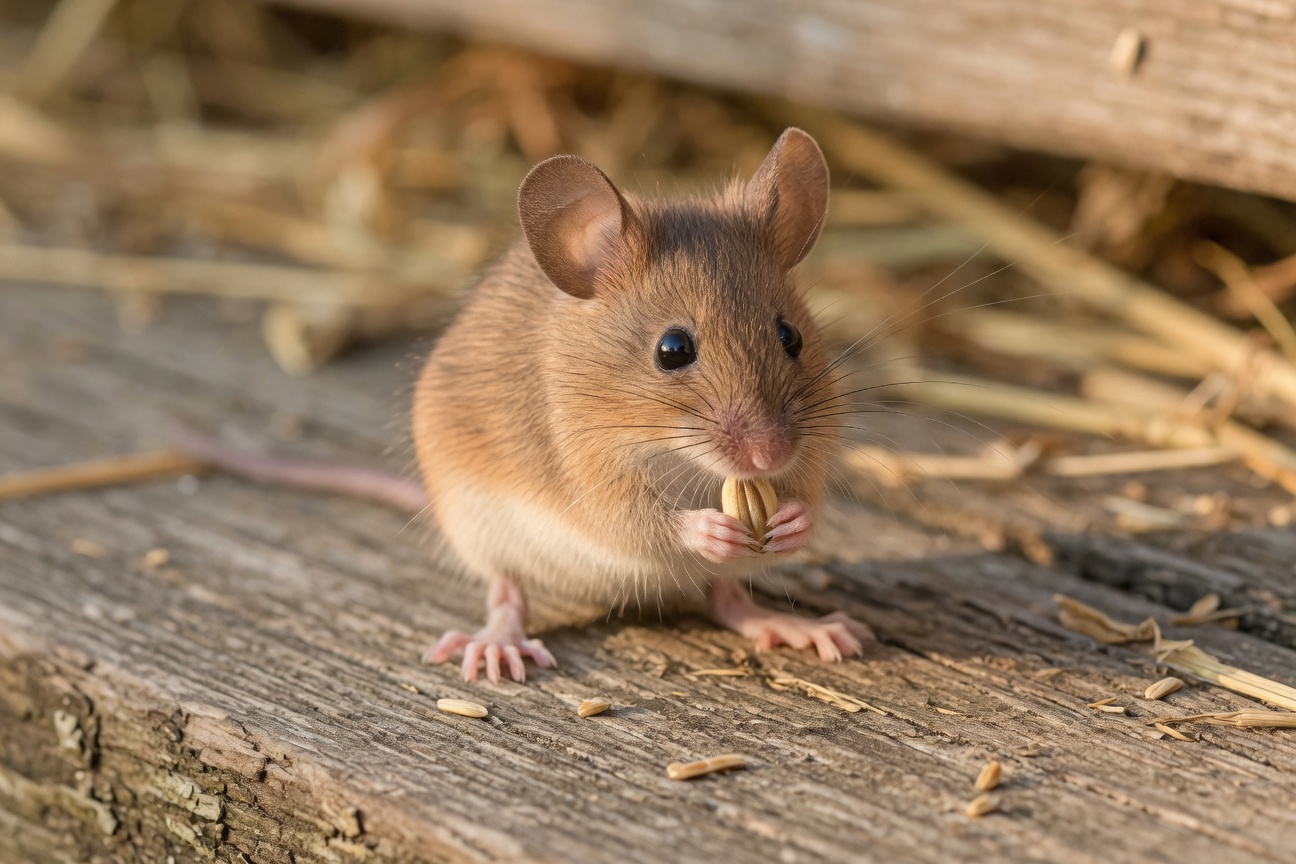
People often tend to confuse rats with mice. Some even think they are the same creatures. However, this isn't so. The confusion is understandable, since there are a lot of similarities between rats and mice. For example, rats are rodents; so are mice. Rats belong to the same family as mice (Muridae). However, rats belong to the genus Rattus; on the other hand, mice belong to the genus Mus.
House Mouse
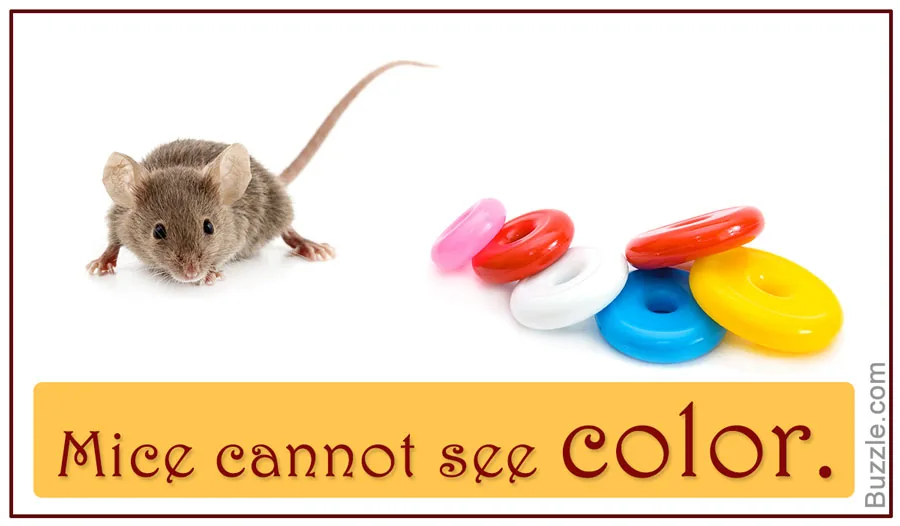
Mice are usually white, gray, black, or brown in color. They have small hair on their body. The belly of a mouse is usually light in color in comparison to its back. The belly also has shorter hair. They have no or very little hair on their ears and tail. They have small beady eyes and prominent whiskers. Mice usually run around, taking long strides. Their hind legs, however, are shorter than their fore legs.
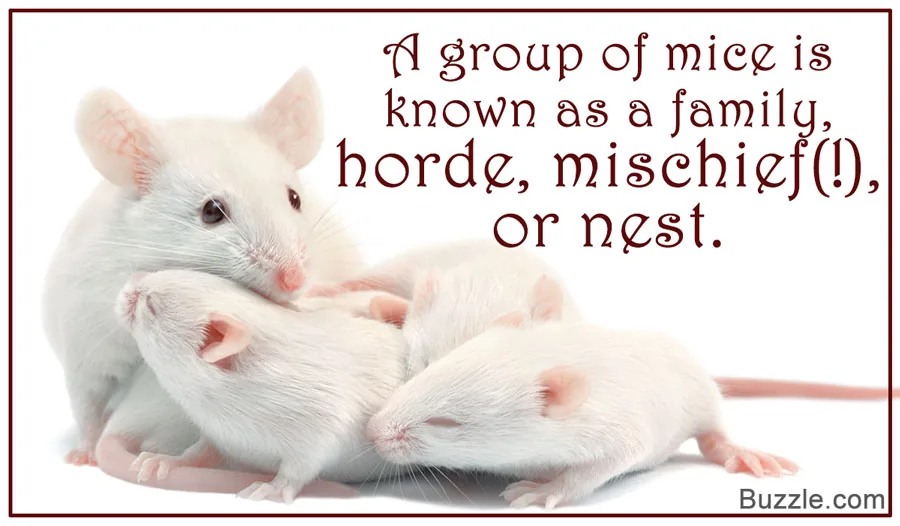
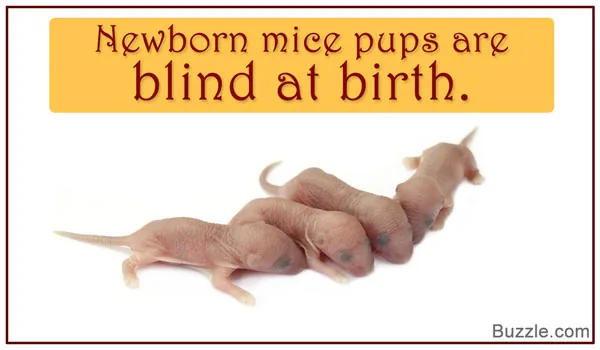
In the wild, they seldom survive for more than a year, but in captivity they are known to live for somewhere around 2-3 years. They make a peculiar squeaking sound that is rather high-pitched. The male mouse is called the 'buck', while the female mouse is called the 'doe'. Their offspring are known as pups.

Did you know that it is very difficult to tell male and female mice apart before they reach adulthood? Once grown, the buck (male) becomes easy to identify by his prominent testicles. The doe (female) has 5 pairs of mammary glands and very small nipples.
Interesting Physical Features
- Did you know that the tail of a mouse is almost as long as its body?
- They measure around 6 to 8 inches from the tip of the nose to the tip of the tail, and weigh approximately 15 to 25 g (i.e. less than 1 oz).
- They also do not like broad daylight. They are nocturnal creatures.
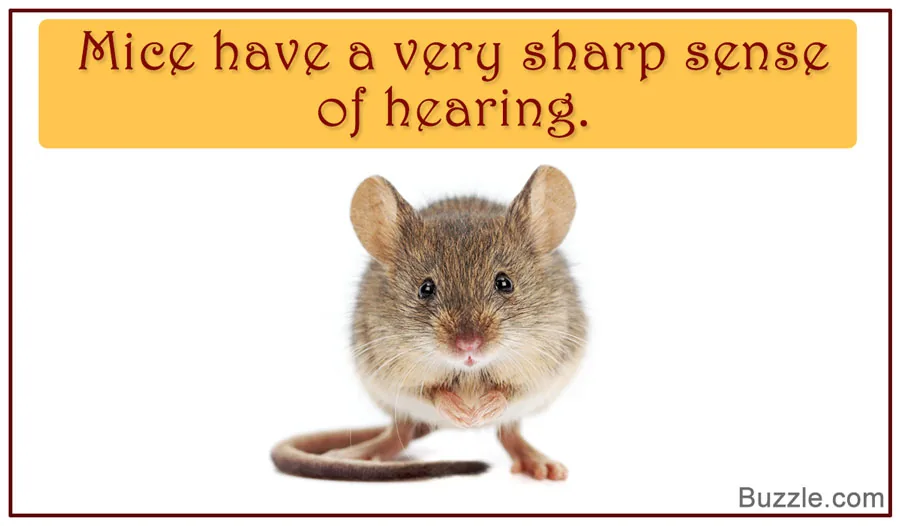
- They can hear in the human range, as well as in the ultrasonic range. While communicating with each other, they make ultrasonic (NOT audible to humans), as well as regular sounds (audible to humans).
- Mice also have a sharp sense of smell. They use a number of pheromones to aid communication at the nest level. They also do not have fur on the body.
- Did you know that mice have two thymuses? The larger, pea-sized thymus is located in the chest, while a smaller pinhead-sized one is present in the neck near the trachea.
- The urine of a male mouse smells noticeably different from a female's! Scientists have found at least 5 special chemical compounds in male mouse urine that are completely absent in females, a built-in ID badge.
Take the Mouse Facts Quiz!
5 quick questions. How well do you really know the humble house mouse?
Behavioral Facts about Mice
- Mice eat ANYTHING. Well, almost. They can chew through anything, that is softer than their teeth. They also need to keep eating ALL THE TIME!
- Mice are neat freaks; they organize their cages (in case of domesticated and / or pet mice) into different sections for eating, sleeping, and defecating!
- Mice can jump up to 18 inches in air. Compared to the size of a mouse, that is actually quite a lot.
- Mice are scared of rats, because rats are known to prey upon mice. However, even with this being so, mice and rats are often seen to live together in the wild.
- Mice are very intelligent creatures. They are known to solve puzzles, and can figure their way around a maze.



Mice are small, cute and intelligent creatures that are often kept as pets. There are a lot of features of mice that make them ideal laboratory animals as well - size being one, breeding being another (a single female mouse can produce a litter almost 6 times a year).
Frequently Asked Questions
What is a mouse's scientific name?
Mus musculus (house mouse)
How long do mice live?
Under one year in the wild; 2-3 years in captivity
Can mice hear ultrasonic sounds?
Yes, mice communicate using both human-range and ultrasonic sounds
What is a baby mouse called?
A pup. Males are bucks, females are does.
Are mice and rats the same animal?
No. Mice belong to genus Mus; rats belong to genus Rattus. Rats are larger and sometimes prey on mice.
Folklore and Other Trivia
- In Ancient Greece, the God Apollo was sometimes called Apollo Smintheus, which means Apollo the Mouse. To honor him, white mice were kept in Apollo's temples under the altar.
- In Egypt, a cooked mouse was used to cure various ailments including stomachaches.
- Ancient Jewish folklore forbade the eating of any mouse-chewed food, because it could cause forgetfulness or a sore throat.
- The Roman writer Pliny recommended mouse ashes mixed with honey to cure earaches.
- Some ancient stories give credit to mice or rats with punishing evil people.
- To this day, some people believe that fried mice or mouse pie is a cure for bed wetting.
- Mice have been domesticated for hundreds of years. The National Mouse Club of Britain was formed in 1895.
- Each year, rodents cause more than one billion dollars in damage in the US alone.
- Some mice may play dead if they are frightened and cannot quickly escape.
- To the untrained eye, a rat and a mouse can look very similar. As a simple rule: rats are larger, more aggressive, and they sometimes hunt and eat mice!


Explore More Animals
 Facts About SquirrelsSquirrels are small tree animals, with a very cute bushy tail and sharp teeth. They are fast, really intelligent, and always alert! It is fun to watch them and
 Wonderfully Astounding Facts About GroundhogsGroundhogs are large ground squirrels also known as woodchucks and marmots. Discover facts about their burrows, hibernation, Groundhog Day, and much more.
 Utterly Astonishing Facts about CricketsIn many cultures, crickets are thought to bring good luck. It is also believed that crickets can tell the surrounding temperature. Discover the astonishing worl
 How is a Possum Really Different from an Opossum?Although possums and opossums are similar-looking animals, opossums are commonly found in the United States, while possums are native to Australia. The possum v
Weren't those some interesting tidbits and facts about mice? I am sure you didn't know all of them! I know I am never going to look at mice in the same way again... are you?

 Fun fact for today!A mouse's tail is almost as long as its entire body!