

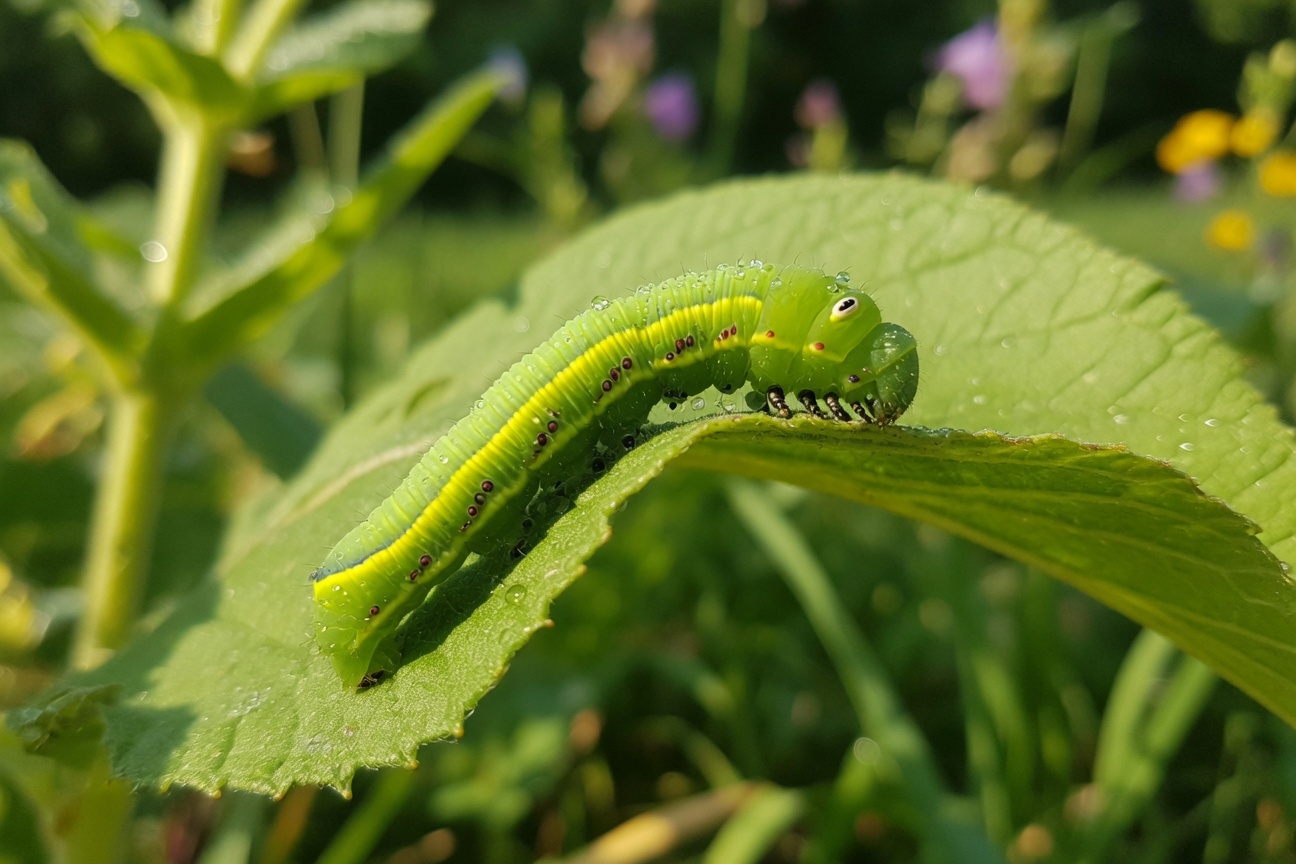
Nature is really a wonder, and it creates wonders too. One classic example is the life cycle of butterflies. First the egg is developed, and a caterpillar emerges from it. The caterpillar later transforms into a pupa, which then metamorphoses into a beautiful, colorful butterfly.
The caterpillar stage is one of the most interesting life stages of the butterfly. There are many types of caterpillars in nature, and green caterpillars are commonly found in vegetation and gardens. That means they are seen near humans quite often. Identifying green caterpillars is easier if you observe them carefully, and studying the whole life cycle of a butterfly makes it even more fun.
How to Identify a Green Caterpillar
Appearance
Caterpillars are hungry, eager feeders. Most of them are herbivorous and live on plants for food. They have tubular, segmented bodies, and their body shape is a bit like a worm. Some caterpillars are hairy, while others are soft and plain. With this basic knowledge, green caterpillar identification is easier.
Main Body Color
Green caterpillars are obviously green, but the exact shade differs from one type to another. So the shade of green helps you identify a caterpillar better. Their size can be big, or they may be very small.
Main Body Pattern
You also have to look at the pattern on the caterpillar's body. They can be banded, striped, dotted, slashed, or even camouflaged. The design on their body makes identification easy.
Hair Density
You must also check the fuzz on the body. The hair density could be high, low, or moderate. Some caterpillars have unique hair growth patterns, like tufts.
Unique Features
Once you have done this first look, search for some unique features that help you pin down exactly which green caterpillar you have found. These special features could be a tail or a split tail, head horns, knobs, lashes, or spines.
Identification Examples
Once you have noticed all the above things, carefully note them down. There are many websites that can help you in your hunt to identify a caterpillar. Some examples of different types of green caterpillars are given below.
Frequently Asked Questions
What is a caterpillar?
A caterpillar is the larva of a butterfly or a moth. It hatches from an egg, then changes into a pupa, and finally becomes an adult butterfly or moth.
How do you identify a green caterpillar?
Look at the shade of green, the body pattern (banded, striped, dotted, slashed or camouflaged), the hair density, and any unique features such as a tail, head horns, knobs, lashes or spines.
What does a Swallowtail caterpillar's osmeterium do?
The osmeterium is a gland just behind the head. When the caterpillar is disturbed it activates and lets out a foul odor, which deters predators from eating it.
Are green caterpillars safe to touch?
Many are harmless, but caterpillars that are distinctively colored or very hairy may sting. The safe rule is to look closely but not touch.
Meet Some Green Caterpillars
Big Green Caterpillar
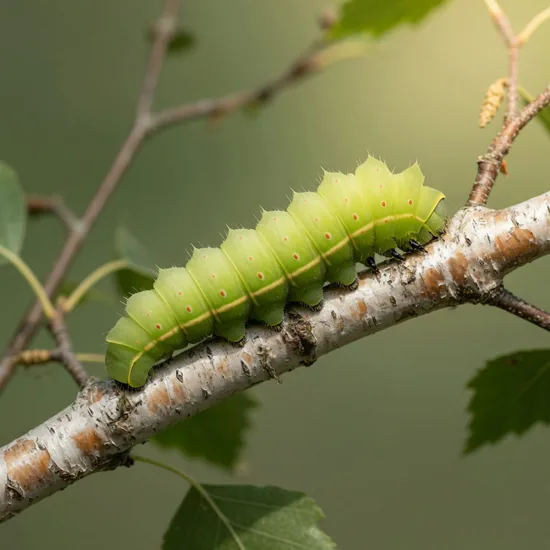
Luna Moth Caterpillar
One of the big green ones. The luna moth caterpillar is a chunky, lime-green grub that feeds high in the trees before it spins up and becomes a pale green luna moth.
Green Caterpillar with White Stripes
Some green caterpillars wear a pale stripe down each side, a handy clue.
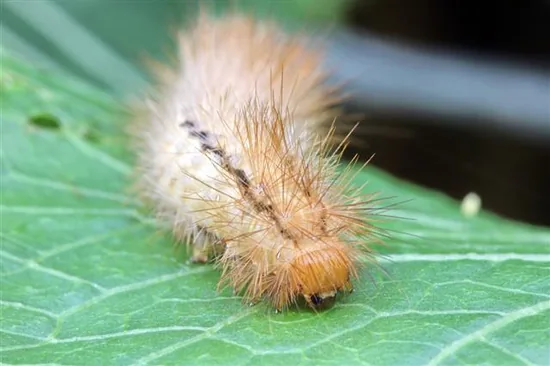
Pellucid Hawk Moth
A smooth green hawk-moth caterpillar marked with pale side lines. Hawk-moth grubs are plump and often carry a small tail horn.
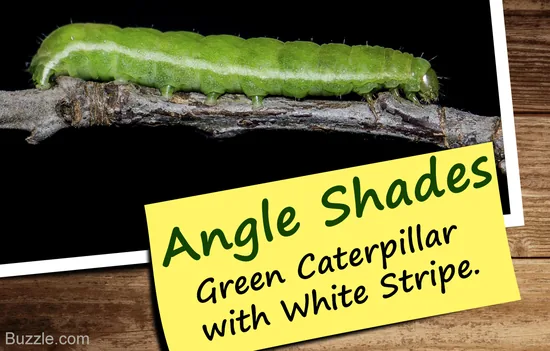
Angle Shades
The angle shades is a classic green caterpillar with a crisp white stripe running along its body. It blends in beautifully against a leafy stem.
Hairy Caterpillars
If it looks fuzzy, it is a hairy caterpillar, admire these ones from a distance.
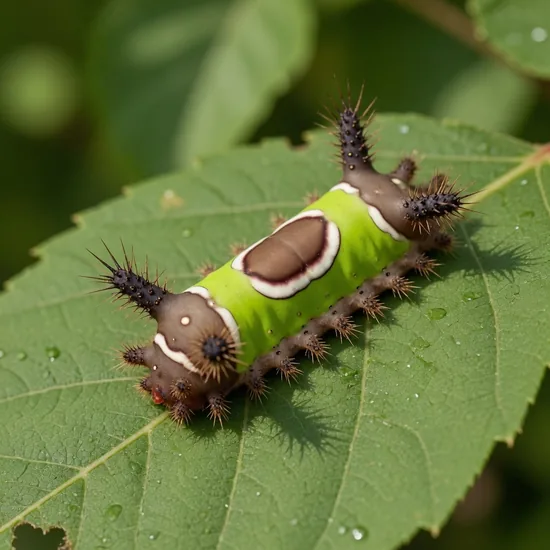
Saddleback Caterpillar
A famous spiny one. The saddleback has a bright green back with a brown “saddle” ringed in white, and stinging spines at both ends. Look, don't touch.
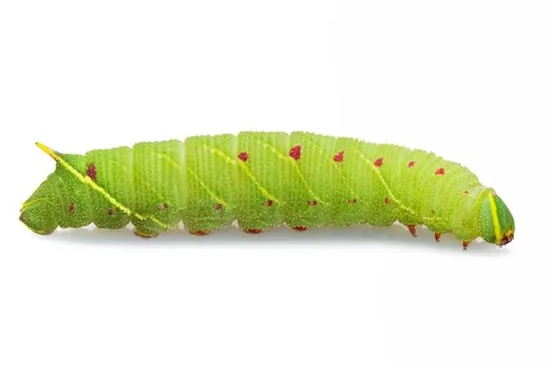
Pale Tussock
The pale tussock is a soft, fuzzy caterpillar with neat tufts of hair standing up along its back, a true tufted hairy caterpillar.
Puss Caterpillar
The puss caterpillar looks like a tiny tuft of fur, but those soft-looking hairs hide spines. It is one to watch and never handle.
Green Caterpillar with Black Spots
Snowberry Clearwing
The snowberry clearwing is a plump green caterpillar dotted with small black spots. It grows up into a fuzzy, bumblebee-lookalike moth.
Sawfly
Sawfly larvae look a lot like caterpillars and are often green with little dark spots. They are not true caterpillars, but they fool plenty of people in the garden.
Take the Green Caterpillar Detective Quiz!
5 quick questions straight from this page. How sharp is your caterpillar eye?
Green Caterpillar with Horn
A spike at the tail end means a hornworm, the horn looks scary but cannot hurt you.
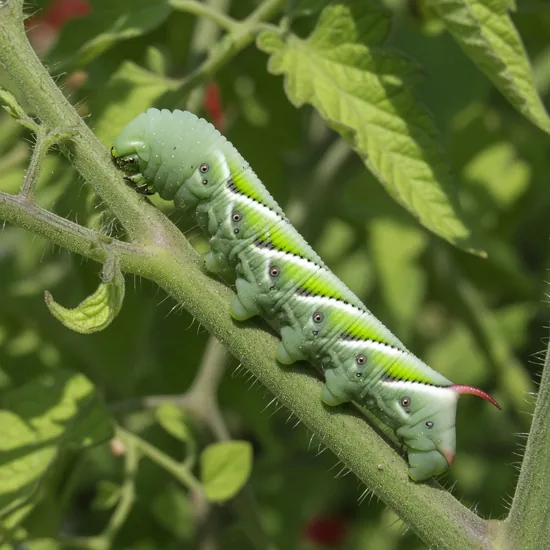
Tobacco Hornworm
A big bright-green caterpillar with slanted white side stripes and a harmless horn at the rear end. You will often find it munching on tomato and tobacco plants.
Walnut Sphinx Caterpillar
A smooth green sphinx-moth caterpillar dressed with pale diagonal lines and a small tail horn. If you bother it, it can even squeak.
Tomato Hornworm
The tomato hornworm is a close cousin of the tobacco hornworm. It is green with V-shaped side markings and the same harmless tail horn, and it loves tomato plants.
Green Caterpillar with Yellow Spots
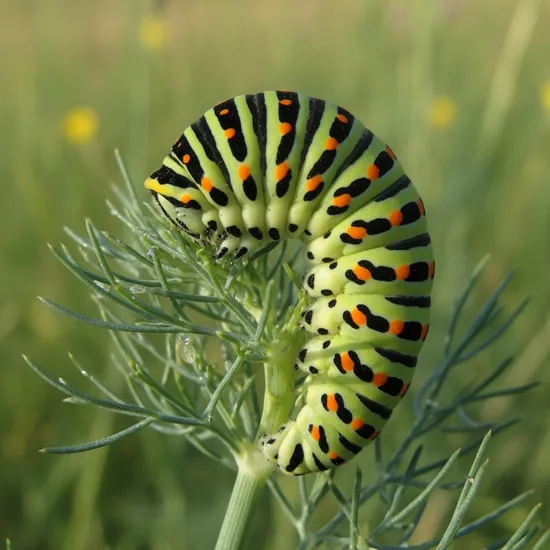
Old World Swallowtail
One of the prettiest green caterpillars: smooth green with bold black bands dotted with orange-yellow spots. Disturb it and its smelly osmeterium pops out behind the head.
These were some of the green caterpillars that have distinct features and are very easy to identify. You can also look at a caterpillar identification chart to grow your knowledge of the many different types of caterpillars.
Explore More Animals
 A Visual Guide to Caterpillar IdentificationIdentify caterpillars by family, loopers, hornworms, woolly bears, swallowtails and more. A visual field guide to common moth and butterfly larvae and their te
 These Facts About Tobacco Hornworms Will Simply Leave You BaffledTobacco hornworms are 70-millimeter caterpillars that can defoliate an entire tobacco plant. Discover their life cycle, habitat, diet, and how to tell them apar
 5 Poisonous Caterpillars You Didn't Know AboutThink caterpillars are harmless? Think again. Meet 5 crazily poisonous caterpillars, from the fuzzy Puss Caterpillar to the spine-covered Io Moth Caterpillar,
 An Awesome Explanation of the Life Cycle of a CaterpillarThe caterpillar life cycle is explained in short in this article, along with some interesting facts about caterpillars.

 Fun fact for today!A Swallowtail caterpillar hides a smelly gland called an osmeterium right behind its head, it pops out a foul whiff to scare predators away!