

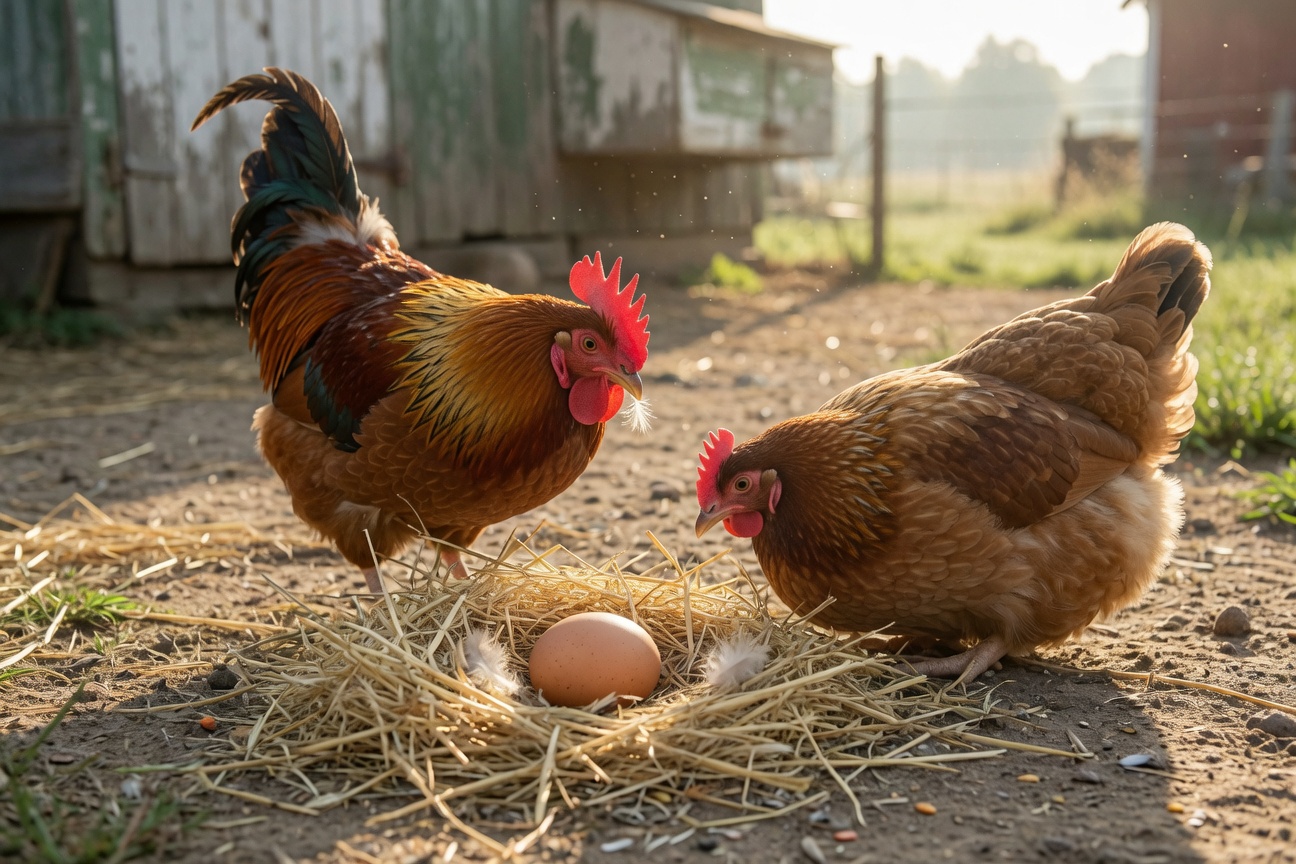
Chicken Egg Fertilization Process
The males, called roosters, have reproductive organs known as testes. These produce sperms that are transferred to the sperm sacs through tube-like structures called vas deferens. The sperms are released through the cloaca of the bird while mating. It takes only thirty seconds for the roosters to deposit sperm in the reproductive tract (called the oviduct) of the hens.
The sperms leave the rooster's body through an opening called the cloaca. They then enter the oviduct of the female and travel through various parts of the reproductive organs to reach the infundibulum, a funnel-shaped organ. In this journey, which takes almost one week, the sperms pass through the shell gland of the hen, then the isthmus and magnum, and finally reach the infundibulum.
Once inside the infundibulum, these sperms can remain live for one week or more, waiting for the eggs. These eggs are not fully formed and lack shells. If there is a yolk in the infundibulum, fertilization takes place instantly.
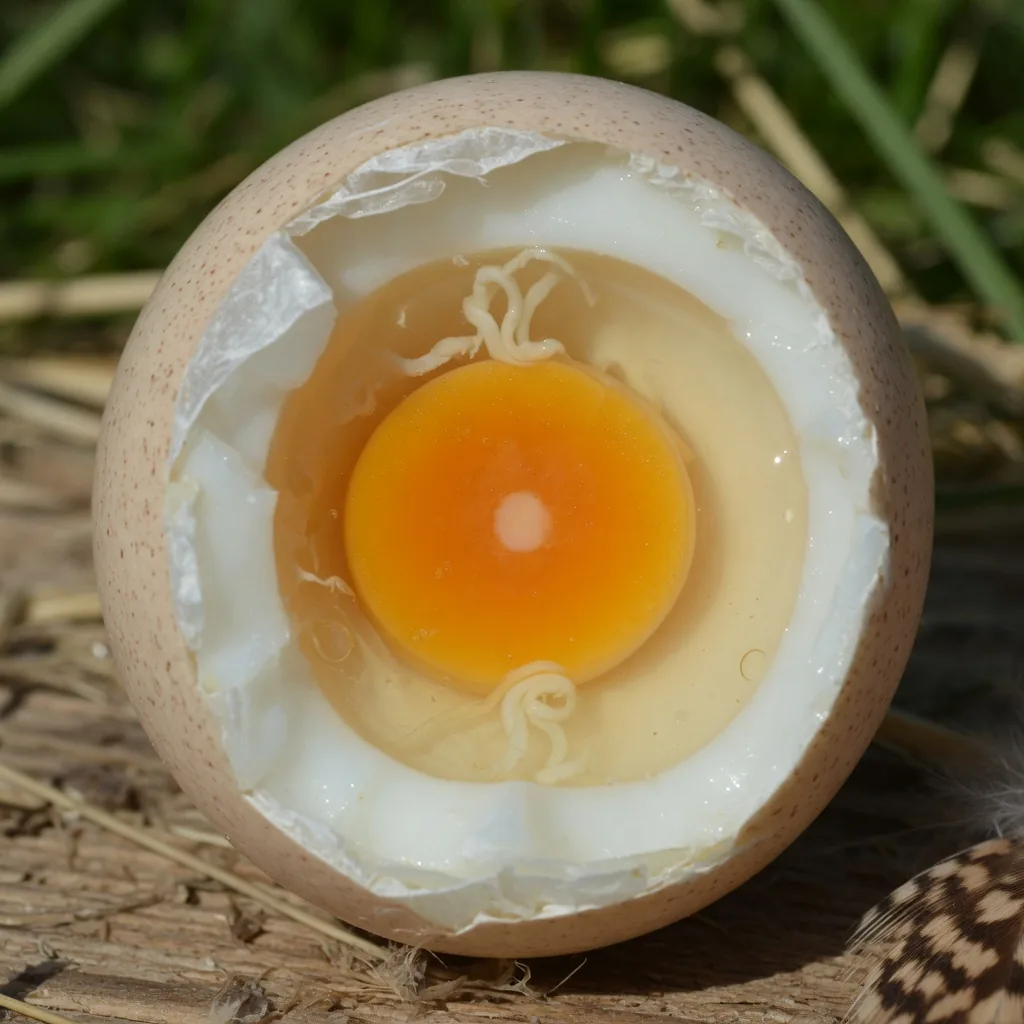
The eggs are formed as yolk in the ovaries of the hen. A healthy young hen produces a single yolk in every 24 to 26 hours. This yolk, when released from the ovaries, travels to the infundibulum. If there are sperms in this funnel-shaped organ, the germinal disc (called blastodisc) in the yolk will get fertilized to form the embryo (called blastoderm).
Once fertilized, the yolk passes through the same route the sperm traveled to reach the infundibulum, but in reverse. As it travels back, it builds up into a proper egg. The yolk gets surrounded by egg white in the magnum. The shell membrane starts forming in the isthmus. From there, the yolk (covered with egg white) travels to the shell gland, where the shell is completed and hardened.
The egg is ready to be laid, which is usually done in the middle of the day. Once the fertilized egg is laid, the hen is ready to start forming a new egg.
Are All Chicken Eggs Fertilized?
A healthy chicken may start laying eggs from the age of four to six months. The egg-laying age for chickens can vary with the breed, climate, and other factors. Even the number of eggs a chicken lays can change with these same factors. An average domestic hen may produce around five eggs a week. Between laying periods, these birds take rest, they do not produce eggs for a short interval after each cycle. Once a chicken starts laying eggs, productivity is highest during the first year and tends to decline after that.
So are all chicken eggs fertilized? Once young female chickens (better known as pullets) reach sexual maturity, they will start laying eggs. In other words, chickens that reach egg-laying age will produce eggs even if there are no roosters. Mating and fertilization are not needed for a chicken to produce eggs.
In fact, most store-bought eggs are not fertilized. Roosters are normally not kept in most poultry farms, since there is no need for mating. Only when there is a demand for fertilized eggs (or when poultry owners need a new batch of egg-laying hens) do they bring in a rooster. In short, you may not be able to hatch chicks by incubating table eggs, as there is no guarantee that such eggs are fertilized.
Take the Chicken Egg Fertilization Quiz!
5 quick questions. How well do you know how eggs are made?
How Long Does It Take to Produce Fertile Chicken Eggs?
One of the common questions about chicken egg fertilization is how long it takes to get fertile eggs after mating. Several factors affect this time period.
In a flock with less than ten hens, introducing a sexually active rooster can produce fast results. Once mating is done, the sperms travel to the infundibulum, and this takes almost seven days. So you can expect fertilized eggs only after seven to ten days of mating. The hen may continue to produce fertilized eggs for the following week.
The size of the flock also matters. If the flock contains fewer hens, there are higher chances of getting fertilized eggs quickly. Even the age of the rooster and the hens can play a role. The older they get, the longer you may have to wait for fertile eggs.
How to Identify Fertilized Chicken Eggs?
In short, a fertilized egg has an embryo, which is not found in an unfertilized one. But a fertilized egg does not mean there is a chick inside. It has an embryo (blastoderm, a fertilized blastodisc). This embryo is capable of producing a chick within 21 days, if kept in the right conditions. The embryo looks like a small flat disc with a ring around it.
If refrigerated, fertilized eggs behave just like unfertilized ones and do not develop further. Most poultry farms use specialized candling equipment to identify fertile eggs. Candling can also be done at home with a bright LED flashlight.
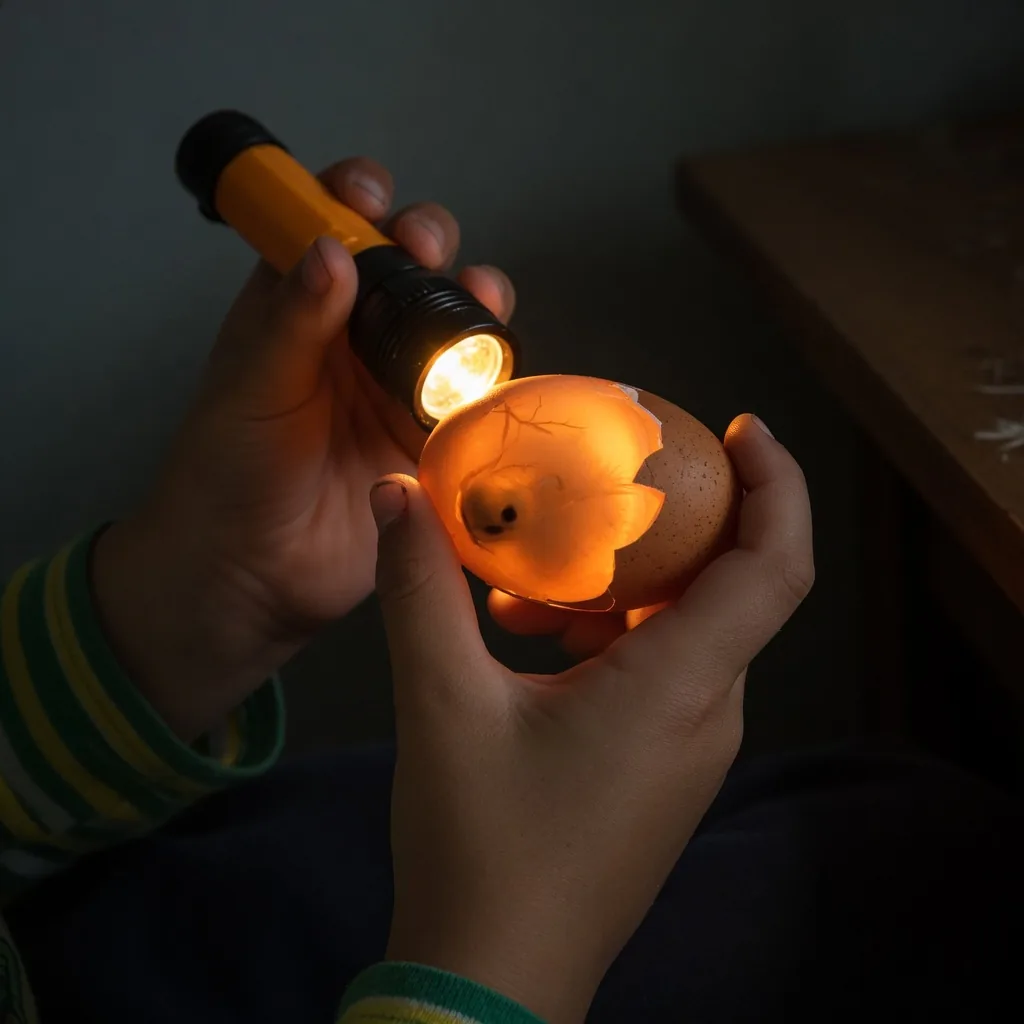
As the light passes through, unfertilized eggs show a round yolk, while fertilized ones appear more opaque. If incubated, within two to three days fertilized eggs will develop a network of veins. You may also see the growing embryo at this stage, but only with an LED flashlight.
You can also crack the egg open and look for the blastodisc or blastoderm. In unfertilized eggs it looks like a small white spot (like a pinpoint). In fertile ones, you can find a more pronounced, bigger (around one eighth inch in width) round white spot. The germinal disc should not be confused with the small white string-like structure (chalazae), which is seen in all eggs. Some people believe that eggs with red spots are fertile ones. This is also incorrect, red spots can develop in any egg during its formation.
Frequently Asked Questions
Do chickens need a rooster to lay eggs?
No, hens lay eggs with or without a rooster. A rooster is only needed if you want the egg to be fertilized and hatch into a chick.
How long after mating will a hen lay fertilized eggs?
After 7 to 10 days of mating.
How do you tell a fertilized egg from an unfertilized one?
Use a bright LED flashlight (candling). Fertilized eggs look more opaque, and after 2-3 days of incubation you can see a network of veins.
Are fertilized eggs safe to eat?
Yes. Fertilized eggs taste and look identical to unfertilized ones, and they do not develop into a chick without being incubated.
Are Fertilized Chicken Eggs Edible?
This is one of the common doubts about eggs. Some people dislike the idea of eating fertilized eggs. Others think they are more nutritious than unfertilized ones. The fact is that fertilized eggs are the same as unfertilized ones in taste, appearance, and texture. A fertilized egg does not develop into a chick without incubation. And most store-bought chicken eggs are unfertilized anyway.
Now you know how to identify a fertilized chicken egg. If you want such eggs for hatching, get fresh fertilized eggs. Fresh eggs are preferred for consumption too. Both fertilized and non-fertilized chicken eggs can be used for eating.
Explore More Animals
 Life Cycle of a Chicken: Egg, Chick, and Chicken ExplainedThe life cycle comprises three basic stages: egg, chick, and chicken. Chickens may be raised for their meat, eggs, or both on local as well as commercial farms.
 Golden Comet Chicken BreedThe Golden Comet is one of the best egg-laying breeds for beginners. Learn about their appearance, temperament, egg production, coop setup, and breeding.
 How to Tell a Barred Rock Rooster from a HenAlthough Barred Rock roosters and hens look similar, there are a lot many distinctions. We'll discuss the major differences between the male and female Barred R
 Facts About Ameraucana Chickens That Will Simply Enchant YouChicken breeds consist of three blue egg layers: the Araucana, the Easter Egger, and the Ameraucana. AnimalSake will provide interesting facts about Ameraucana

 Fun fact for today!Most eggs you buy at the store are not fertilized, roosters aren't kept in most poultry farms!