

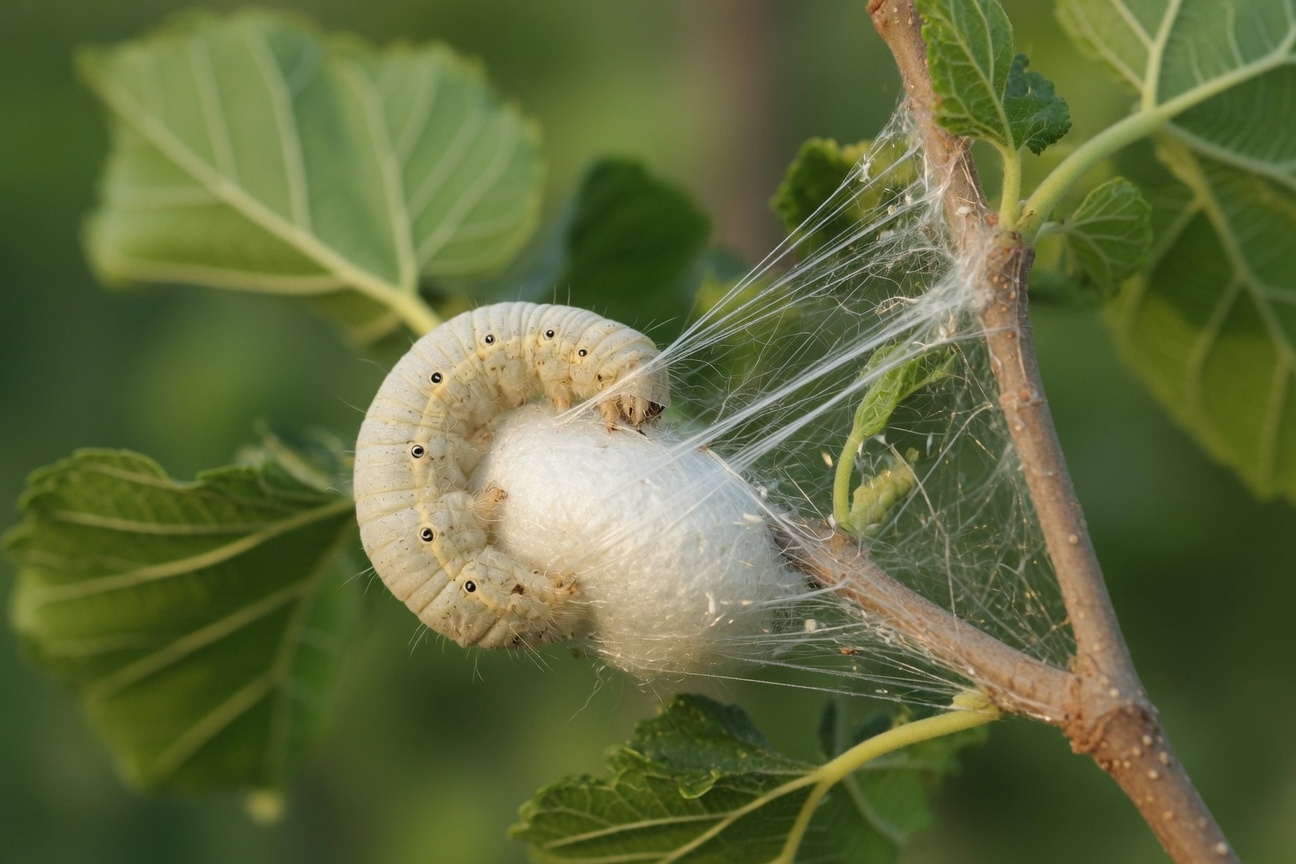
What Is Silk?
At its most basic, silk is a natural protein fiber. It is produced by the larvae of certain insects, mainly the caterpillars of moths. Silk is composed mainly of a protein called fibroin. Other insects also produce silk, but the moth caterpillar type is the one used for making textiles.
Researchers have found that out of the many species of silk moths, 70 are of some economic value. Of those 70, only 4 natural silk varieties have real commercial value: Mulberry silk, Tasar silk, Muga silk, and Eri silk.
The very best silk comes from the mulberry silkworm Bombyx mori, which is raised through domestication. The other silkworm species produce what is called "wild silk", because those silkworms grow in remote forests under natural conditions.
The Four Types of Natural Silk
Tasar silk is produced by the silkworms Antheraea mylitta and Antheraea paphia. It is copperish in color. These silkworms feed on food plants like Sal and Arjun.
Muga silk is produced by Antheraea assamensis and is golden-yellow in color. These silkworms eat the aromatic leaves of Som and Soalu plants. Muga silk is mainly used for making silk saris.
Eri silk (often called Endi or Errandi silk) is produced by Philosamia ricini and is creamy-white in color. Compared to other types, eri silk is a little less shiny. These silkworms mostly feed on castor leaves.
The fourth and most prized type is Mulberry silk, made by Bombyx mori. It is so pure and fine because the worm is fully domesticated and fed only on fresh mulberry leaves.
How the Silkworm Spins Its Cocoon
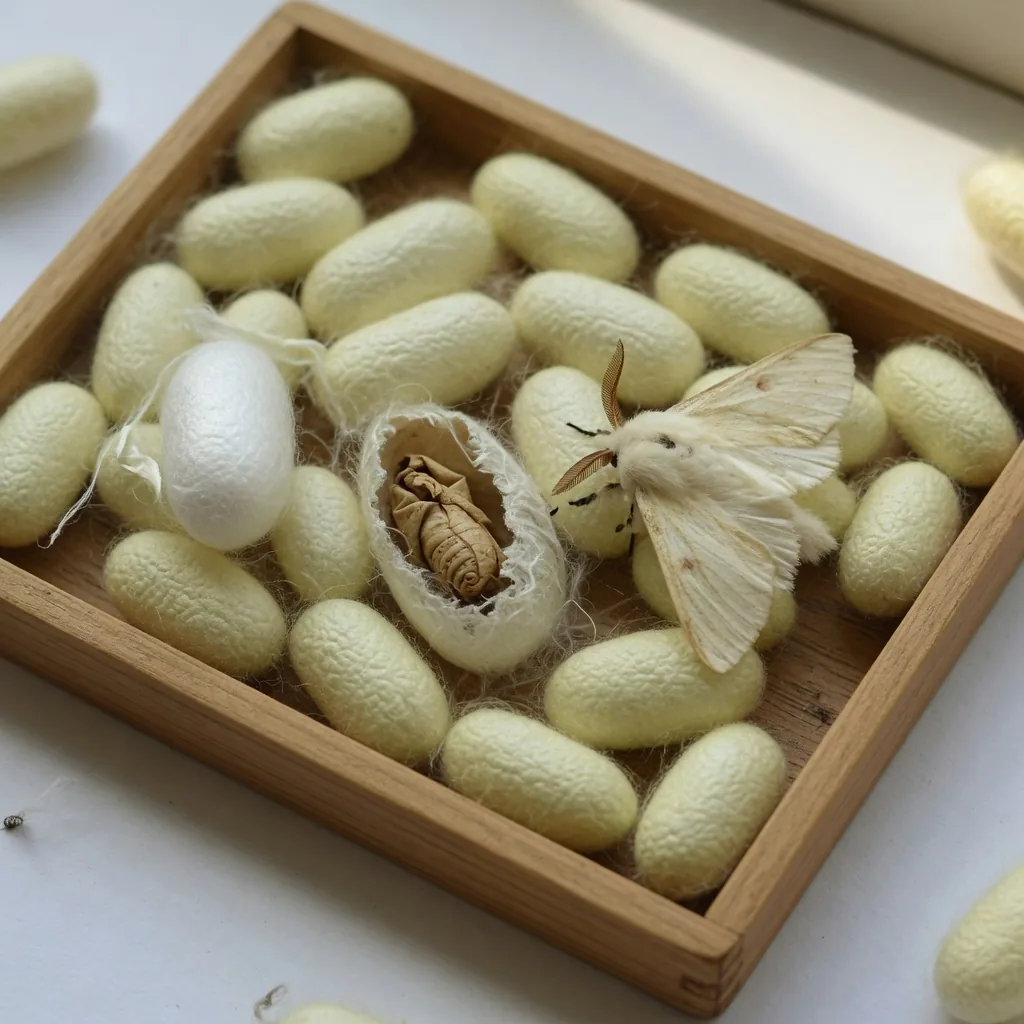
Silk production is just one stage in the silkworm's life cycle. It happens when the worm is ready to become a moth.
A cocoon is a protective shell the silkworm spins around itself. When the silkworm is ready to enter the pupal stage (when its larval body breaks down and an adult moth forms) it stops eating and starts spinning. The cocoon protects it from harsh weather. Silkworms usually spin their cocoons at the start of winter and spend the entire season inside. This resting time is often called the "sleeping stage."
The cocoon is made of silk spun from a pair of specially modified salivary glands called sericteries. These glands produce fibroin, a creamy, soft, clear fluid released from the insect's mouth. As soon as the fluid touches the air, it solidifies into a silk thread.
The entire cocoon is formed from a single continuous thread. The thread from one cocoon is around 300 m long. The silkworm takes 3 to 4 days to spin the cocoon, rotating its body in the shape of the number 8 the whole time.
Take the Silkworm Quiz!
5 quick questions. How much do you know about silk and silkworms?
Silk Quality Depends on the Silkworm's Diet
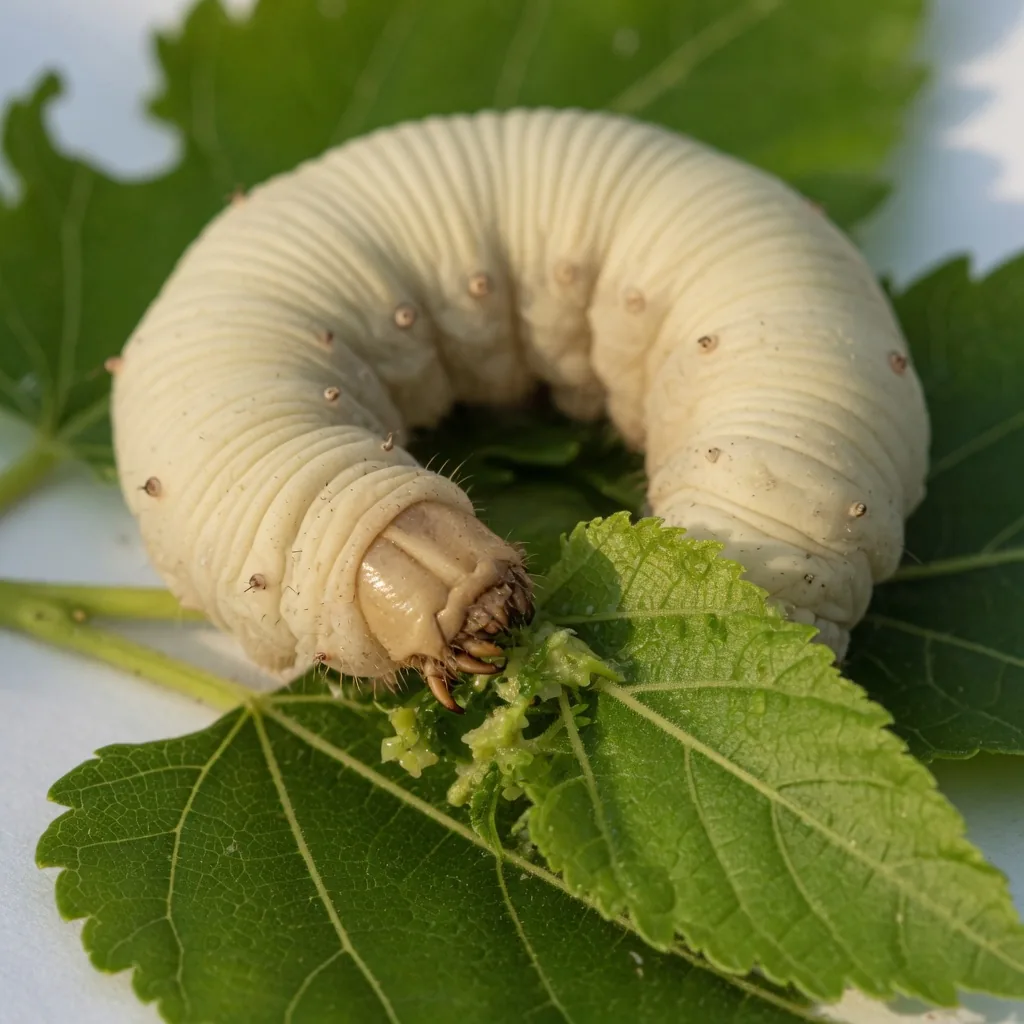
Silkworms have a huge appetite, and it keeps growing as they get bigger. They keep cutting and slicing through mulberry leaves (their staple food) and never stop eating throughout the larval stage, which lasts over 35 days. They have large, strong jaws to handle those tough leaves.
Young silkworms, though, need soft, tender leaves because their jaws are still developing. Silkworms do not need water at all, just fresh, moist mulberry leaves every day. Leaf consumption shoots up dramatically during the last three weeks of the larval stage. If the worms eat wilted or dead mulberry leaves, they do not produce good-quality silk.
After eating for almost six weeks continuously, the silkworm reaches its maximum size of 3 inches. It stops eating and changes color. At this point, it is 70 times larger than when it hatched, and weighs 10,000 times more. During its growth it sheds its skin four times. When fully grown, the silkworm attaches itself to a twig and begins the next stage: spinning the cocoon.
Silk Production Through Sericulture
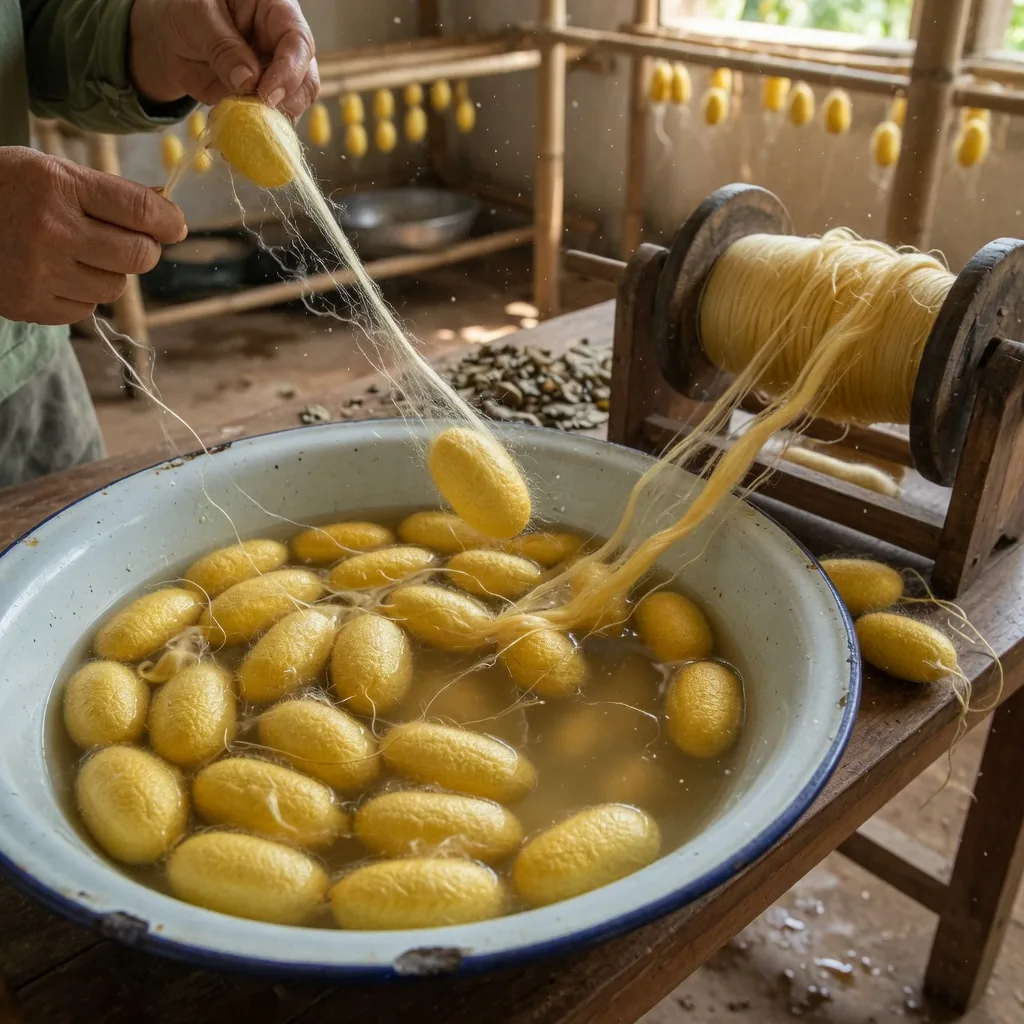
China began producing silk almost 5,000 years ago. After such a long time of domestication, the mulberry silkworm is now completely dependent on humans for its survival. No silkworms can live in the wild today, they are found only in children's cardboard boxes and on commercial silk farms.
In nature, the silkworm rests inside its cocoon for at least three weeks while it transforms. Then it chews a hole in the cocoon to emerge as a moth. In sericulture, however, the pupa is not allowed to escape. Instead, the cocoon is placed in boiling water, which kills the pupa. This keeps the single long thread intact. If the moth were allowed to chew through, the thread would break into shorter pieces and lose much of its commercial value.
Frequently Asked Questions
Which silkworm produces the best silk?
The mulberry silkworm Bombyx mori produces the finest silk.
How long is the thread from one cocoon?
Around 300 m, and it takes the silkworm 3 to 4 days to spin it.
What are the four types of natural silk?
Mulberry silk, Tasar silk, Muga silk, and Eri silk.
What is Ahimsa Silk?
A method invented by Kusuma Rajaiah that produces silk without killing the silkworms.
Where was silk first discovered?
In China, around 5000 years ago, according to the most popular legend involving Empress Xilingshi.
A New Approach: Ahimsa Silk
The standard method of silk production involves killing many silkworms, which is not ideal. So Kusuma Rajaiah from India found a new way to produce silk without harming the silkworms and named it "Ahimsa Silk."
Ahimsa means non-violence and respect for every living being. Rajaiah says his inspiration was Mahatma Gandhi, a man devoted to non-violence. It was Gandhi's dream to produce silk without killing worms, but that dream went unfulfilled in his own lifetime. Kusuma Rajaiah took it forward and made it happen.
In the Ahimsa method, the pupa is allowed to emerge from the cocoon first. Then the empty cocoons are steamed or boiled to extract the silk threads. The one downside is that the long thread breaks into shorter pieces, which are harder to spin into a yarn. Still, the fabric produced is real silk, just made with care.
It is always good to know where our things come from, including the fabric of our clothes. Now that we understand how silkworms are involved, we can choose to support "peace silk" or "ahimsa silk", and companies that sell eco-friendly or recycled silk.
Explore More Animals
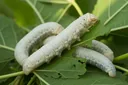 Striking Facts About SilkwormsSilk, one of the most exotic fabrics is created by silkworms. This AnimalSake article is a compilation of some interesting silkworm facts.
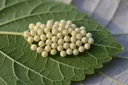 Important Stages in the Life Cycle of a SilkwormThe life cycle of a silkworm, from a microscopic egg to a beautiful moth is simply mind-blowing. Discover each stage, egg, larva, cocoon, and adult moth.
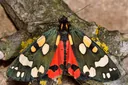 Types of Moths: A Guide to the 9 Major FamiliesMoths make up 90% of Lepidoptera, and most species are still unnamed. Meet the 9 major moth families, from silk-spinning Bombycidae to the hovering hawk-moths
 Utterly Fascinating Information About Butterfly MetamorphosisA complete change of physical form starting from the egg, to a larva, then a chrysalis, and then a gorgeous butterfly, discover the four amazing stages of butt

 Fun fact for today!Around 50,000 silkworms are killed during sericulture to make just one silk sari!