

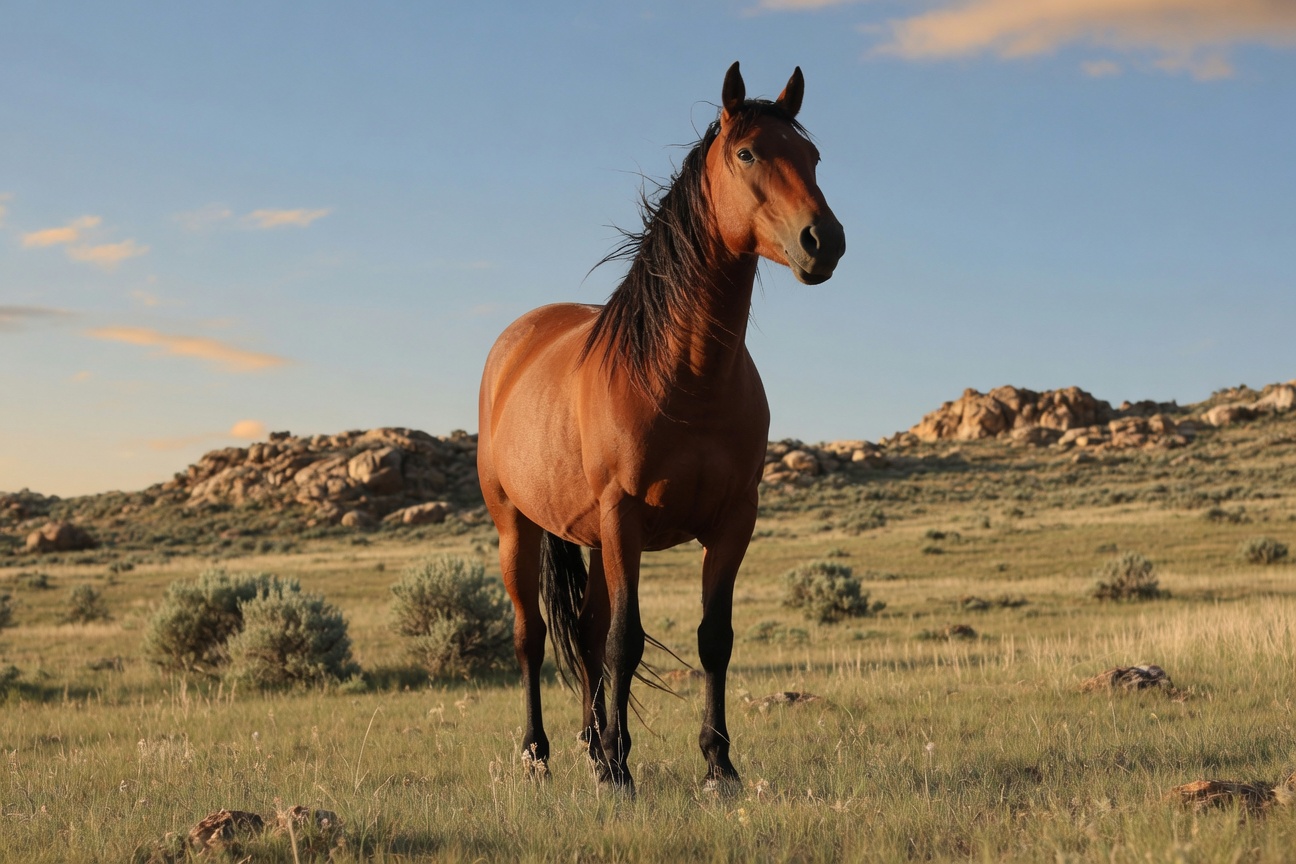
Mustang horses are known to have roamed the vast terrains of North America in large herds, protecting themselves from predators like wolves and coyotes. At one point these horses dwelt in millions across the U.S., but today their numbers have dropped to thousands.
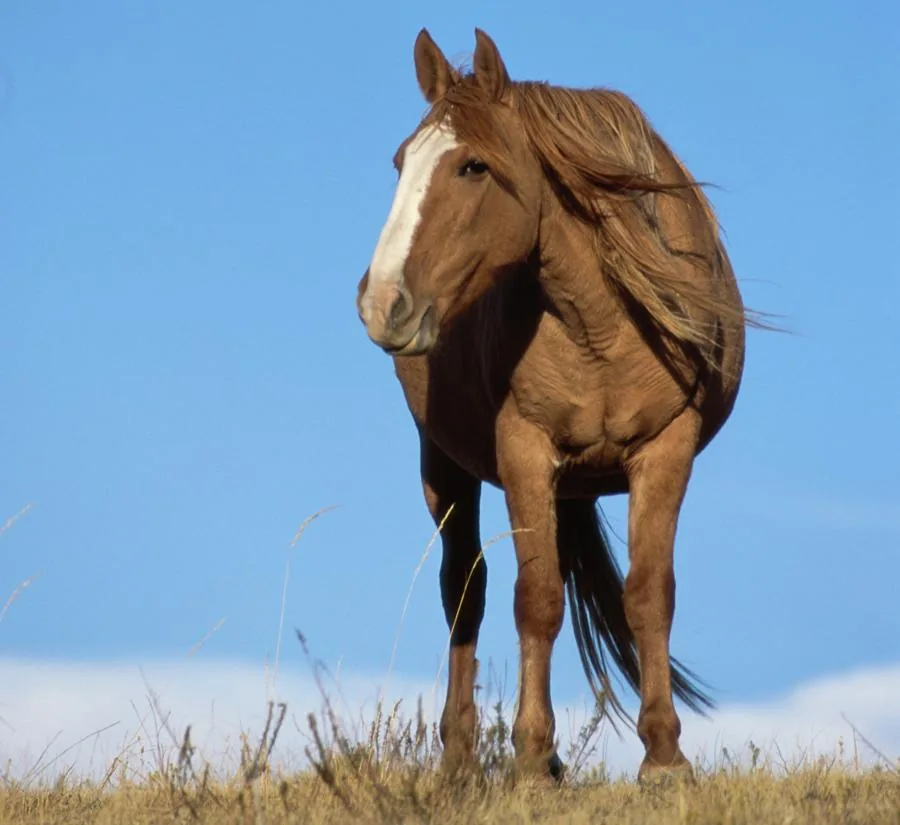
Mustangs are small, swift, surefooted, and hardy. They range from an average size of 14.2-15.2 hands and weigh 1,000 lbs or more. They come in many colors, reddish-brown, bay, sorrel, brown, or black. Mustangs have a life span of about 25-30 years.
The name "mustang" comes from the Spanish word mustengo, meaning "ownerless beast" or "stray horse." These horses are often called wild horses because of their independent nature. The word "feral" suits them even better, it means wild and untamed.
History
The Mustang horses that roamed the North American grasslands in prehistoric times were called dawn horses. However, at the end of the last ice age (nearly 12,000 years ago) the Mustang population was wiped out from the American continent. For thousands of years, the land was silent: no thundering hoofbeats, no wild herds. Then, in the 16th century, Spanish conquistadors reintroduced Mustangs to the American terrain.
By the mid-1800s, millions of Mustangs were once again roaming the American land. Towards the start of the twentieth century, Mustangs were hunted for pet food, until the 1971 act was passed to protect these horses.
Symbol of the American West
The United States Congress in the year 1971 honored the Mustang horse with the title of "living symbols of the historic and pioneer spirit of the West, which continue to contribute to the diversity of life forms within the Nation and enrich the lives of the American people." A federal law was also passed that year banning the capturing, harming, or killing of Mustangs freely roaming on public land.

Mustang's Characteristics
The Mustangs found in the U.S. today are mostly crosses between different horse breeds. This mix is why they appear in such a wide variety of shapes, sizes, and colors. These are medium-sized horses, with an average height of about 14 hands, though they can range from 13 to 16 hands. Their weight is proportional to their height, anywhere between 600 to 1,200 pounds.
In the wild, Mustangs live about 15 to 20 years. Domesticated Mustangs can live up to 25 to 30 years.
Mustang's Temperament
The Mustang is known for its intelligence and independent spirit. These high-spirited animals have a mind of their own, but they can be very obedient as well. Although difficult by nature (especially when taken from the wild) they can be trained and tamed by patient, experienced handlers, just as with any other type of horse. They can be trained for horse racing, equine shows, and competitions.
One must always remember that these horses demand respect and will not tolerate abuse. They have a no-nonsense attitude, and if you can live with that, they are great around the farm. Just like any other creature, the temperament of Mustangs varies from one individual to another.
Take the Mustang Horse Quiz!
5 quick questions. Test what you know about these wild, free-spirited horses.
Mustang Herds
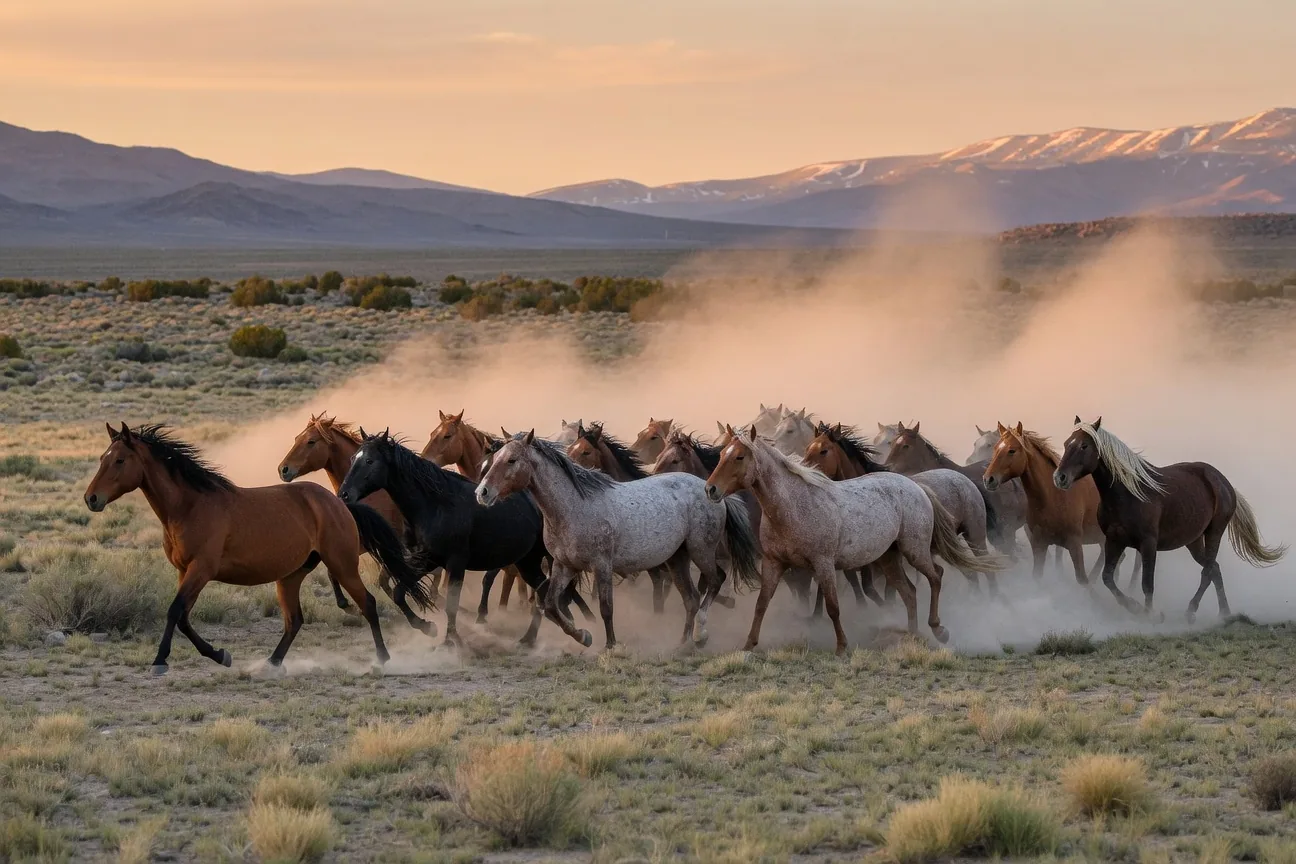
Mustang stallions take charge of herds once they turn 6 years old. There is fierce competition for dominance among stallions, each tries to gather his mares together and defend them from rivals. A stallion may even try to steal mares from other herds by fighting off the competing stallion. Each herd includes many mares and young horses. Young stallions driven away by the dominant stallion band together to form bachelor herds.
Each herd also has a lead mare, an older female Mustang. Her role is to lead the herd away from danger, while the stallion stays back to deal with the threat.
Frequently Asked Questions
Where does the word 'mustang' come from?
From the Spanish word 'mustengo,' meaning 'ownerless beast' or 'stray horse.'
How big is a Mustang horse?
Mustangs average about 14 hands tall and weigh 600-1,200 pounds.
How long do Mustangs live?
Wild Mustangs live 15-20 years; domesticated ones can reach 25-30 years.
How many Mustangs are left in the United States?
Around 25,000 Mustangs remain in the United States, with more than half in Nevada.
Who protects wild Mustangs today?
The Bureau of Land Management (BLM) protects and manages the Mustang population.

Plummeting Mustang Population
In the 1800s, a great drought hit California. Ranchers who considered Mustangs a nuisance had 40,000 horses killed. In the 1920s, the pet food industry was slaughtering almost 500 Mustangs a day. By the 1930s, processing horse meat into chicken and pet food had reached its peak, about 30 million pounds of horseflesh were canned. From a high of 2.3 million Mustangs at the start of that century, numbers collapsed to just 25,000 by the 1950s.
Save the Mustangs
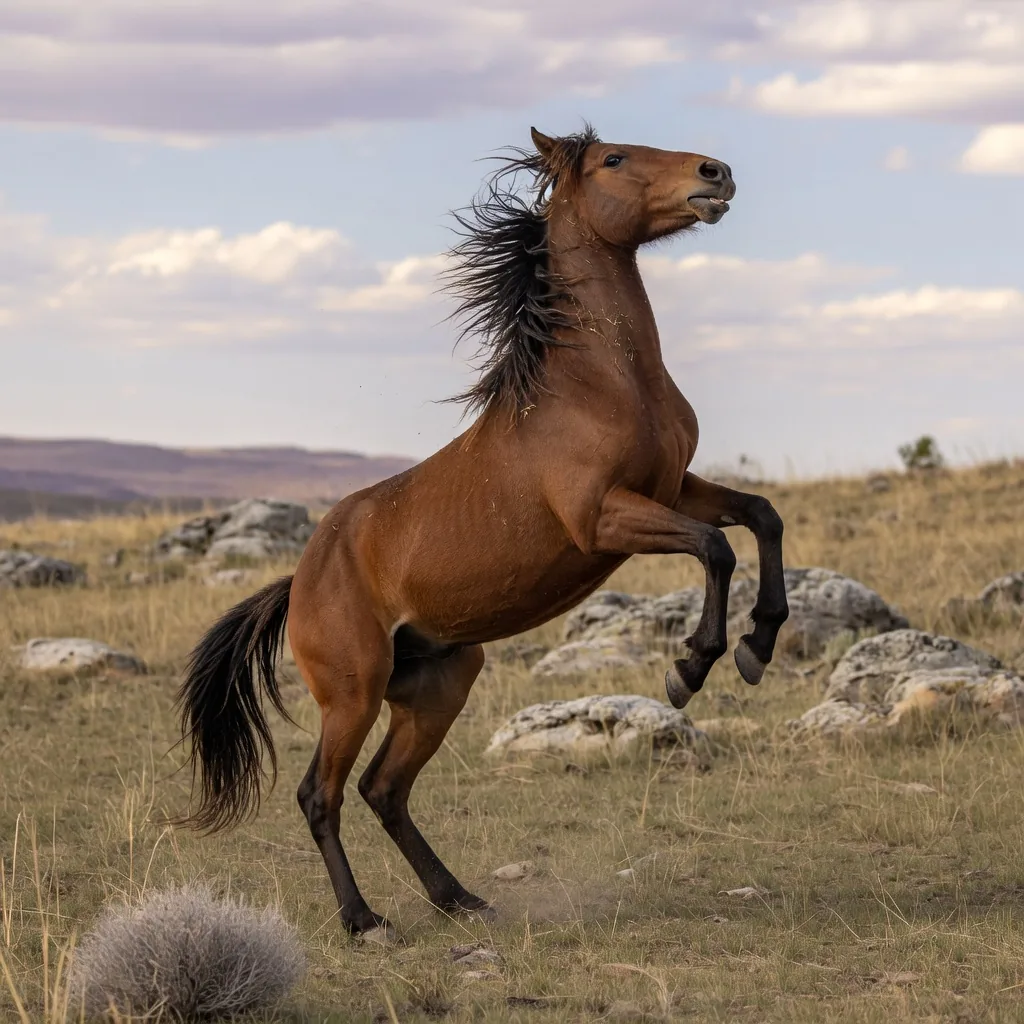
Around 100 years ago, about 2 million Mustangs roamed the North American terrain. Today, only 25,000 remain in the United States. More than half of those live in Nevada, with the rest found in parts of Oregon, Wyoming, and Montana. It's vital we keep the numbers from falling further. Today, the Mustang population is protected and managed by the Bureau of Land Management (BLM).
Mustangs are available for adoption through Bureau of Land Management Wild Horse and Burro facilities. If you are looking to adopt one, a young Mustang is the better choice, the younger the horse, the easier it can be handled and trained.

Explore More Animals
 Zebra Adaptations & Facts: How Zebras SurviveAfrican savannas are full of predators, and zebras have remarkable adaptations to survive them. Meet all three zebra species and discover how stripes, speed, he
 A Full List of Draft Horse BreedsA kid-friendly field guide to the world's draft horse breeds: Clydesdale, Belgian, Shire, Percheron, Fjord and more, with each breed's origin, height, colors a
 Fascinatingly Crazy Facts About Texas Longhorn CattleTexas Longhorns are renowned the world over for their remarkably long horns and lean meat, which has less saturated fat compared to other breeds. AnimalSake lis
 Facts about Coyote - Prairie WolfThe interesting facts about coyotes go well beyond the depiction of this species in popular culture. While there is no questioning that, what is even more inter
 Fun fact for today!The word "mustang" comes from the Spanish mustengo, meaning "ownerless beast" or "stray horse"!