

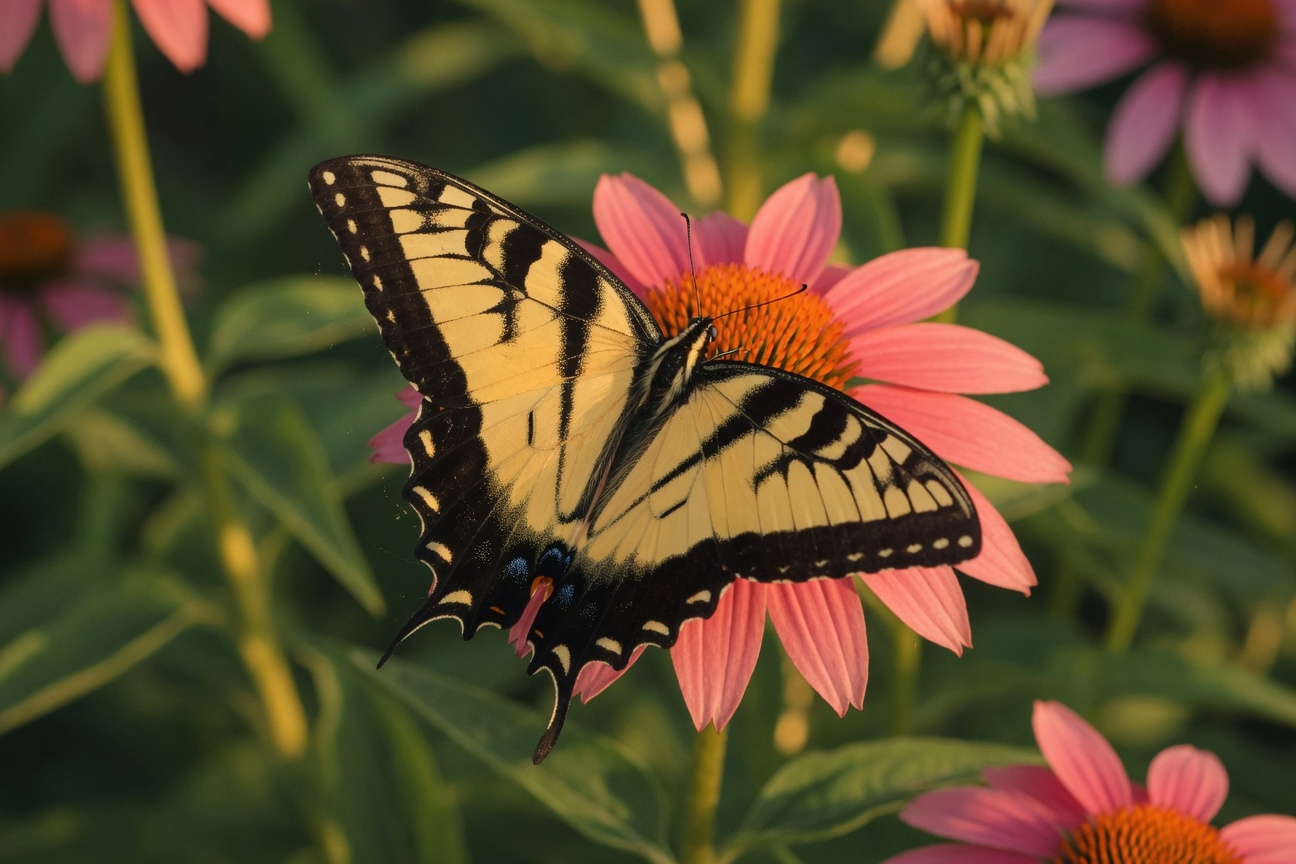
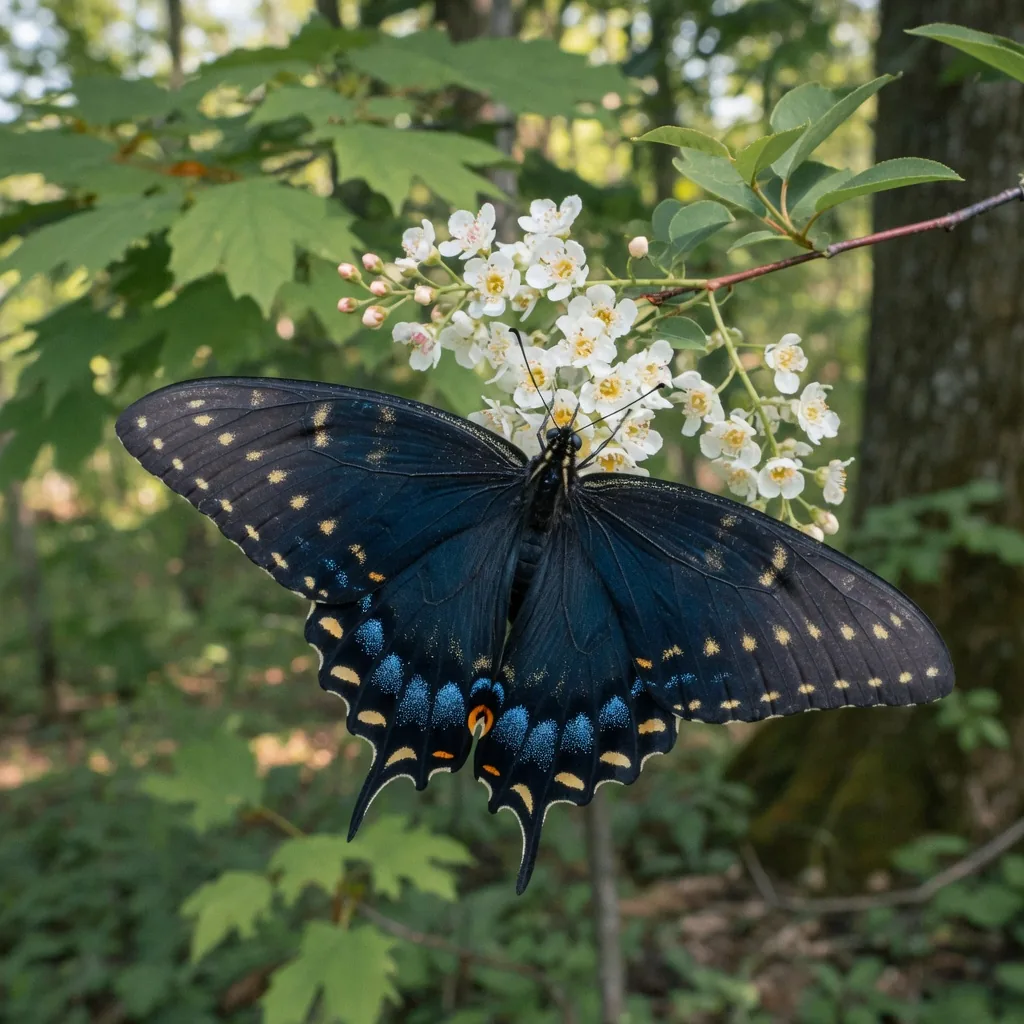
While the male tiger swallowtail butterfly flaunts yellow and black stripes like those of a tiger, the female may be darker than the male or similar to it. The abundance of tiger swallowtails is probably due to their versatile feeding habits and wide range of host plants, where the female lays her eggs.
The tiger swallowtail is a frequent visitor to home gardens and the trees around us. It belongs to the large group of swallowtail butterflies, which account for about 500 species in total. Even many of the caterpillars you have seen feeding on plant foliage are tiger swallowtails. Because this butterfly has specific features, you can identify it at a single glance.
Tiger Swallowtail Facts and Info
The tiger swallowtail is a large species of butterfly, and adult females are bigger than their male counterparts. It shares the same taxonomic family with other swallowtail butterflies, such as the eastern, western, southern, sahara, giant, black, zebra, spicebush, short-tailed, and two-tailed. They are generally attracted to red and pink flowers on hardy plants.
What Is in a Name?
The name "Tiger swallowtail butterfly" comes from two things, color and tail-like extensions. This lovely insect is adorned with yellow and black stripes across its wingspan and body. In some females, the wing and body color is much darker. As for "swallowtail", this butterfly has long, tapering tail-like features on the hind wings that resemble the tail of a swallow bird.
Scientific Classification
The widely accepted scientific name for the tiger swallowtail is Papilio glaucus. Here, Papilio is the genus name, while glaucus is the species name of this striped butterfly. It belongs to the superfamily Papilionoidea, family Papilionidae, and subfamily Papilioninae. The class and order of this butterfly species are Insecta and Lepidoptera respectively. The species name for tiger swallowtails varies based on the particular strain.
Tiger Swallowtail Description
Beyond its color and wings, there are many more features that set the tiger swallowtail apart from other butterflies. The wingspan of this butterfly averages 9-16.5 cm. It can fly for long distances and is often seen gliding above the ground, and sometimes all the way up at treetop level.
Habitat and Distribution
Swallowtail butterflies are found in nearly all parts of the world. They are named differently depending on the region where they are most common. For instance, the eastern tiger swallowtail butterfly is found in eastern United States, while the western swallowtail butterfly is seen commonly in western North America. They live in swampy areas, alongside rivers, in woodlands, grasslands, and cities.
Diet and Feeding Habits
The diet of this butterfly changes depending on which stage of life it is in. Adult butterflies mainly feed on the sweet nectar of various flower species, while the caterpillars eat plant foliage. The pupa is a resting phase while the insect prepares to emerge as an adult. Food plants for this butterfly include lilac bush, poplar tree, black cherry, chokecherry, and sweet bay magnolia. The larvae feed voraciously and grow many times their original size before entering the pupal stage.
Tiger Swallowtail Reproduction
Male tiger swallowtail butterflies fly alone in search of compatible females. They intercept the females for the purpose of mating. When laying eggs, the female is very careful about location. She only lays eggs on or near host plants, plants that the caterpillars can feed on after they hatch. Individual eggs are laid on the leaves of shrubs and woody plants.
Four Growth Stages
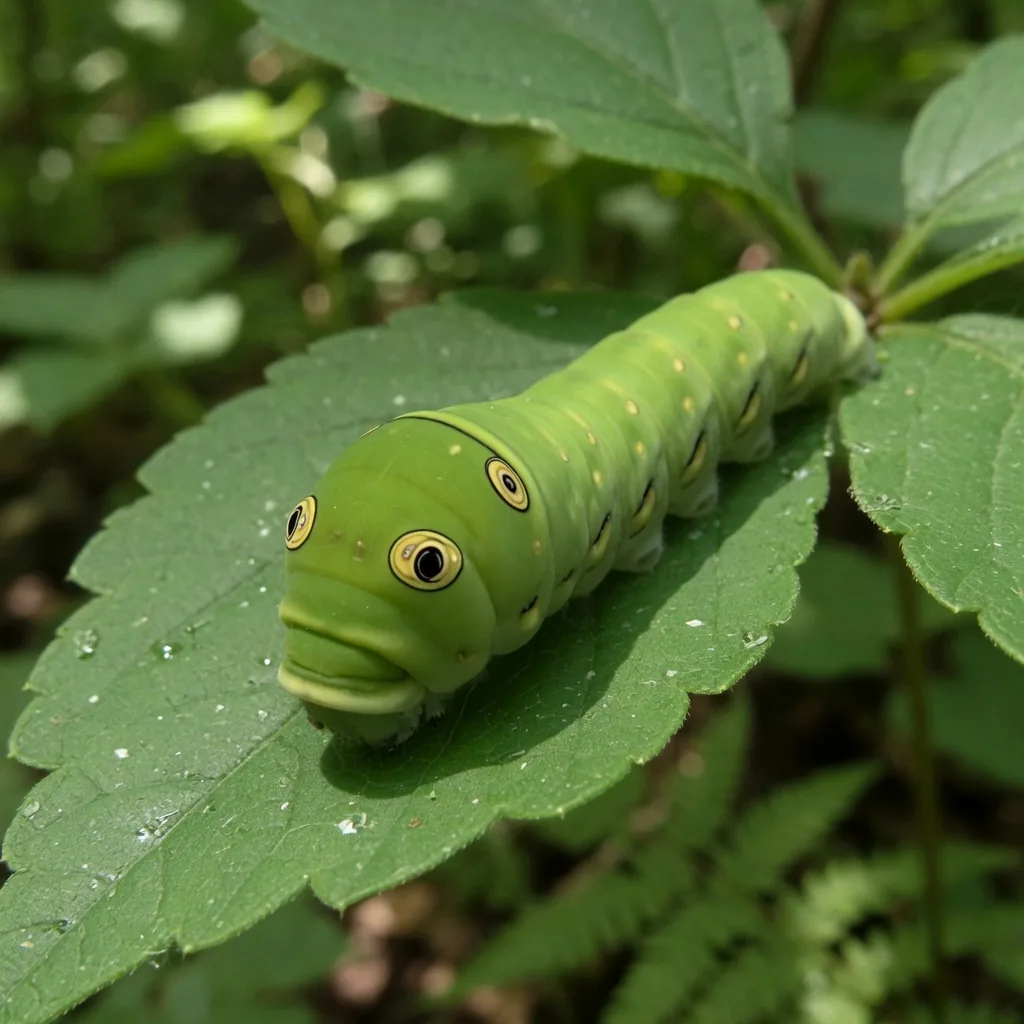
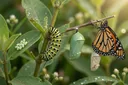
In studying insects, the butterfly life cycle is the classic example of metamorphosis. Like other butterflies, the tiger swallowtail has four growth stages that look completely different from one another. These stages are: egg (yellowish green in color), larvae (a smooth, green caterpillar with distinctive eyespots), pupae (brown in color), and adult. Of these, caterpillars eat the most and grow to about 2 inches in length.
Take the Tiger Swallowtail Quiz!
5 quick questions. How much do you know about this beautiful butterfly?
Tiger Swallowtail Predators
Birds are the main natural enemies of adult butterflies, and this is true for the tiger swallowtail too. As for the caterpillars, they are green and well camouflaged against their surroundings. Their exceptionally large head and eyespots are adaptations to deter predators. Even so, various animals feed on the smooth, green caterpillars, including raccoons, squirrels, and shrews.
Attract Tiger Swallowtails to Your Garden
Watching vibrant swallowtail butterflies is a relaxing hobby you can enjoy any time. If you already have a garden, you can bring them in by adding the right plants. For the adult butterflies, consider planting abelia and lilacs. To encourage females to visit and lay eggs, grow cherry, magnolia, and tulip trees, these are the host plants where caterpillars will feed after hatching.
Explore More Animals
 Awe-inspiring Facts About the Beautiful Swallowtail ButterfliesSwallowtail butterflies are considered the most beautiful butterflies in the world. Discover facts about their life cycle, diet, flight, and more than 500 speci
 Zebra Swallowtail Butterfly FactsThese butterflies have stripes like zebras and tailed wings like swallows. Discover fascinating facts about the zebra swallowtail butterfly, from its life cycle
 Utterly Fascinating Information About Butterfly MetamorphosisA complete change of physical form starting from the egg, to a larva, then a chrysalis, and then a gorgeous butterfly, discover the four amazing stages of butt
 Four Growth Stages of a ButterflyHow does a caterpillar that comes out of a tiny egg, metamorphose into a butterfly with magnificently artistic designs on its wings? This article will tell you

 Fun fact for today!Swallowtail butterflies make up about 500 species, and the tiger swallowtail is one of the most recognisable of them all!