

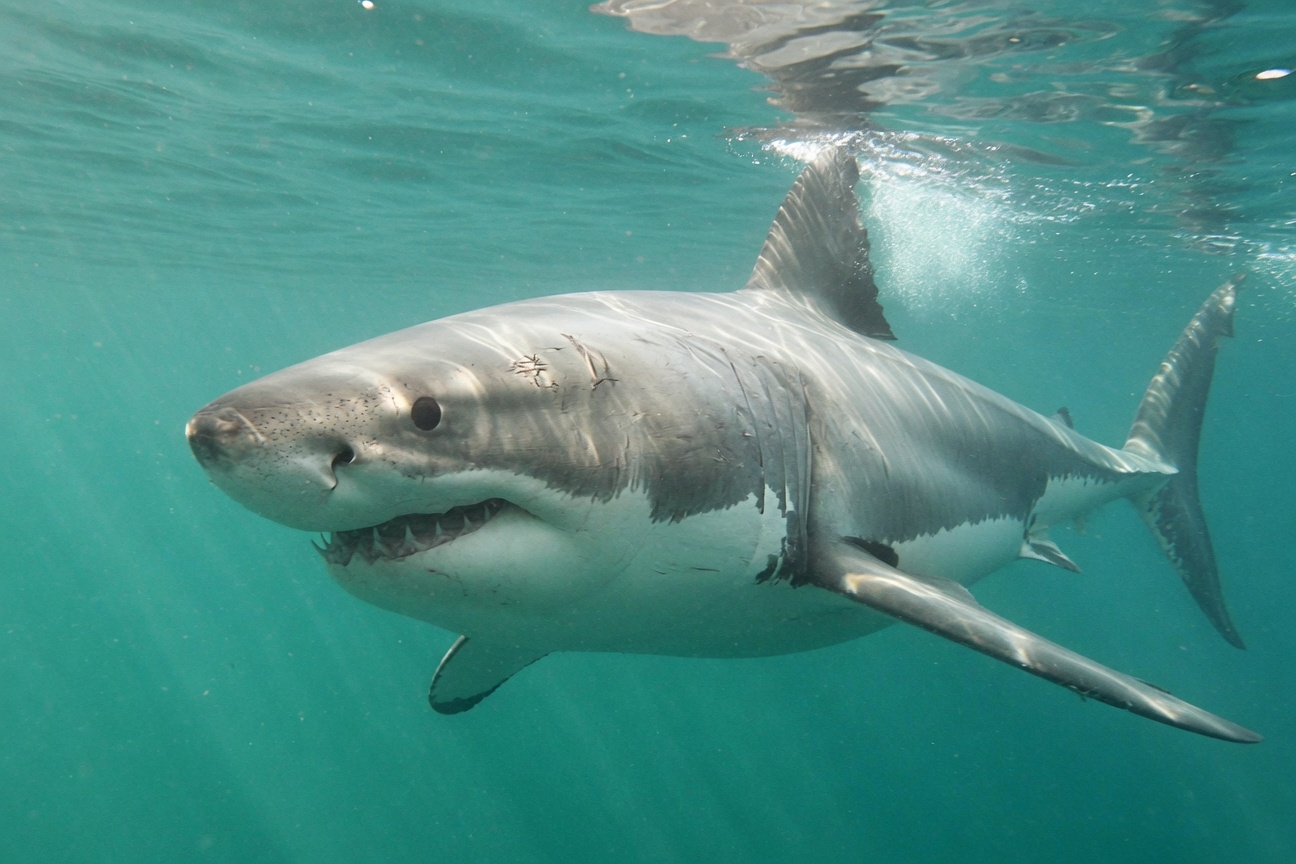
Of the 400 odd species of sharks that exist today, only around 20 species are large enough to pose any threat to humans. According to data compiled by the International Shark Attack File (ISAF), 2,463 confirmed unprovoked shark attacks were recorded worldwide between 1957 and 2011. Of the 980 confirmed unprovoked attacks reported from the United States during that same period, 36 turned out to be fatal. In 2011 alone, 118 attacks were reported, and 17 of these (which amounts to 15% of the total) were fatal.
Most of these attacks happen because large sharks confuse humans for seals or other prey. It is safe to say that sharks pose a risk to humans because of their size, not because they are natural man-eaters.
It is also important to understand why a particular species might display aggressive behavior before labeling it as "dangerous." Sharks are no doubt a potential threat to us, but they themselves are far more threatened by us. Every year approximately 100 million sharks fall prey to commercial and recreational fishing.
Most Aggressive Sharks in the World
The number of attacks linked to any one species depends largely on how often that species meets humans. A very aggressive shark living only in deep ocean rarely encounters people, while a less aggressive species that swims close to shore may have more recorded attacks simply because the contact is more frequent.
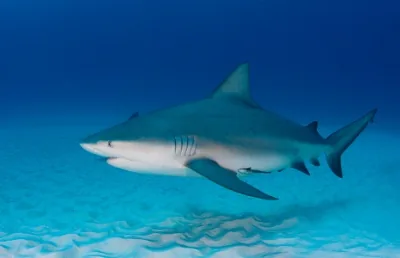
1. Bull Shark (Carcharhinus leucas)
The bull shark inhabits both saltwater and freshwater around the world, making it the most aggressive shark toward humans. It tends to swim in coastal and shallow warm waters that people frequent, the tropical shorelines from Brazil to Western Australia are favorite spots. Because bull sharks can enter shallow, warm water, attacks by this species are not unusual. Like other sharks, bull sharks attack humans out of curiosity rather than hunger, we are not on their menu. Researchers rank the bull shark as the most aggressive of all shark species, followed by the great white and the tiger shark. Bull sharks can grow up to 10.8 feet in length. Females are larger than males, and they weigh about 700 pounds.
2. Great White Shark (Carcharodon carcharias)
The great white shark is the legendary predator that created shark-phobia in many people's minds. More than 116 people have been victims of great white shark attacks; of these, 67 people lost their lives. These sharks grow to about 20 feet in length and weigh (hold your breath) 5,000 pounds. That makes them one of the biggest sharks in the world and the largest predatory fish on Earth. Great white sharks are curious hunters. Researchers have found they generally do not prey on humans but instead take "sample bites" of their victims. Unfortunately, a curious bite from a great white can still be fatal for a human.
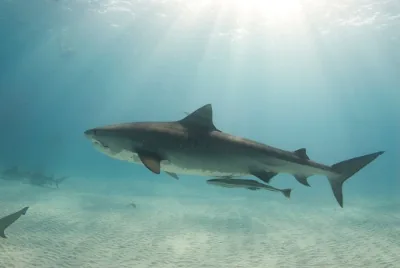
3. Tiger Shark (Galeocerdo cuvier)
The tiger shark is the only member of the Galeocerdo genus. It inhabits tropical and temperate waters around Pacific islands, and its dark body stripes give it the name "tiger shark." These sharks generally hunt at night and will eat almost anything that comes their way, even metal objects. Many specimens are found to have human remains in their stomachs along with license plates, car tires, aluminum cans, and other trash. Known as "man eaters," tiger sharks are placed at number 3 on this list. They can be 8 to 11 feet long and can weigh 850 to 1,400 pounds.
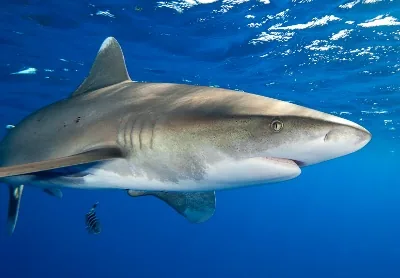
4. Oceanic Whitetip Shark (Carcharhinus longimanus)
The oceanic whitetip shark is a large open-ocean, or pelagic, shark. It inhabits tropical and warm-temperate seas and has a long, white-tipped body with rounded fins. Although slow-moving, this shark is quite violent toward humans. It enters a frenzied feeding mode when there are survivors from a shipwreck or air crash in the water. It will forever be remembered as the species responsible for the deaths of an estimated 600 to 800 sailors from the USS Indianapolis. The shark can grow up to 10 to 13 feet in length and weighs about 370 pounds.
Take the Shark Quiz!
5 quick questions. How much do you know about the world's most aggressive sharks?
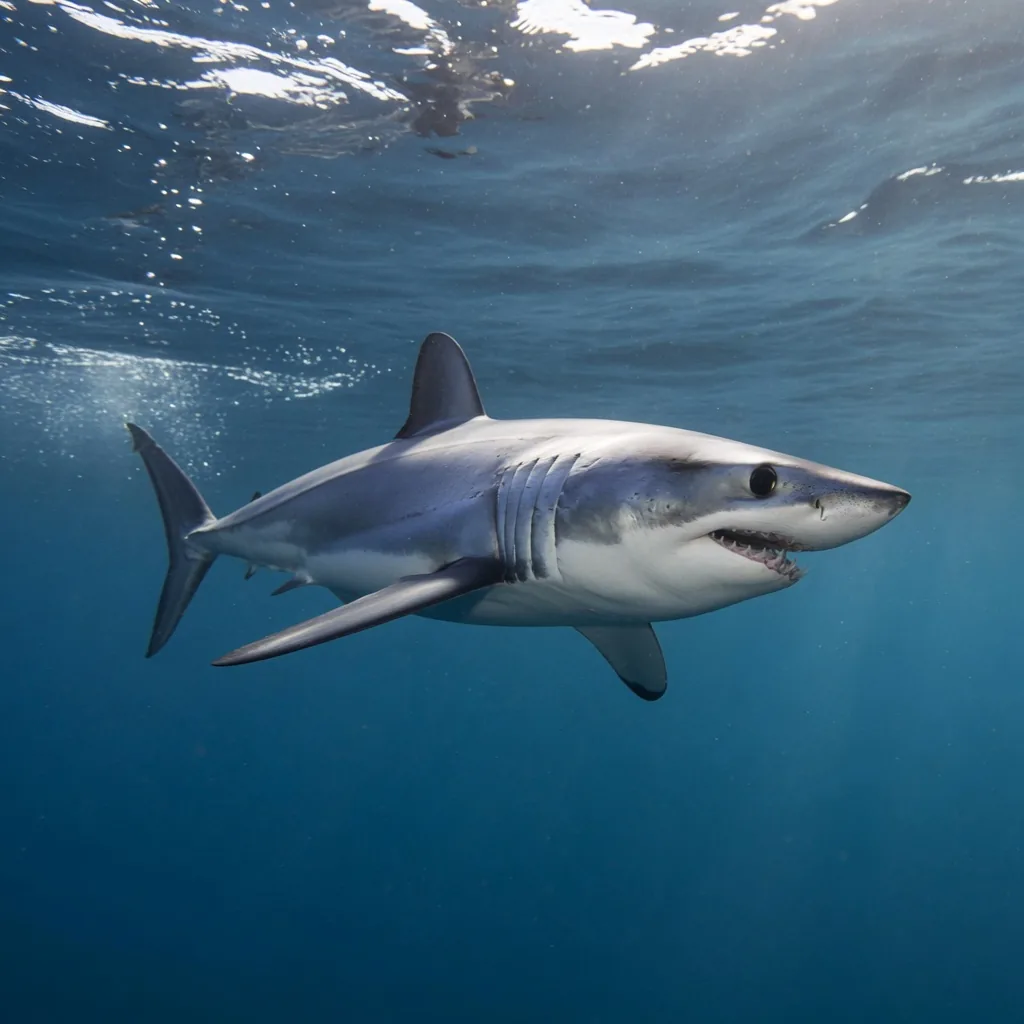
5. Shortfin Mako Shark (Isurus oxyrinchus)
The shortfin mako shark (the one with a distinctively sharp nose) ranks 5th on this list. This shark is the fastest in the ocean: it can swim at 46 mph and even jump 28 feet up into the air! There have been 2 fatal attacks linked to the mako shark. It reaches 9 to 13 feet in length and can weigh a hefty 1,759 pounds.
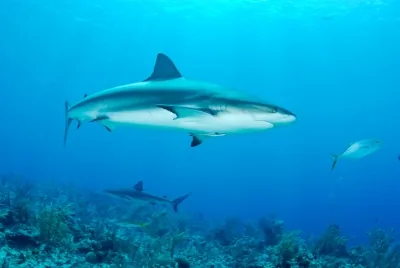
6. Gray Reef Shark (Carcharhinus amblyrhynchos)
The gray reef shark is one of the fiercest predators in the ocean. It has a nictitating membrane that covers its eyes when it goes into attack mode. This membrane protects its eyes from injury so it can continue biting anything in its path. The gray reef shark can grow up to 8.4 feet in length and can weigh 74.3 pounds. There have been 8 reported attacks on humans by this shark, and none of them have been fatal. Learn more about whether sharks are mammals or fish to better understand how they're classified.
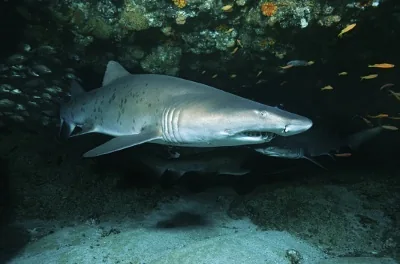
7. Sand Tiger Shark (Family Odontaspididae)
Sand tiger sharks belong to the family Odontaspididae. They are one of the most aggressive shark species, and their aggression begins even before birth. These sharks are ovoviviparous, meaning the young develop from eggs inside the mother's body. The females have two uteri, each carrying many eggs. Once a young shark develops in each uterus, it feeds on the other, weaker fetuses until only one pup remains in each uterus. There are 64 reported human attacks by sand tiger sharks, with 2 fatalities. They are about 10 feet in length and weigh up to 350 pounds.
Explore More Animals
 The Top 10 Most Aggressive Animals in the WorldWith the number of animal species on our planet far exceeding the million mark, compiling a list of ten most aggressive animals can be a daunting task. We tried
 Bull Shark vs. Great White Shark: How to Tell Them ApartBull shark or great white? Meet two of the ocean's most feared sharks side by side (habitat, size, teeth, and hunting tricks) plus a quiz, glossary, and myth-
 World's Most Aggressive Snakes That'll Scare the Life Out of YouWhich is the most aggressive snake in the world? Is it the large black mamba or the small carpet viper? Let's find out...
 The Amazing Life Cycle of SharksSharks have prowled the oceans for around 400 million years. Discover how great white, hammerhead, bull, and thresher sharks are born, grow, and survive.
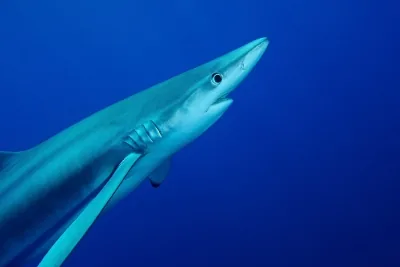
8. Blue Shark (Prionace glauca)
The blue shark takes the 8th slot in our list of the top 10 most aggressive sharks. It has been reported to attack 32 humans, of which 3 attacks proved fatal. Blue sharks are something like explorers, their quest for exploration can be a dangerous thing for humans. They are known for their "exploring bites" on small boats, and such bites can be deadly. The blue shark is about 12 feet in length and weighs about 450 pounds.
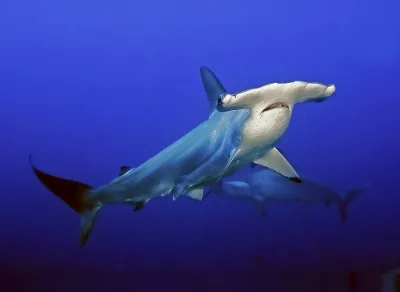
9. Hammerhead Shark (Genus Sphyrna)
People often ask: "Are hammerhead sharks aggressive?" Despite no recorded fatalities, the answer is yes, with important nuance. There are 9 species of hammerhead sharks, all belonging to the Sphyrna genus. Of these 9 species, 3 are considered extremely aggressive. Hammerhead sharks are generally shy creatures, but they will bite swimmers who get too close. The three most aggressive species are Sphyrna lewini (scalloped hammerhead), Sphyrna couardi (whitefin hammerhead), and Sphyrna mokarran (great hammerhead). These sharks are about 10 to 17 feet long and weigh between 330 and 1,100 pounds.
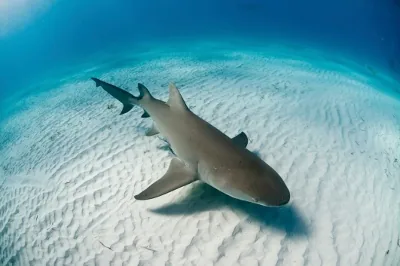
10. Lemon Shark (Negaprion brevirostris)
Lemon sharks are native to the subtropical and tropical regions of the Atlantic coasts of North and South America. They are the most studied sharks in science, largely because they can survive in captivity. There have been reports of 22 lemon shark attacks on humans since 1850, and not a single one was fatal. Lemon sharks can grow up to 12.6 feet long and weigh well over 400 pounds. These reef sharks become extremely aggressive during mating seasons and are easily provoked into attacking.
Putting the Numbers in Context
The number of attacks linked to any particular species will largely depend on how often that species meets humans. A very aggressive shark that lives only in deep oceans rarely comes into contact with people. On the other hand, a relatively less aggressive species that swims in shallow waters near the shoreline may have more attacks to its credit, simply because it is more likely to encounter humans directly.
While shark attacks on humans always make headlines, the plight of sharks themselves rarely gets the same attention. In such circumstances, it is difficult to say whether sharks are the real threat to humans, or whether humans are the greater threat to sharks. Explore the life cycle of sharks to understand how these animals develop and reproduce.

 Fun fact for today!Every year approximately 100 million sharks are killed by humans, far more than the other way around!