

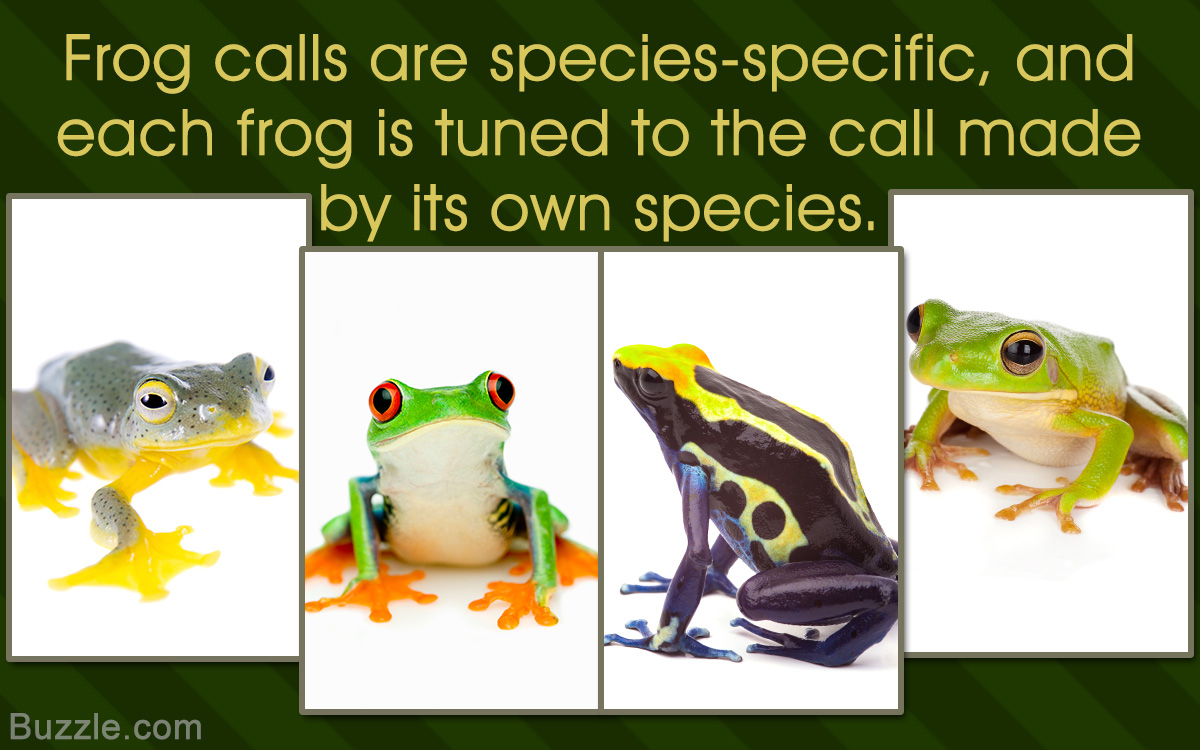
From the smallest frog Paedophryne amauensis to the largest Conraua goliath, there are thousands of frog and toad species with very different sizes and features. They all belong to the order Anura, which is the most diverse order of amphibians. According to the ITIS (Integrated Taxonomic Information System), there are 47 families in the order Anura, which has around 6,000 species. The order is divided into three suborders — Archaeobatrachia, Mesobatrachia, and Neobatrachia.
Even though toads are considered a type of frog, there are some differences between them. While most frogs have smooth, thin, and slimy skin, toads are rough and warty. Frogs are mostly found near water sources. Toads have short and stocky hind legs meant for hopping, whereas frogs have long, strong hind legs that help them jump. True toads belong to the family Bufonidae, but families like Bombinatoridae, Alytidae, Pelobatidae, Rhinophrynidae, Scaphiopodidae, and Microhylidae also have some toad species.
The following is a list of different types of frogs and toads with pictures. This classification is based on their common features.
Midwife Toads and Painted Frogs
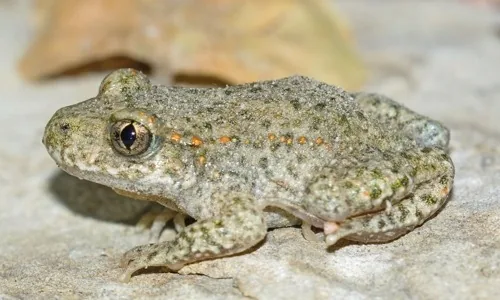
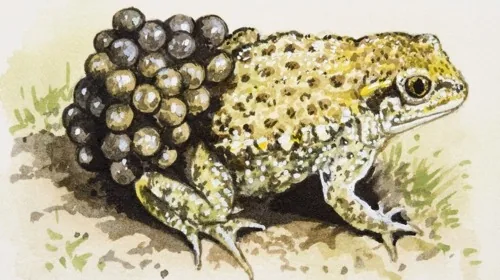
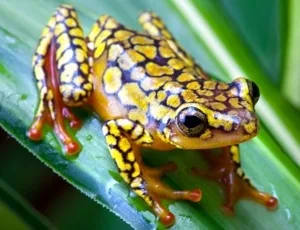
The family Alytidae consists of two genera — Alytes and Discoglossus. This family of primitive frogs was earlier known as Discoglossidae, which has another name, Colodactylidae. The members of the genus Alytes are called midwife toads, as the male members carry eggs on their backs. They live on land, and are found in Europe and some parts of Africa. The members of the genus Discoglossus are also found in these regions. This genus has six species, which are known as painted frogs that are mostly found near water bodies. They have pointed snouts and big eyes. Most of the painted frogs have patches on their backs.
Screeching Frogs or Squeakers
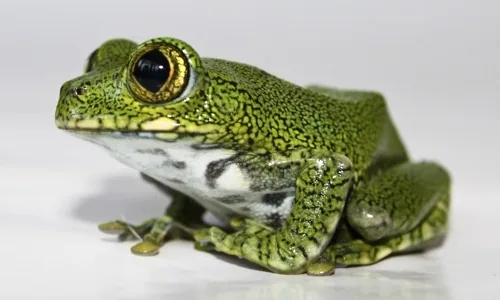
As the name suggests, these frogs are known for their calls. Though they produce high-pitched calls, these frogs are small, with a maximum body length of two inches. Usually found in leaf litter, they belong to the genus Arthroleptis in the subfamily Arthroleptinae. This subfamily has six other genera including Trichobatrachus, which has the unique hairy frog named Trichobatrachus robustus. The subfamily Arthroleptinae belongs to the family Arthroleptidae, which has another subfamily called Leptopelinae. The latter has a single genus Leptopelis. Peacock tree frogs belong to this genus and they are known for their high-pitched calls. In fact, this frog produces two different types of sounds. One type is used to prevent other males from entering the territory, whereas the other type is used to attract females.
Fire-belly Toads
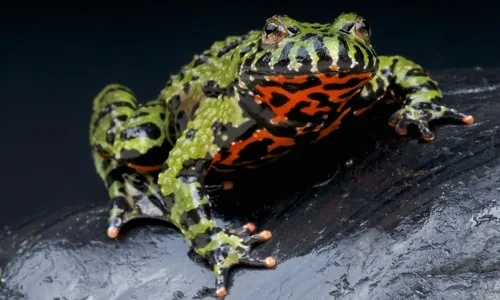
These toads have bright-colored marks on their bellies — hence the name. Most of them have black markings with red and yellow patterns. As in many other animal species, these bright colors signal toxicity. When threatened by predators, they arch their backs and display their bellies as a warning sign. These toads belong to the genus Bombina and family Bombinatoridae. This family has another genus named Barbourula with two species, which are known as jungle toads. They are seen in the Philippines and Borneo Islands, whereas members of the genus Bombina are found throughout Eurasia. Both jungle toads and fire-bellied toads have flattened bodies. The mating calls of these toads resemble dog barking, but the sounds are too low to hear clearly. These toads are kept as exotic pets.
Saddleback Toads
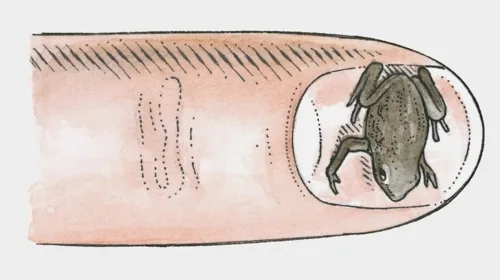
These bright-colored toads belong to the genus Brachycephalus in the family Brachycephalidae. They are small-sized toads with a body length of around one inch. In fact, the smallest frog of the Southern Hemisphere belongs to this family — none other than Izecksohn's toad Brachycephalus didactylus, also called the Brazilian gold toad. Found in the Atlantic forest of Brazil, most saddleback toads are bright yellow. The bright color signals toxicity. Unlike most other frogs, saddlebacks have three toes and three fingers each on their feet and hands. Recently, another genus called Ischnocnema was added to this family, with some frogs from Brazil and Argentina.
True Toads


True toads belong to the family Bufonidae, which has around 45 genera with more than 500 species. Most members of this family are typical toads with a dry, warty skin. They have parotid glands behind their eyes, and most of them are toothless. These parotid glands secrete toxins when the toads are threatened. The toxins secreted by Bufo guttatus (smooth-sided toad) are lethal enough to cause heart failure in humans if ingested. Even the cane toad is toxic enough to cause human deaths if consumed. Male members of this family have the Bidder's organ, a spherical part located near the kidney. This organ turns into an ovary if the testes stop functioning properly. True toads are found in almost all parts of the world, except Australia and Antarctica.
Glass Frogs


Most glass frogs are arboreal and are found in regions like Mexico, Venezuela, Brazil, and Argentina. Many of them are light green, and some have transparent skin on their bellies — which means the internal organs can be seen, giving them their name. They are small-sized frogs that may resemble tree frogs belonging to the family Hylidae. Tree frogs have eyes that bulge sideways, whereas the eyes of glass frogs face forward. Glass frogs belong to the family Centrolenidae, with two subfamilies — Allophryninae and Centroleninae. While Allophryninae has a single genus Allophryne with a single species, Centroleninae has four genera.
Darwin's Frogs
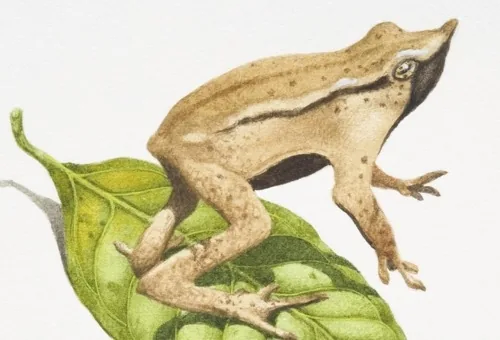
These small frogs are found in certain parts of South America. There are two species belonging to the genus Rhinoderma. Discovered by Charles Darwin, these frogs have a proboscis-like elongation on the tips of their noses. They are seen in green or brown colors with dark undersides. Some of them have white blotches on their bellies. The male members have unusually large vocal sacs, which they use for carrying tadpoles. These frogs belong to the subfamily Cycloramphinae in the family Cycloramphidae, which has another subfamily Alsodinae and genus Rupirana. The family was earlier known as Rhinodermatidae.
Poison Dart Frogs
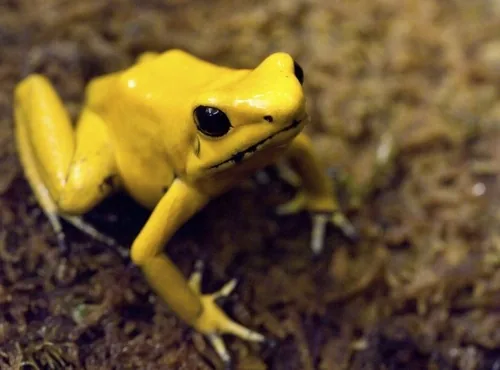
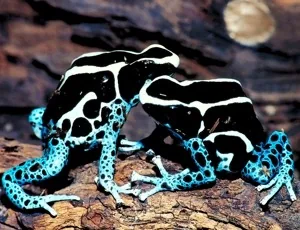
These poisonous frogs produce toxic secretions and are brightly colored to warn predators. They belong to the family Dendrobatidae with three subfamilies — Colostethinae, Dendrobatinae, and Hyloxalinae. Those belonging to the genus Phyllobates in the subfamily Dendrobatinae are found to be highly poisonous. The indigenous people of the Americas used blowdarts tipped with the toxic secretions of these frogs — hence the name. The golden poison dart frog (Phyllobates terribilis) produces enough venom to kill ten adult humans. The level of toxicity may vary from species to species. Only one predator has been found that can eat the most toxic species: Leimadophis epinephelus, a snake that is immune to the toxins. Many species of poisonous dart frogs are raised as exotic pets, and captive individuals are found to be less poisonous than wild ones.
Take the Frog Quiz!
5 questions about the amazing world of frogs and toads. How much do you know?
Ghost Frogs
Found in the mountain streams of South Africa, ghost frogs belong to the family Heleophrynidae, which has two genera — Hadromophryne and Heleophryne. While the genus Hadromophryne has a single species, there are six species in the genus Heleophryne. Most of them have transparent white skin on their bellies, through which the internal organs can be seen — which could be one reason for the name. These frogs are found in the Skeleton Gorge in Table Mountain, where local people once brought dead bodies. Their bodies are flattened so they can squeeze into rock crevices. They have toe discs to help them grip rocks. Even the tadpoles have sucking mouth parts to cling to rocks in fast-moving streams.
Marsupial Frogs
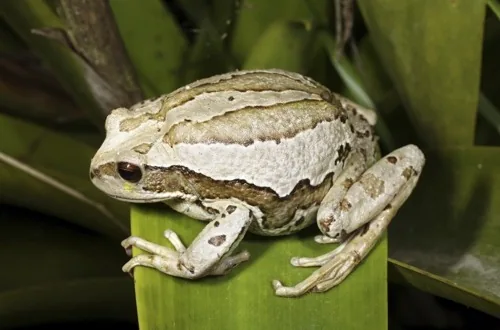
These frogs are known for their parental care. Females carry eggs on their backs until they hatch, and sometimes carry froglets too. Even the males are actively involved in placing the eggs properly. Native to South and Central America, these frogs belong to the family Hemiphractidae, which has five genera: Cryptobatrachus, Flectonotus, Gastrotheca, Hemiphractus, and Stefania. Around 80% of the marsupial frogs belong to the genus Gastrotheca.
Tailed Frogs
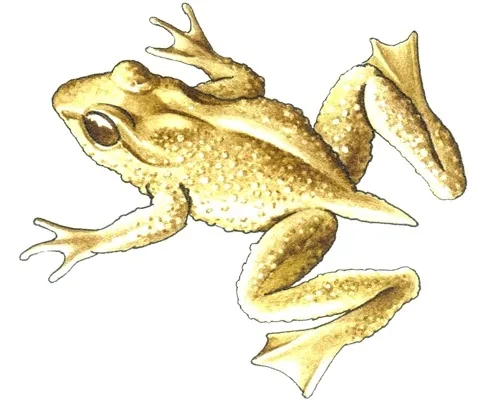
There are two species of tailed frogs belonging to the genus Ascaphus. Both the mountain tailed frog (Ascaphus montanus) and the coastal tailed frog (Ascaphus truei) have distinct tails. The tail is an extension of the male cloaca. With this extended cloaca, internal fertilisation is possible and the chances of sperm loss are reduced. These frogs inhabit mountain streams, and their tadpoles have suckers to attach themselves to rocks in fast currents. They are found in the Northwest United States and British Columbia. Though they were earlier classified under the family Ascaphidae, the genus is now placed in the family Leiopelmatidae, along with the genus Leiopelma. Like tailed frogs, the members of this genus have additional vertebrae, but they lack the tail — however, they have remains of tail muscles. This genus has four species known as New Zealand primitive frogs.
Litter Frogs
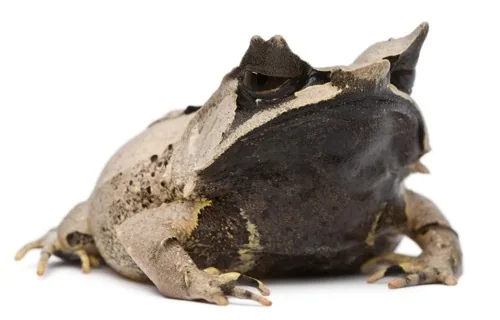

From the very name, it is clear that these frogs live in leaf litter. Many of them live on forest floors and have excellent camouflaging skills — they look like dead leaves, complete with leaf-like veins, patterns, and color. A species named Megophrys nasuta doesn't look like a frog at all, as it has projections that extend from its eyes and nose. Hence, it is also known as the long-nosed horned frog. Litter frogs are found in Southeast Asia, and they belong to the family Megophryidae with ten genera: Borneophrys, Brachytarsophrys, Leptobrachella, Leptobrachium, Leptolalax, Megophrys, Ophryophryne, Oreolalax, Scutiger, and Xenophrys.
Spadefoot Toads
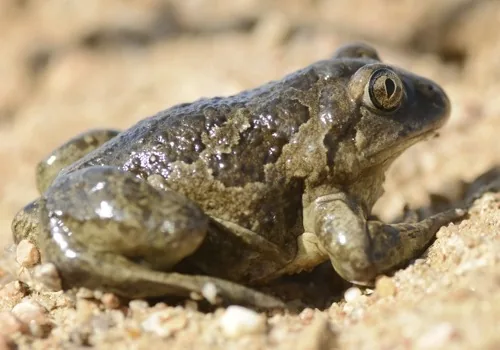
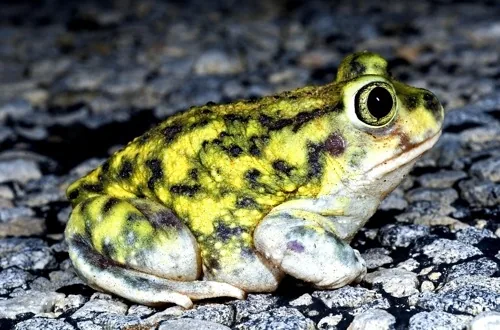
Four species of the genus Pelobates of the family Pelobatidae are known as European spadefoot toads. They have round bodies and smooth skin, often in dull brown mottled patterns, with stocky bodies and big, bulging eyes with vertical pupils. The name comes from the sharp, bony protrusions on their hind feet that help them dig — they are also known as burrowing toads. They are found in Europe and certain parts of Asia and Africa. American spadefoot toads are also burrowing, with a spade-like appendage on their hind feet. Found in Canada, the United States, and Mexico, they belong to the family Scaphiopodidae with two genera — Scaphiopus (three species of southern spadefoot toads) and Spea (four species of western spadefoot toads).
Tongueless and Clawed Frogs

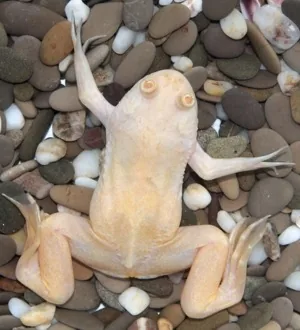
These frogs belong to the family Pipidae, which has five genera: Hymenochirus, Pipa, Pseudhymenochirus, Silurana, and Xenopus. The members of this family are toothless and tongueless. These aquatic frogs have flattened bodies, webbed feet, and claws on the hind feet. They lack ears, but have special adaptations that let them hear underwater. The lateral lines running along the sides of their bodies help them sense sounds and movements while submerged. These primitive frogs do not have vocal cords, but they produce sounds with bony rods in the larynx. Those belonging to the genus Pipa are found in tropical regions of South America, whereas those in the other genera are found in Africa.
More Frog and Toad Families
Beyond the major groups above, there are many more fascinating frog families. Here is a selection, organized by group.
Parsley Frogs
Parsley frogs belong to the genus Pelodytes in the family Pelodytidae. The name comes from the green marks on the common parsley frog's body. Three different species are found in green and brown colors. These slender frogs have slightly flattened bodies and small warts, with large eyes that have vertical pupils. They are mostly found in Southwest Europe.
Mexican Burrowing Toads
These round, fat toads (Rhinophrynus dorsalis) spend most of their time in burrows. Their characteristic feature is the reddish-orange or yellowish line running along the dorsal side of their body. They have sharp claws for burrowing. Unlike other frogs, their tongue is attached to the back of the mouth rather than the tip. Their calls are very loud and distinct; they inflate themselves while calling or when alarmed. They are found in Texas, Honduras, Mexico, and Costa Rica. These toads are the only species in the genus Rhinophrynus, the lone genus in the family Rhinophrynidae.
Shovelnose Frogs
These frogs have prominent noses — hence the name. While most burrowing frogs dig rear-first, shovelnose frogs burrow head-first. They have smooth skin, round bodies, and short stocky legs. Eggs are laid in underground burrows; once they hatch, the female either makes a tunnel to the water source or carries the tadpoles to water. There are nine species of shovelnose frogs in the single genus Hemisus in the family Hemisotidae. These frogs are found in savannahs, marshes, grasslands, and swamps of Africa.
Tree Frogs
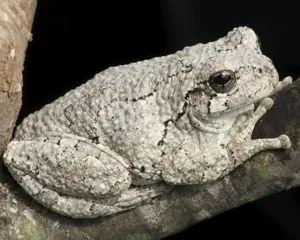

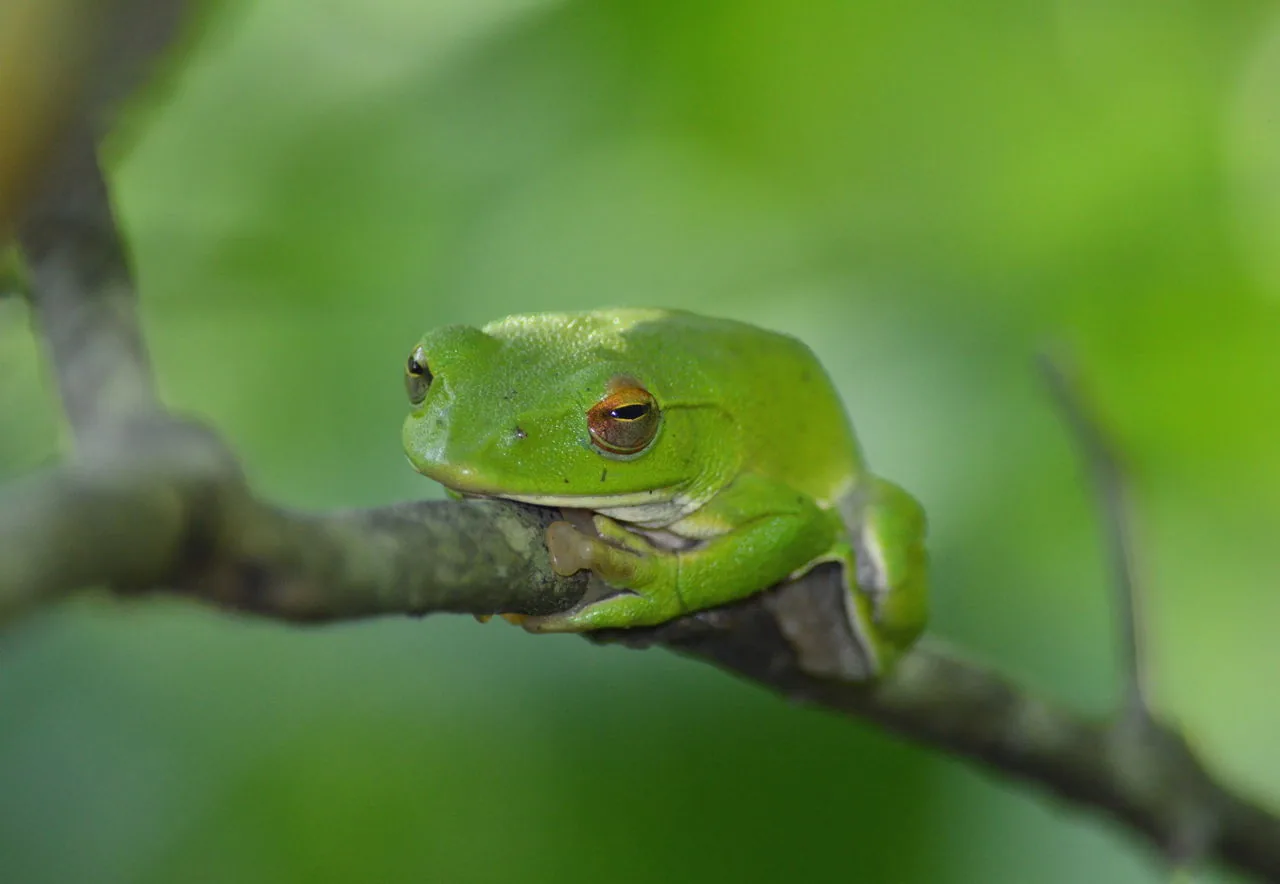
Tree frogs belong to the family Hylidae with three subfamilies — Hylinae, Pelodryadina, and Phyllomedusinae. Many of them live in trees and tall vegetation. Being small-sized, they can easily move on slender branches and twigs. They have bulging eyes with binocular vision and adhesive toe pads that help them climb. However, some members of this family are terrestrial or semi-aquatic. Tree frogs come in shades of green, white, gray, yellow, and brown; body color and pattern help with camouflage. They are mostly found in forests, woodlands, and marshes. Their body length ranges between 3 to 14 centimeters. They are carnivorous and feed on insects, worms, and even small frogs. The most popular among them are green tree frogs, which are raised as pets. Another well-known species is the gray tree frog or North American tree frog, which emerges during spring for mating. The color of their warty skin may shift between green and gray according to the background. Found in most parts of the United States, the northern cricket frog (Acris crepitans) is a tree frog that does not actually inhabit trees. It is very small and grows up to 1.5 inches long. Its dorsal skin carries blotchy patterns in a color that ranges between gray, green, and brown. Its mating call resembles crickets, hence the name.
Frequently Asked Questions
How many types of frogs and toads are there?
There are around 6,000 species of frogs and toads, classified across 47 families in the order Anura.
What is the smallest frog in the world?
The smallest known vertebrate in the world is Paedophryne amauensis, a frog from Papua New Guinea with a body length of around seven millimeters.
What is the largest frog in the world?
The goliath frog (Conraua goliath) is the largest frog in the world. It can grow up to 33 inches long and weigh more than three kilograms. It is mainly found in Cameroon and Equatorial Guinea.
What is the difference between frogs and toads?
Most frogs have smooth, thin, and slimy skin; toads are rough and warty. Frogs are mostly found near water sources. Toads have short, stocky hind legs for hopping, while frogs have long, strong hind legs for jumping.
African Reed Frogs and Running Frogs
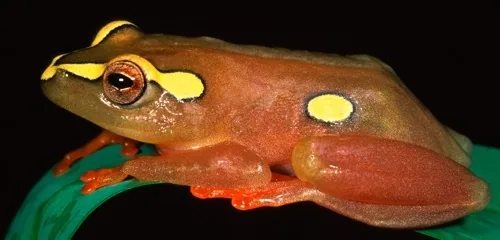

Otherwise known as hyperolids, these frogs have brightly patterned skin. They have a body length ranging between 1.5 to 10 centimeters. They belong to the family Hyperoliidae, which has 17 genera. There are around 100 species of reed frogs belonging to some of these genera, especially Hyperolius. Reed frogs are very popular as pets. Usually male argus reed frogs are green and females are reddish-brown with colorful marks. While most members of this family are found in Africa, those belonging to the genus Heterixalus are found only in Madagascar. Those in the genus Tachycnemis are found only in the Seychelles Islands. Some inhabit trees while others are completely terrestrial. There are around 30 species in the genus Afrixalus, known as banana frogs, which make nests by folding leaves above water bodies. Members of the genus Kassina are known as running frogs due to their distinctive walking pattern using their hind legs.
Southern or Tropical Frogs
These frogs belong to the family Leptodactylidae, which has four genera: Hydrolaetare, Leptodactylus, Paratelmatobius, and Scythrophrys. White-lipped frogs belong to the genus Leptodactylus — the name comes from their white upper lip. They are also known as ditch frogs, as they are found in marshes, ditches, and muddy areas. Most frogs in this family make foam nests in which eggs are laid; such nests can be seen on the ground, the surface of water bodies, or in cracks and crevices. Tadpoles live in these nests until they metamorphose. Most come in shades of gray, green, and brown. Some species like the gold-striped frog have bright lines and spots used for tricking predators, since bright colors signal toxicity. Another notable species is the Surinam horned frog Ceratophrys cornuta, which has an unusually wide mouth and horns above the eyes.
Mantellid Frogs
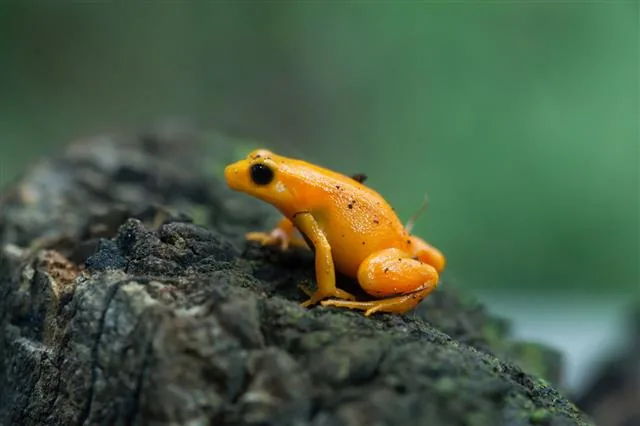

These frogs belong to the family Mantellidae, which has three subfamilies — Boophinae, Laliostominae, and Mantellinae. This family has numerous species with little in common between them. While some are arboreal or aquatic, most are terrestrial. These frogs are found in Madagascar and Mayotte Island. The subfamily Boophinae has a single genus named Boophis. Members of this genus resemble tree frogs. Some of them have transparent bellies like glass frogs and are called skeleton frogs. While Laliostominae has two genera and four species, Mantellinae forms the major part of the family, with two genera — Mantella and Mantidactylus. Those in the genus Mantella are like poison dart frogs: small, brightly colored, and they produce toxins too.

Narrowmouthed Frogs
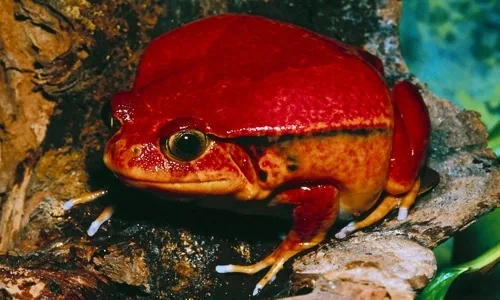

These frogs have wide bodies and narrow mouths, and they belong to the family Microhylidae. The family has numerous species classified under 11 subfamilies (Cophylinae, Dyscophinae, Gastrophryninae, Hoplophryninae, Kalophryninae, Melanobatrachinae, Microhylinae, Otophryninae, Phrynomerinae, and Scaphiophryninae), plus 12 other genera. Not all microhylids are narrowmouthed — some have normal body proportions. While most of these frogs are found in New Guinea and Madagascar, they can be seen in some parts of Central and South America, Asia, and Australia. Their body length ranges from 1.5 to 10 centimeters. There are three species of tomato frogs in the genus Dyscophus, the sole genus in the subfamily Dyscophinae. Tomato frogs are natives to Madagascar.
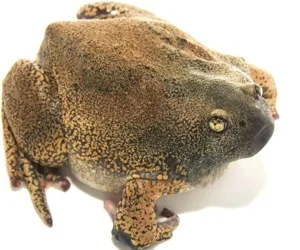
True Frogs
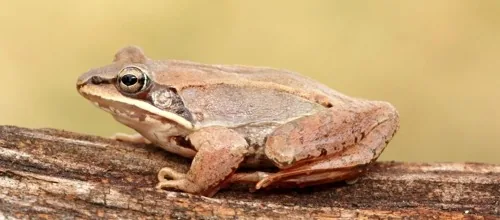
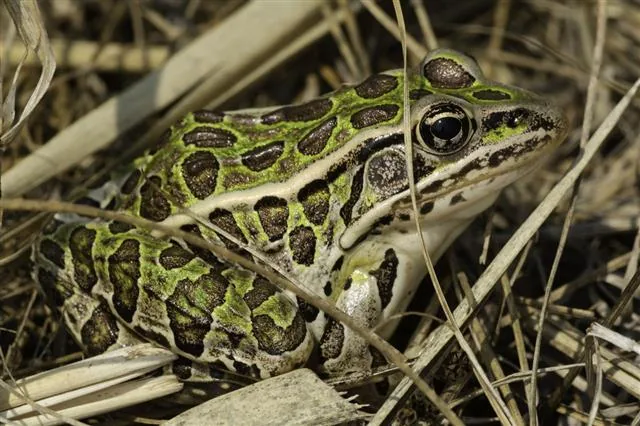
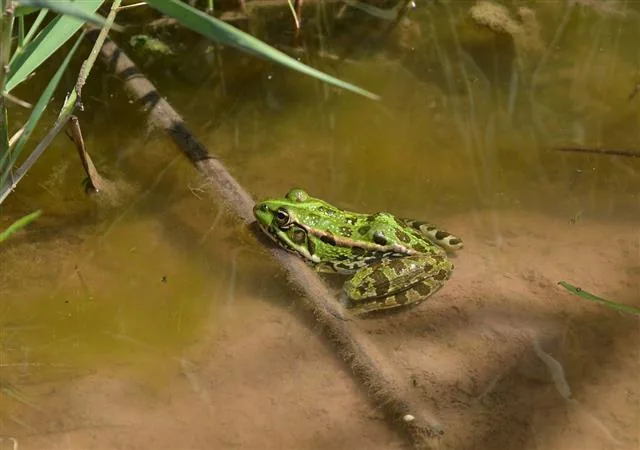
True frogs belong to the family Ranidae and are found in almost all parts of the world, except Antarctica. While most of them are aquatic, some are arboreal and others are terrestrial. These frogs have smooth and moist skin, webbed feet, narrow waists, and long, strong legs. Some of them are live-bearers. The wood frog is a common Ranidae species with a mask-like marking over the eyes. It is said that wood frog tadpoles can identify their siblings. The American bullfrog (Rana catesbeiana) can be found across North America in large numbers and is a voracious eater. Like the American bullfrog, the African bullfrog is also very large and commonly found in many African countries. Their habitat includes freshwater lakes, pastures, canals, ditches, dry savanna, and moist savanna. The northern leopard frog (Lithobates pipiens) is common in the United States and is fairly large, often found near water bodies with dense aquatic plants. The dorsal part of its body is green to brown with large round spots bordered by light-colored rings. Its mating calls are like snores. Northern leopard frogs are used for research purposes.
Explore More Animals
 3 Types of Amphibians and Their Distinguishing FeaturesClass Amphibia is divided into three orders: Anura (frogs and toads), Caudata (salamanders and newts), and Gymnophiona (caecilians). Discover the key features t
 Small But Deadly: 4 of the Most Poisonous Frogs in the WildDiscover the world's most poisonous frogs, from the golden poison frog that can kill 20 humans to the warty cane toad. Learn their habitats, toxins, and how to
 Frog Habitat Facts With Stunning Pictures of Their DwellingsFrogs are amphibians, which means that they typically live on land but breed underwater. Discover natural frog habitats, the life cycle connection, aquarium set
 Poison Dart Frog FactsMeet the tiny, jewel-bright poison dart frog, one of the most poisonous creatures on Earth. Discover its colors, diet, reproduction, and conservation status.
Moss Frogs and Gliding Frogs
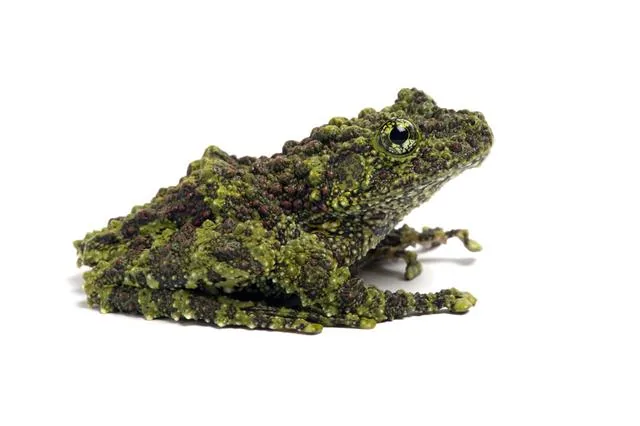
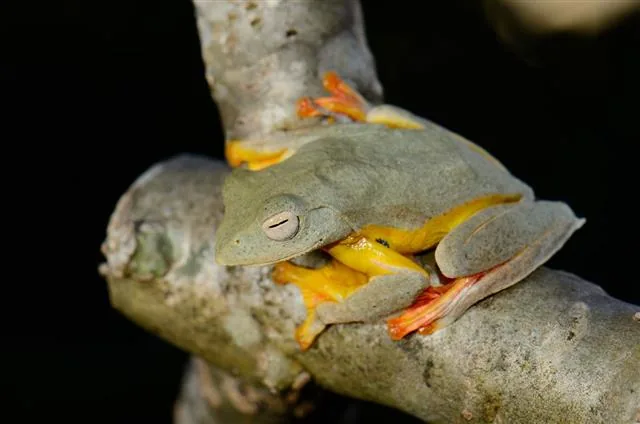
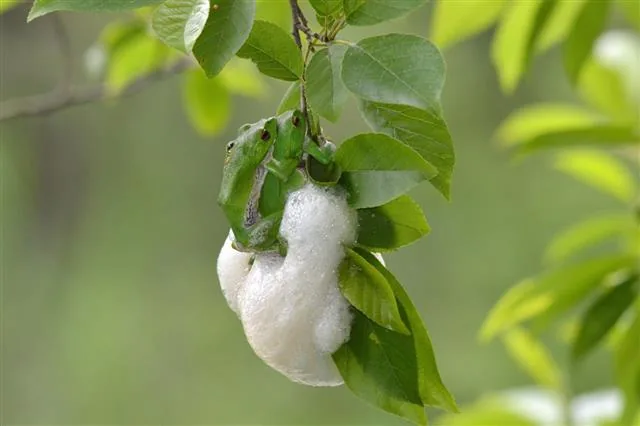
These frogs belong to the family Rhacophoridae, which has two subfamilies — Buergeriinae and Rhacophorinae. While Buergeriinae has a single genus with a few species, Rhacophorinae has 11 genera with numerous species. Most frogs in this family are arboreal; they lay eggs in tree holes filled with water or on branches above water sources. Some make foam nests on tree branches. Flying or gliding frogs belong to this family and have specialized webbing between their fingers and toes, which enables them to glide through the air. Moss frogs like Theloderma corticale are also found in this family. These frogs have a mottled and warty skin and are seen in mossy habitats.
Seychelles Frogs
These frogs belong to the family Sooglossidae, which has two genera — Sechellophryne and Sooglossus. They have two species each, so this family has only four species in total. Sooglossus gardineri or Gardiner's frog is one of the smallest frogs in the world, with a maximum length of 11 millimeters. Though this frog lacks a middle ear cavity, it has the ability to hear. These frogs are golden brown with a dark line extending from their mouths to their legs. Seychelles frogs are often seen hiding in rock crevices or within fallen leaves on the ground.
Goliath Frog & African Torrent Frogs
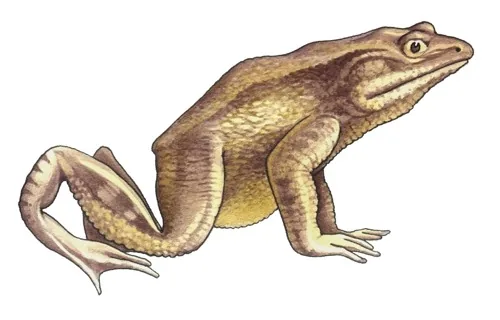
Found in some parts of Africa, these frogs belong to the family Petropedetidae, which has two genera — Petropedetes and Conraua. While the genus Petropedetes has ten species, there are six species in Conraua. The largest frog in the world, the goliath frog, belongs to the genus Conraua. It can grow to a length of up to 33 inches and have a body weight of more than three kilograms. These giant frogs are mainly found in Cameroon and Equatorial Guinea.
Additional Frog Families
Apart from those discussed above, there are some more families in the order Anura. None of the current classifications are fully conclusive, and this article follows the Integrated Taxonomic Information System (ITIS).
Additional Families Order Anura
- Aromabatidae — subfamilies Allobatinae, Anomaloglossinae, Aromobatinae
- Calyptocephalellidae — genera Calyptocephalella, Telmatobufo
- Ceratobatrachidae — genera Batrachylodes, Ceratobatrachus, Discodeles, Palmatorappia, Platymantis
- Ceratophryidae — subfamilies Batrachylinae, Ceratophryinae, Telmatobiinae
- Craugastoridae — genera Craugastor, Haddadus
- Dicroglossidae — subfamilies Dicroglossinae, Occidozyginae
- Eleutherodactylidae — subfamilies Eleutherodactylinae, Phyzelaphryninae
- Hylodidae — genera Crossodactylus, Hylodes, Megaelosia
- Leiuperidae — genera Edalorhina, Engystomops, Eupemphix, Pleurodema, Pseudopaludicola, Somuncuria
- Limnodynastidae — genera Adelotus, Heleioporus, Lechriodus, Limnodynastes, Neobatrachus, Notaden, Philoria, Platyplectrum
- Micrixalidae — genus Micrixalus
- Nasikabatrachidae — genus Nasikabatrachus
- Nyctibatrachidae — genera Lankanectes, Nyctibatrachus
- Phrynobatrachidae — genus Phrynobatrachus
- Ptychadenidae — genera Hildebrandtia, Lanzarana, Ptychadena
- Pyxicephalidae — subfamilies Cacosterninae, Pyxicephalinae
- Ranixalidae — genus Indirana
- Rhacophoridae — subfamilies Buergeriinae, Rhacophorinae
- Strabomantidae — subfamilies Holoadeninae, Strabomantinae
As mentioned above, there are around 6,000 species of frogs and toads with varying features. While some are less than ten millimeters, some are more than 33 inches in length. Some are brightly colored, others are dull. You may find some unique and beautiful members, while weird ones are not uncommon either.

 Fun fact for today!The smallest known vertebrate in the world is a frog — Paedophryne amauensis from Papua New Guinea, just 7 mm long!