

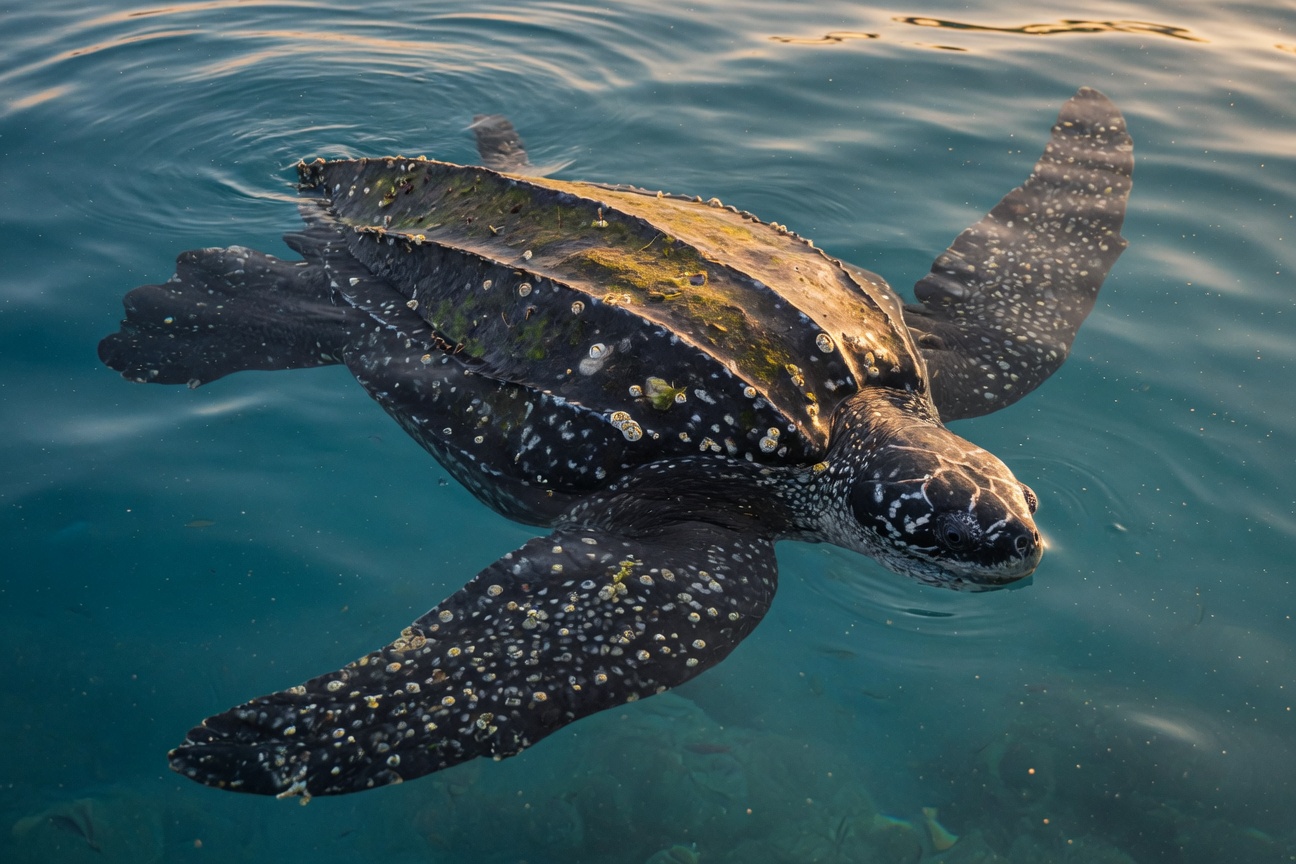
The Largest and the Smallest Turtle
There are more than 300 different species of turtle in the world. The largest is the leatherback sea turtle, with an average shell length of 6.6 ft and a weight of 2,000 lb. The smallest is the speckled padloper tortoise, with an average length of 3.1 inches and a weight of just 5 oz.
That gap (from giant to palm-sized) shows just how much variety exists in this reptile family. Over millions of years, evolution has shaped each species to suit its own habitat and lifestyle.
More than 300 species might seem hard to believe, since most of us only know the turtles sold as pets. But turtles have been on Earth for over 200 million years, fossils prove they were already here during the Upper Triassic period, long before many of the dinosaurs. Below you'll find short portraits of some of the most interesting species.
Turtle or Tortoise?
People often wonder whether to say "turtle" or "tortoise." The answer depends on where you are. In British English, "turtles" are the ocean-dwelling species and "tortoises" are the land-living ones. In American English, "turtle" is used for the whole group (all 300+ species) and the ocean ones are simply called "sea turtles." Either way, they all belong to the same family of shelled reptiles.
Classification of Turtles
Scientists group turtles into the order Testudines, which splits into two sub-orders: Cryptodira and Pleurodira. Cryptodira turtles can pull their head straight back into their shell. Pleurodira turtles have unusually long necks that they fold sideways to tuck under the shell's edge, which is why they're called "side-necked turtles."
Within Testudines, there are 14 families and 97 genera. 11 families belong to Cryptodira (including Cheloniidae, Chelydridae, Emydidae, Geoemydidae, Testudinidae, and Trionychidae), and 3 belong to Pleurodira (Chelidae, Pelomedusidae, and Podocnemididae).
The Different Types of Turtles
Scientific names like "genus" and "sub-order" can be confusing, so this guide groups all 14 families into easy everyday types: snapping turtles, sea turtles, true tortoises, mud turtles, river turtles, softshell turtles, and side-necked turtles. Read on to meet each group!
Snapping Turtles
Snapping turtles belong to the family Chelydridae. There are just two species, each in its own genus: the common snapping turtle and the alligator snapping turtle. Both are found in North and South America, with some populations in Asia. They're named for their powerful, lightning-fast bite, they cannot pull their heads inside their shells, so snapping is their main defense.

Genus Chelydra
- Common snapping turtle (Chelydra serpentina) · Geographical Range: Canada, United States and Mexico · Conservation Status: Least Concern
Genus Macrochelys
- Alligator snapping turtle (Macrochelys temminckii) · Geographical Range: Southern United States · Conservation Status: Vulnerable
Sea Turtles
Sea turtles are the animals most people picture when they hear the word "turtle." They belong to two families (Cheloniidae and Dermochelyidae) and together these two families hold seven living species. Cheloniidae has five genera; Dermochelyidae has just one, the leatherback sea turtle, which is the largest turtle alive. Sea turtles live in every ocean on Earth except the Arctic. Learn more about why sea turtles are endangered.
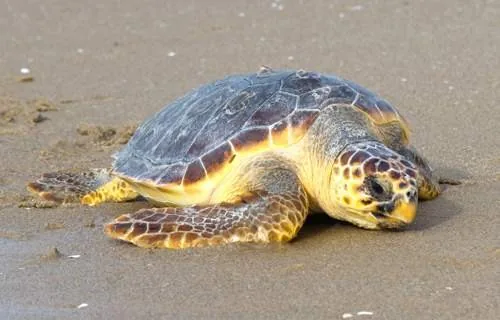


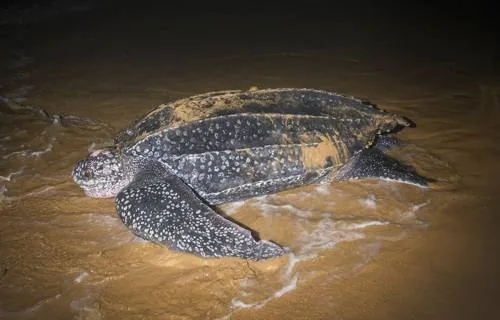
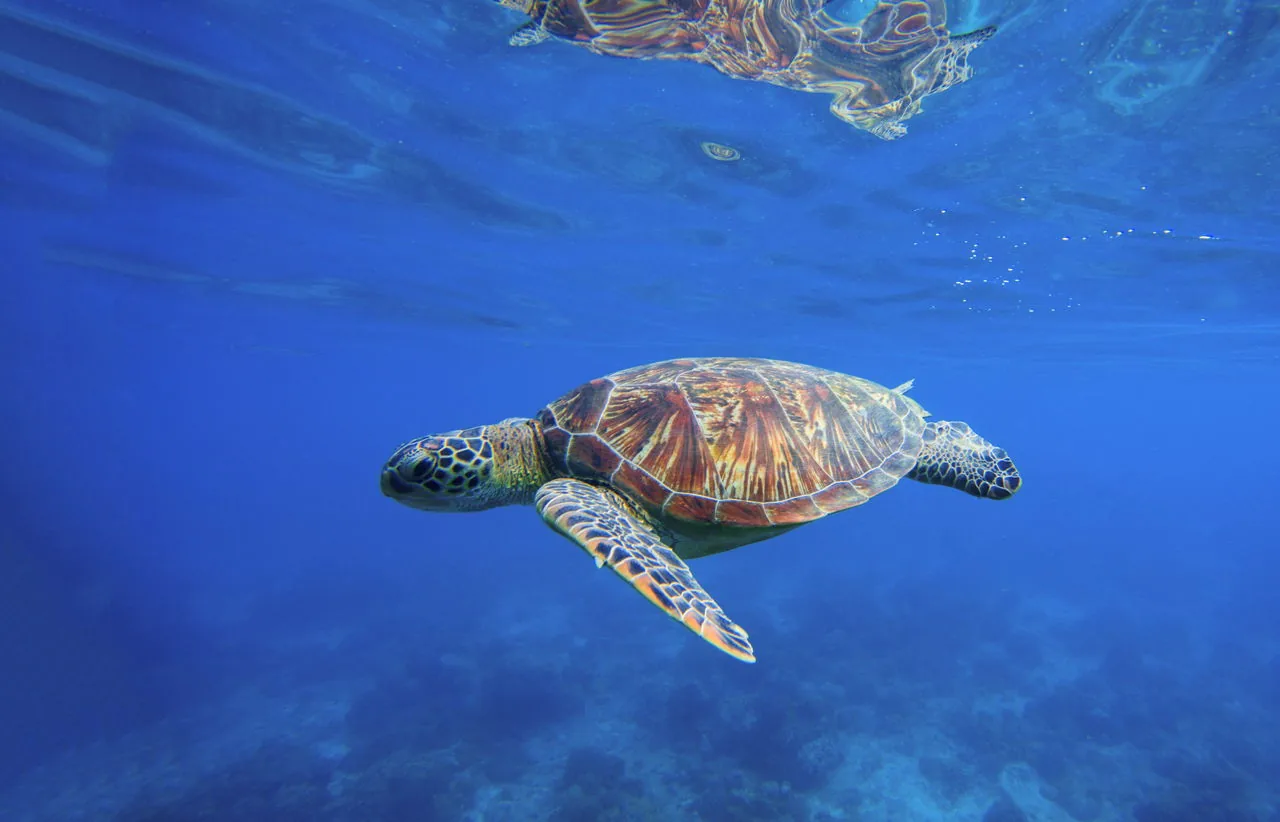
Take the Totally Turtles Quiz!
5 quick questions on the world’s shelled reptiles. How many can you crack?
Genus Caretta
- Loggerhead sea turtle (Caretta caretta) · Geographical Range: Distributed throughout the world · Conservation Status: Endangered
Genus Chelonia
- Green sea turtle (Chelonia mydas) · Geographical Range: Tropical and subtropical seas of the world · Conservation Status: Endangered
Genus Eretmochelys
- Hawksbill sea turtle (Eretmochelys imbricata) · Geographical Range: Distributed throughout the world · Conservation Status: Critically Endangered
Genus Lepidochelys
- Olive ridley sea turtle (Lepidochelys olivacea) · Geographical Range: Tropical and warm waters of the world · Conservation Status: Vulnerable
- Kemp's ridley sea turtle (Lepidochelys kempii) · Geographical Range: Atlantic Ocean and the Gulf of Mexico · Conservation Status: Critically Endangered
Genus Natator
- Flatback sea turtle (Natator depressus) · Geographical Range: Endemic to Australian continental shelf · Conservation Status: Endangered
Genus Dermochelys (Dermochelyidae sub-family)
- Leatherback sea turtle (Dermochelys coriacea) · Geographical Range: Distributed throughout the world · Conservation Status: Endangered
Big-headed Turtles
The big-headed turtle is the only member of the family Platysternidae. Found in rivers of south and southeast Asia, it is famous for its oversized head, so big it cannot retract into its shell at all. It was once classified with the snapping turtles because the two look similar, but scientists later found the resemblance is only skin-deep, and it now sits in its own family.
Genus Platysternon
- Big-headed turtle (Platysternon megacephalum) · Geographical Range: China, Laos, Myanmar, Thailand, and Vietnam · Conservation Status: Endangered
Pond Turtles and Marsh Turtles
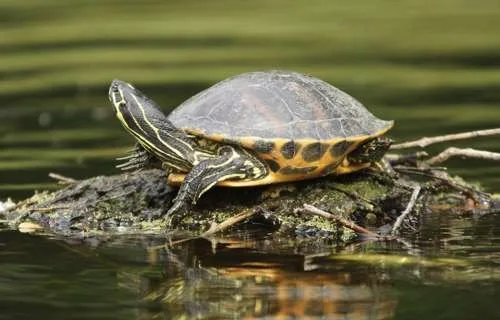
Turtles found in ponds, marshes, and slow rivers around the world make up the Emydidae family. With around 50 species, it is one of the larger turtle families, and almost all of them live in the Western Hemisphere. Many Emydidae turtles are popular as pets, which is one reason they're the best-known group of all.




Genus Clemmys
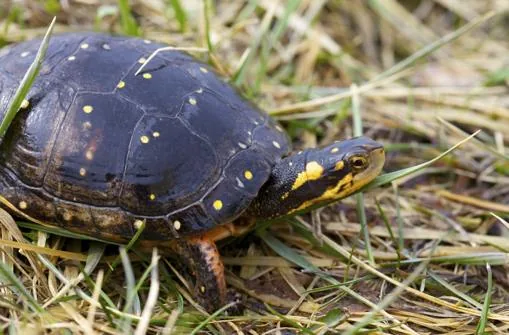
- Spotted turtle (Clemmys guttata) · Geographical Range: Southern Canada and the Eastern U.S. · Conservation Status: Endangered
Genus Emys
- Blanding's turtle (Emys blandingii) · Geographical Range: Southern and central Europe, West Asia and North Africa · Conservation Status: Endangered
- European pond turtle (Emys orbicularis) · Geographical Range: Sicily, Italy · Conservation Status: Near Threatened
- Sicilian pond turtle (Emys trinacris) · Geographical Range: Canada and the United States · Conservation Status: Endangered
- Western pond turtle (Emys marmorata) · Geographical Range: West coast of the United States of America and Mexico · Conservation Status: Vulnerable
Genus Glyptemys
- Bog turtle (Glyptemys muhlenbergii) · Geographical Range: Eastern United States · Conservation Status: Critically Endangered
- Wood turtle (Glyptemys insculpta) · Geographical Range: Endemic to North America · Conservation Status: Endangered
Genus Terrapene
- Common box turtle (Terrapene carolina) · Geographical Range: Eastern United States and Mexico · Conservation Status: Vulnerable
- Coahuilan box turtle (Terrapene coahuila) · Geographical Range: Endemic to Mexico · Conservation Status: Endangered
- Ornate box turtle (Terrapene ornata) · Geographical Range: Central United States · Conservation Status: Near Threatened
- Spotted box turtle (Terrapene nelsoni) · Geographical Range: Endemic to Mexico · Conservation Status: Data Deficient
Genus Chrysemys
- Painted turtle (Chrysemys picta) · Geographical Range: Distributed throughout North America · Conservation Status: Least Concern
Genus Deirochelys
- Chicken turtle (Deirochelys reticularia) · Geographical Range: Southeast United States · Conservation Status: Least Concern
Genus Graptemys
- Alabama map turtle (Graptemys pulchra)
- Geographical Range: Alabama, Georgia and Mississippi Conservation Status: Near Threatened Barbour's map turtle (Graptemys barbouri)
- Geographical Range: Endemic to the eastern United States Conservation Status: Vulnerable Black-knobbed map turtle (Graptemys nigrinoda) · Geographical Range: Endemic to the southeastern United States · Conservation Status: Near Threatened
- Cagle's map turtle (Graptemys caglei)
- Geographical Range: Texas, USA Conservation Status: Endangered Escambia map turtle (Graptemys ernsti)
- Geographical Range: Endemic to the United States Conservation Status: Near Threatened False map turtle (Graptemys pseudogeographica)
- Geographical Range: Missouri and Mississippi river, USA Conservation Status: Least Concern Northern map turtle (Graptemys geographica) · Geographical Range: Southern Canada and the United States · Conservation Status: Least Concern
- Ouachita map turtle (Graptemys ouachitensis)
- Geographical Range: United States of America Conservation Status: NA Pascagoula map turtle (Graptemys gibbonsi)
- Geographical Range: Endemic to the Pascagoula River in the United States Conservation Status: Endangered Pearl River map turtle (Graptemys pearlensis) · Geographical Range: Endemic to the Pearl River in the United States · Conservation Status: Endangered
- Ringed map turtle (Graptemys oculifera)
- Geographical Range: Pearl River in the United States Conservation Status: Vulnerable Texas map turtle (Graptemys versa)
- Geographical Range: Central Texas Conservation Status: Least Concern Yellow blotched sawback or Yellow-blotched map turtle (Graptemys flavimaculata) · Geographical Range: Pascagoula River and its tributaries in the United States · Conservation Status: Vulnerable
Genus Malaclemys
- Diamondback terrapin (Malaclemys terrapin) · Geographical Range: Florida Keys to Cape Cod, United States · Conservation Status: Near Threatened
Genus Pseudemys
- Alabama red-bellied cooter (Pseudemys alabamensis) · Geographical Range: Native to Alabama · Conservation Status: Endangered
- Florida red-bellied cooter (Pseudemys nelsoni) · Geographical Range: Florida and southern Georgia · Conservation Status: Least Concern
- Northern red-bellied cooter (Pseudemys rubriventris) · Geographical Range: Endemic to the United States · Conservation Status: Near Threatened
- Peninsula cooter (Pseudemys peninsularis) · Geographical Range: Florida peninsula · Conservation Status: NA
- Rio Grande cooter (Pseudemys gorzugi) · Geographical Range: Mexico and the United States · Conservation Status: Near Threatened
- River cooter (Pseudemys concinna) · Geographical Range: Central and eastern United States · Conservation Status: Least Concern
- Texas river cooter (Pseudemys texana) · Geographical Range: Texas, United States · Conservation Status: NA
Genus Trachemys
- Pond slider (Trachemys scripta) · Geographical Range: Native to the US and Mexico · Conservation Status: Near Threatened
- Baja California slider (Trachemys nebulosa)
- Geographical Range: Baja California, Sinaloa and Sonora in Mexico Conservation Status: NA Big bend slider (Trachemys gaigeae) · Geographical Range: New Mexico and Texas (USA) and Chihuahua (Mexico)
- Conservation Status: Vulnerable Central Antillean slider (Trachemys stejnegeri) · Geographical Range: Puerto Rico, Great Inagua, Dominican Republic and Haiti · Conservation Status: Near Threatened
- Colombian slider (Trachemys callirostris)
- Geographical Range: Colombia and Venezuela Conservation Status: NA Cuatro Cienegas slider (Trachemys taylori)
- Geographical Range: Cuatro Ciènegas basin, Mexico Conservation Status: Endangered Cuban slider (Trachemys decussata)
- Geographical Range: Native to Cuba and Isla de la Juventud Conservation Status: NA D'Orbigny's slider (Trachemys dorbigni) · Geographical Range: Brazil, Argentina and Uruguay · Conservation Status: Least Concern
- Haitian slider (Trachemys decorata)
- Geographical Range: Dominican Republic, Haiti, Cuba, and Puerto Rico Conservation Status: Vulnerable Jamaican slider (Trachemys terrapen)
- Geographical Range: Bahamas and Jamaica Conservation Status: Vulnerable Maranhão slider (Trachemys adiutrix)
- Geographical Range: Endemic to northeastern Brazil Conservation Status: Endangered Meso-American slider (Trachemys venusta) · Geographical Range: Mexico to Honduros · Conservation Status: NA
- Nicaraguan slider (Trachemys emolli)
- Geographical Range: Nicaragua and Costa Rica Conservation Status: NA Ornate slider (Trachemys ornata)
- Geographical Range: Western Mexico Conservation Status: Vulnerable Yaqui slider (Trachemys yaquia) · Geographical Range: Northwestern Mexico · Conservation Status: Vulnerable
Eurasian Pond and River Turtles, and Neotropical Wood Turtles
With up to 70 species, Geoemydidae is the largest turtle family of all. Most of its members live across Eurasia and northern Africa, the only exceptions are the 9 species of genus Rhinoclemmys, which live in Central and South America. One notable member, the yellow-headed temple turtle (Hieremys annandalii), was originally thought to be its own species but is now placed within genus Heosemys.

Genus Batagur
- Burmese roofed turtle (Batagur trivittata)
- Geographical Range: Burma Conservation Status: Endangered Northern river terrapin (Batagur baska)
- Geographical Range: Southeast Asia Conservation Status: Critically Endangered Painted terrapin or Saw-jawed turtle (Batagur borneoensis) · Geographical Range: Brunei, Indonesia, Malaysia, and Thailand · Conservation Status: Critically Endangered
- Red-crowned roofed turtle (Batagur kachuga)
- Geographical Range: South Asia Conservation Status: Critically Endangered Southern river terrapin (Batagur affinis)
- Geographical Range: Malaysia, Indonesia and Cambodia Conservation Status: NA Three-striped roofed turtle (Batagur dhongoka) · Geographical Range: Nepal, Bangladesh and India · Conservation Status: Endangered
Genus Geoclemys
- Black pond turtle or Spotted pond turtle (Geoclemys hamiltonii) · Geographical Range: South Asia · Conservation Status: Vulnerable
Genus Hardella
- Brahminy river turtle or Crowned river turtle (Hardella thurjii) · Geographical Range: India, Pakistan and Bangladesh · Conservation Status: Vulnerable
Genus Morenia
- Bengal eyed terrapin (Morenia ocellata)
- Geographical Range: Endemic to Burma Conservation Status: Vulnerable Indian eyed turtle (Morenia petersi) · Geographical Range: India and Bangladesh · Conservation Status: Vulnerable
Genus Pangshura
- Assam roofed turtle (Pangshura sylhetensis)
- Geographical Range: Assam and eastern Bangladesh Conservation Status: Endangered Brown roofed turtle (Pangshura smithii)
- Geographical Range: South Asia Conservation Status: Near Threatened Indian roofed turtle (Pangshura tecta)
- Geographical Range: South Asia Conservation Status: Least Concern Indian tent turtle (Pangshura tentoria) · Geographical Range: Peninsular India · Conservation Status: Least Concern
Genus Chinemys
- Chinese broad-headed pond turtle (Chinemys megalocephala)
- Geographical Range: Endemic to China Conservation Status: Vulnerable Chinese pond turtle (Chinemys reevesii)
- Geographical Range: Endemic to China Conservation Status: Vulnerable Red-necked pond turtle (Chinemys nigricans) · Geographical Range: Endemic to China · Conservation Status: Vulnerable
Genus Cuora
- Amboina box turtle (Cuora amboinensis)
- Geographical Range: Throughout south and southeast Asia Conservation Status: Vulnerable Chinese three-striped box turtle or Golden coin turtle (Cuora trifasciata) · Geographical Range: China · Conservation Status: Critically Endangered Indochinese (flowerback) box turtle (Cuora galbinifrons) Geographical Range: China, Vietnam, Laos and Cambodia Conservation Status: Critically Endangered
- McCord's box turtle (Cuora mccordi)
- Geographical Range: Endemic to Chinese Guangxi province Conservation Status: Critically Endangered Pan's box turtle (Cuora pani)
- Geographical Range: Endemic to China Conservation Status: Critically Endangered Southern Vietnamese box turtle (Cuora picturata) · Geographical Range: Mountainous regions in southern Vietnam · Conservation Status: Critically Endangered
- Vietnamese three-striped box turtle (Cuora cyclornata)
- Geographical Range: China, Vietnam and Laos Conservation Status: Critically Endangered Yellow-margined box turtle, Chinese box turtle or Snake-eating turtle (Cuora flavomarginata) · Geographical Range: Central China, Taiwan and Japan · Conservation Status: Endangered
- Yunnan box turtle (Cuora yunnanensis)
- Geographical Range: Endemic to Yunan province of China Conservation Status: Critically Endangered Zhou's box turtle (Cuora zhoui) · Geographical Range: China and Vietnam · Conservation Status: Critically Endangered
Genus Cyclemys
- Asian leaf turtle (Cyclemys dentata)
- Geographical Range: South and southeast Asia Conservation Status: NA Assam leaf turtle (Cyclemys gemeli)
- Geographical Range: Bangladesh and India Conservation Status: Near Threatened Eastern black-bridged leaf turtle (Cyclemys pulchristiata)
- Geographical Range: Cambodia and Vietnam Conservation Status: NA Enigmatic leaf turtle (Cyclemys enigmatica) · Geographical Range: Brunei, Malaysia and Indonesia · Conservation Status: NA
- Myanmar brown leaf turtle (Cyclemys fusca)
- Geographical Range: Myanmar, India and Bangladesh Conservation Status: NA Oldham's leaf turtle (Cyclemys oldhamii)
- Geographical Range: South and southeast Asia Conservation Status: NA Western black-bridged leaf turtle (Cyclemys atripons) · Geographical Range: Cambodia, Southeast Thailand and Vietnam · Conservation Status: NA
Genus Geoemyda
- Black-breasted hill turtle (Geoemyda spengleri)
- Geographical Range: China and Vietnam Conservation Status: Endangered Ryukyu black-breasted leaf turtle (Geoemyda japonica) · Geographical Range: Endemic to the Ryukyu Islands in Japan · Conservation Status: Endangered
Genus Leucocephalon
- Sulawesi forest turtle (Leucocephalon yuwonoi) · Geographical Range: Endemic to Indonesia · Conservation Status: Critically Endangered
Genus Malayemys
- Malayemys macrocephala Geographical Range: Cambodia, West Malaysia, Myanmar and Thailand Conservation Status: NA Malayemys subtrijuga Geographical Range: Cambodia, Laos, Vietnam and Thailand Conservation Status: Vulnerable
Genus Heosemys
- Arakan forest turtle (Heosemys depressa)
- Geographical Range: Arakan hills of western Myanmar Conservation Status: Critically Endangered Giant Asian pond turtle (Heosemys grandis)
- Geographical Range: Cambodia, Vietnam, Laos, Malaysia, Myanmar and Thailand Conservation Status: Vulnerable Spiny turtle (Heosemys spinosa)
- Geographical Range: Southeast Asia Conservation Status: Endangered Yellow-headed temple turtle (Heosemys annandalii) · Geographical Range: Native to Southeast Asia · Conservation Status: NA
Genus Mauremys
- Balkan pond turtle or Balkan terrapin (Mauremys rivulata)
- Geographical Range: Balkan peninsula Conservation Status: NA Caspian turtle or Striped-neck terrapin (Mauremys caspica)
- Geographical Range: Eastern Mediterranean region Conservation Status: NA Japanese pond turtle (Mauremys japonica) · Geographical Range: Endemic to Japan · Conservation Status: Near Threatened
- Spanish pond turtle (Mauremys leprosa)
- Geographical Range: Europe and northwestern Africa Conservation Status: NA Vietnamese pond turtle or Annam leaf turtle (Mauremys annamensis)
- Geographical Range: Endemic to central Vietnam Conservation Status: Critically Endangered Yellow pond turtle (Mauremys mutica) · Geographical Range: China, Japan, Taiwan and Vietnam · Conservation Status: Endangered
Genus Melanochelys
- Indian black turtle (Melanochelys trijuga)
- Geographical Range: South Asia Conservation Status: Near Threatened Tricarinate hill turtle (Melanochelys tricarinata) · Geographical Range: India, Bangladesh and Nepal · Conservation Status: Vulnerable
Genus Notochelys
- Malayan flat-shelled turtle (Notochelys platynota) · Geographical Range: Southeast Asia · Conservation Status: Vulnerable
Genus Ocadia
- Chinese Stripe-necked Turtle (Ocadia sinensis)
- Geographical Range: China, Taiwan and Vietnam Conservation Status: Endangered Ocadia glyphistoma Geographical Range: Endemic to Guangxi/China Conservation Status: Data Deficient Philippen's striped turtle (Ocadia philippeni) · Geographical Range: Hainan Province of China · Conservation Status: Data Deficient
Genus Orlitia
- Malaysian giant turtle or Bornean river turtle (Orlitia borneensis) · Geographical Range: Indonesia and Malaysia · Conservation Status: Endangered
Genus Pyxidea
- Keeled box turtle (Pyxidea mouhotii or Cuora mouhotii) Geographical Range: China, Vietnam, Laos, Cambodia, Thailand, Myanmar and India Conservation Status: Endangered
Genus Rhinoclemmys
- Black river turtle (Rhinoclemmys funerea) · Geographical Range: Costa Rica, Honduras, Nicaragua and Panama · Conservation Status: Near Threatened
- Brown wood turtle (Rhinoclemmys annulata)
- Geographical Range: Colombia, Costa Rica, Ecuador, Honduras, Nicaragua and Panama Conservation Status: Near Threatened Colombian wood turtle (Rhinoclemmys melanosterna)
- Geographical Range: Colombia, Ecuador and Panama Conservation Status: Least Concern Furrowed wood turtle (Rhinoclemmys areolata) · Geographical Range: Yucatan Peninsula and surrounding areas · Conservation Status: Near Threatened
- Large-nosed wood turtle (Rhinoclemmys nasuta)
- Geographical Range: Colombia and Ecuador Conservation Status: Near Threatened Maracaibo wood turtle (Rhinoclemmys diademata)
- Geographical Range: Colombia and Venezuela Conservation Status: Least Concern Mexican spotted wood turtle (Rhinoclemmys rubida) · Geographical Range: Endemic to Mexico · Conservation Status: Near Threatened
- Painted wood turtle (Rhinoclemmys pulcherrima)
- Geographical Range: Mexico and Central America Conservation Status: NA Spot-legged turtle (Rhinoclemmys punctularia) · Geographical Range: Brazil, French Guiana, Guyana, Suriname, Venuezuela, Trinidad and Tobago · Conservation Status: Least Concern
Genus Sacalia
- Beal's eyed turtle or Beal's four-eyed turtle (Sacalia bealei)
- Geographical Range: China and Hong Kong Conservation Status: Endangered Chinese false-eyed turtle (Sacalia pseudocellata)
- Geographical Range: Hainan, China Conservation Status: Data Deficient Four-eyed turtle (Sacalia quadriocellata) · Geographical Range: China, Laos and Vietnam · Conservation Status: Endangered
Genus Siebenrockiella
- Black marsh turtle (Siebenrockiella crassicollis)
- Geographical Range: Endemic to Southeast Asia Conservation Status: Vulnerable Philippine forest turtle (Siebenrockiella leytensis) · Geographical Range: The island province of Palawan in Philippines · Conservation Status: Critically Endangered
Genus Vijayachelys
- Cochin forest cane turtle (Vijayachelys silvatica) · Geographical Range: Western Ghats of India · Conservation Status: Endangered
True Tortoises
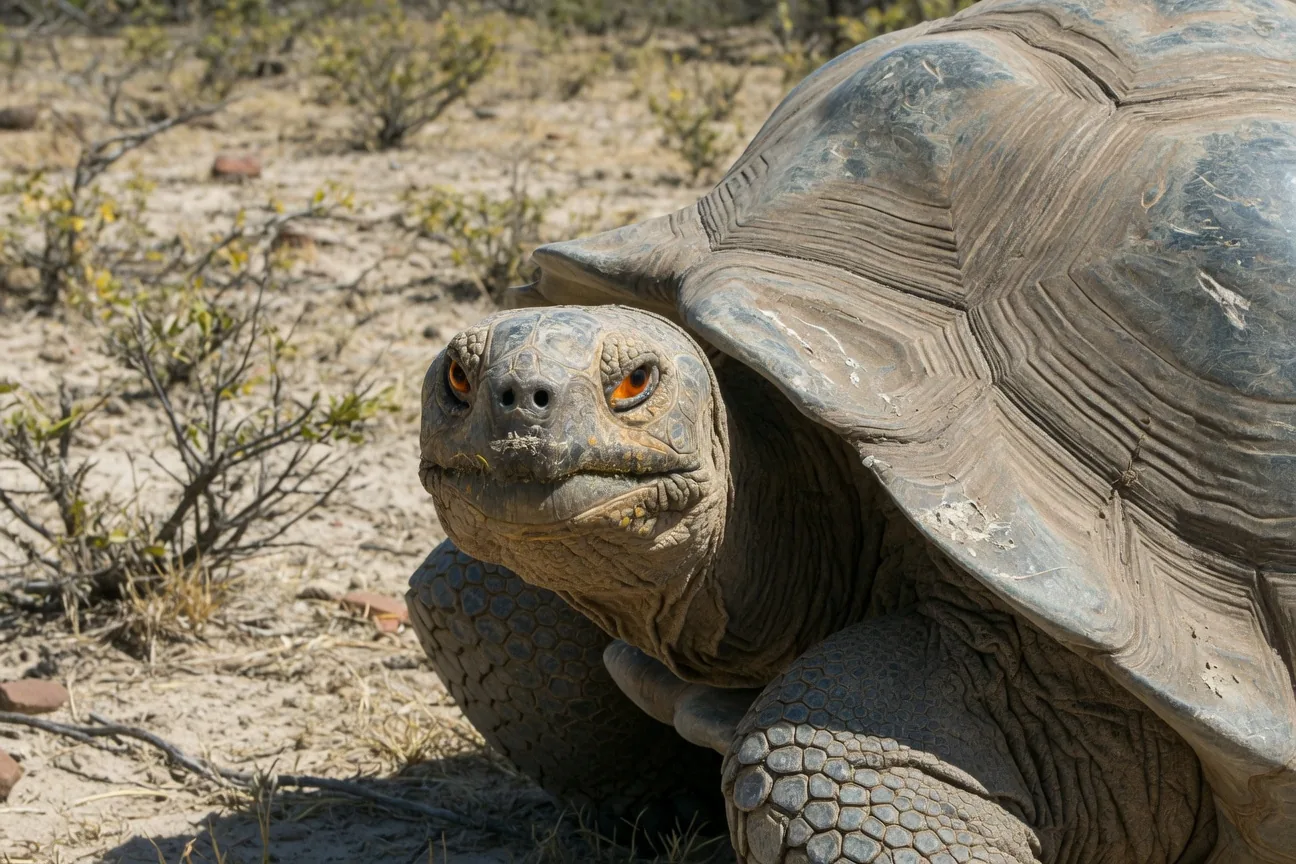
True tortoises make up the family Testudinidae, all land-living turtles that walk on stumpy, elephant-like legs instead of flippers. Two sub-families, Testudininae (38 species) and Xerobatinae (6 species), together give us 44 living species of true tortoise. This family ranges from tiny to enormous: the Aldabra giant tortoise is the largest living tortoise on Earth, while the speckled padloper is just 3.1 inches long.



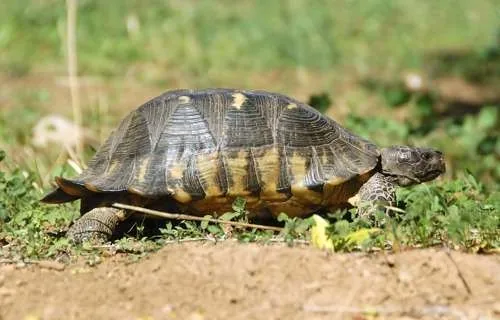
Genus Aldabrachelys
- Aldabra giant tortoise (Aldabrachelys gigantea) · Geographical Range: Aldabra Atoll in the Seychelles · Conservation Status: Vulnerable
- Arnold's giant tortoise (Aldabrachelys gigantea arnoldi) · Geographical Range: Seychelles islands · Conservation Status: Conservation dependent
- Seychelles giant tortoise (Aldabrachelys gigantea hololissa) · Geographical Range: Seychelles islands · Conservation Status: Extinct in the Wild
Genus Astrochelys
- Radiated tortoise (Astrochelys radiata) · Geographical Range: Endemic to Madagascar · Conservation Status: Critically Endangered
- Angulated tortoise or Madagascan(plowshare) tortoise (Astrochelys yniphora) · Geographical Range: Southern Madagascar · Conservation Status: Critically Endangered
Genus Chelonoidis
- Galapagos giant tortoise (Chelonoidis nigra) · Geographical Range: Native to seven of the Galápagos Islands · Conservation Status: Vulnerable
- Argentine tortoise or Chilean tortoise (Chelonoidis chilensis)
- Geographical Range: Native to Argentina Conservation Status: Vulnerable Brazilian giant tortoise or Yellow-footed tortoise (Chelonoidis denticulata) · Geographical Range: South America · Conservation Status: Vulnerable
- Chaco tortoise (Chelonoidis petersi)
- Geographical Range: Argentina, Bolivia and Paraguay Conservation Status: Vulnerable Red-footed tortoise (Chelonoidis carbonaria) · Geographical Range: Native to South America · Conservation Status: Endangered
Genus Chersina
- Bowsprit tortoise (Chersina angulata) · Geographical Range: Dry areas and scrub forest in South Africa · Conservation Status: NA
Genus Geochelone
- African spurred tortoise or Sulcata tortoise (Geochelone sulcata)
- Geographical Range: Southern Sahara in Africa Conservation Status: Vulnerable Burmese star tortoise (Geochelone platynota) · Geographical Range: Myanmar (Burma)
- Conservation Status: Critically Endangered Indian star tortoise (Geochelone elegans) · Geographical Range: India and Sri Lanka · Conservation Status: Least Concerned
Genus Homopus
- Beaked cape tortoise or Parrot-beaked cape tortoise (Homopus areolatus) · Geographical Range: Endemic to the Republic of South Africa · Conservation Status: NA Berger's cape tortoise or Nama padloper (Homopus bergeri or Homopus solus)
- Geographical Range: Endemic to Namibia Conservation Status: Vulnerable Boulenger's cape tortoise (Homopus boulengeri) · Geographical Range: Endemic to the Nama Karoo Region of South Africa and in southern Namibia · Conservation Status: NA
- Karroo cape tortoise (Homopus femoralis)
- Geographical Range: Endemic to the Karoo region of South Africa Conservation Status: NA Speckled cape tortoise or Speckled padloper (Homopus signatus) · Geographical Range: Little Namaqualand, South Africa · Conservation Status: Near Threatened
Genus Indotestudo
- Elongated tortoise (Indotestudo elongata)
- Geographical Range: South and southeast Asia Conservation Status: Endangered Travancore tortoise or Forsten's tortoise (Indotestudo forstenii)
- Geographical Range: Sulawesi Island, Indonesia Conservation Status: Endangered Travancore tortoise (Indotestudo travancorica) · Geographical Range: Western Ghats of India · Conservation Status: Vulnerable
Genus Kinixys
- Bell's hinged-back tortoise (Kinixys belliana) Geographical Range: Distributed throughout a large part of sub-Saharan Africa Conservation Status: Least Concern Home's hinge-back tortoise (Kinixys homeana)
- Geographical Range: Distributed throughout the African continent Conservation Status: Vulnerable Lobatse hinge-back tortoise (Kinixys lobatsiana) · Geographical Range: Southern Africa · Conservation Status: NA
- Natal hinge-back tortoise (Kinixys natalensis)
- Geographical Range: Mozambique, South Africa and Swaziland Conservation Status: Near Threatened Serrated hinge-back tortoise (Kinixys erosa)
- Geographical Range: Distributed throughout the African continent Conservation Status: Data Deficient Speke's hinge-back tortoise (Kinixys spekii) · Geographical Range: Africa · Conservation Status: NA
Genus Malacochersus
- Pancake tortoise (Malacochersus tornieri) · Geographical Range: Native to Tanzania and Kenya · Conservation Status: Vulnerable
Genus Psammobates
- African tent tortoise (Psammobates tentorius)
- Geographical Range: Southern Africa Conservation Status: NA Geometric tortoise (Psammobates geometricus)
- Geographical Range: South-Western Cape of South Africa Conservation Status: Endangered Serrated star tortoise (Psammobates oculifer) · Geographical Range: Southern Africa · Conservation Status: NA
Genus Pyxis
- Madagascan flat-tailed tortoise (Pyxis planicauda)
- Geographical Range: Endemic to Madagascar Conservation Status: Critically Endangered Madagascan spider tortoise (Pyxis arachnoides) · Geographical Range: Endemic to Madagascar · Conservation Status: Critically Endangered
Genus Stigmochelys
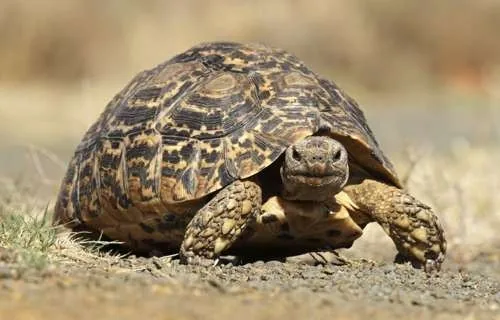
- Leopard tortoise (Stigmochelys pardalis) · Geographical Range: Savannas of eastern and southern Africa · Conservation Status: Least Concern
Genus Testudo
- Herman's tortoise (Testudo hermanni) · Geographical Range: Distributed throughout southern Europe · Conservation Status: Near Threatened
- Marginated tortoise (Testudo marginata) · Geographical Range: Greece, Italy and the Balkans in southern Europe · Conservation Status: Least Concern
- Egyptian tortoise (Testudo kleinmanni)
- Geographical Range: Egypt Conservation Status: Critically Endangered Greek tortoise or Spur-thighed tortoise (Testudo graeca)
- Geographical Range: Europe and Africa Conservation Status: Vulnerable Russian tortoise, Horsfield's tortoise or Central Asian tortoise (Testudo horsfieldii) · Geographical Range: Afghanistan to north-western China · Conservation Status: Vulnerable
Genus Gopherus
- Desert tortoise (Gopherus agassizii) · Geographical Range: Native to the Mojave and Sonoran deserts of the US and Mexico. · Conservation Status: Vulnerable
- Bolson tortoise (Gopherus flavomarginatus)
- Geographical Range: Native to North America Conservation Status: Vulnerable Gopher tortoise (Gopherus polyphemus)
- Geographical Range: Native to the southeastern United States Conservation Status: Vulnerable Texas tortoise (Gopherus berlandieri) · Geographical Range: Native to North America · Conservation Status: Least Concern
Genus Manouria
- Brown tortoise or Mountain tortoise (Manouria emys)
- Geographical Range: India, Bangladesh, Thailand, Malaysia and Indonesia Conservation Status: Endangered Impressed tortoise (Manouria impressa) · Geographical Range: Southeast Asia · Conservation Status: Vulnerable
Pig-nosed Turtles
The pig-nosed turtle is the only surviving member of the family Carettochelyidae. It lives in freshwater rivers and lagoons in northern Australia and parts of southeast Asia, and is easy to recognize by its fleshy, pig-like snout. This family was once much more widespread around the world. Today, the pig-nosed turtle is its only living representative, and it is listed as Endangered.
Genus Carettochelys
- Pig-nosed turtle (Carettochelys insculpta) · Geographical Range: Northern Territory, Papua New Guinea and West Papua region · Conservation Status: Endangered
Central American River Turtles
The Central American river turtle is the only surviving member of the family Dermatemydidae. It lives in the rivers of Central America, from southern Mexico to northern Honduras. The IUCN lists it as Critically Endangered; the U.S. Endangered Species Act lists it as Endangered. Like the pig-nosed turtle, if this species disappears it will take an entire turtle family with it, making its conservation all the more urgent.
Frequently Asked Questions
How many types of turtles are there?
There are more than 300 species of turtle, classified into 14 families and 97 genera within the order Testudines.
What is the difference between a turtle and a tortoise?
In British English, tortoises live on land and sea-dwelling species are called turtles. In American English, 'turtle' is used for the whole group.
What is the largest turtle?
The leatherback sea turtle, with an average shell length of 6.6 ft and weight of about 2,000 lb.
What is the smallest turtle?
The speckled padloper tortoise, with an average length of about 3.1 inches.
Genus Dermatemys
- Central American river turtle or Mesoamerican river turtle (Dermatemys mawii) · Geographical Range: Central America, from southern Mexico to northern Honduras · Conservation Status: Critically Endangered
Mud Turtles and Musk Turtles
Mud turtles and musk turtles are small freshwater turtles in the family Kinosternidae. Most sources divide the 25 living species into 4 genera. Mud turtles get their name from the muddy-bottomed, slow-moving water they love to hide in. Musk turtles get theirs from a rather less pleasant talent: they can squirt a strong, smelly musk when threatened, which has earned them the nickname "stinkpots."
Genus Kinosternon
- Alamos mud turtle (Kinosternon alamosae)
- Geographical Range: Sinaloa and Sonora Conservation Status: Least Concern Arizona mud turtle (Kinosternon arizonense) · Geographical Range: Arizona (United States) and Sonora (Mexico)
- Conservation Status: Vulnerable Central American mud turtle (Kinosternon angustipons)
- Geographical Range: Endemic to Central America Conservation Status: Vulnerable Creaser's mud turtle (Kinosternon creaseri) · Geographical Range: Endemic to Mexico · Conservation Status: Near Threatened
- Dunn's mud turtle (Kinosternon dunni)
- Geographical Range: Endemic to Colombia Conservation Status: Vulnerable Durango mud turtle (Kinosternon durangoense)
- Geographical Range: Chihuahua, Coahuila and Durango Conservation Status: Vulnerable Eastern mud turtle (Kinosternon subrubrum)
- Geographical Range: United States Conservation Status: Least Concern Guanajuato mud turtle (Kinosternon integrum) · Geographical Range: Endemic to Mexico · Conservation Status: Vulnerable
- Herrara's mud turtle (Kinosternon herrerai)
- Geographical Range: Endemic to Mexico Conservation Status: Vulnerable Jalisco mud turtle (Kinosternon chimalhuaca)
- Geographical Range: Venezuela and Colombia Conservation Status: Least Concern Mexican mud turtle (Kinosternon hirtipes) · Geographical Range: United States (Texas) and
- Mexico Conservation Status: Vulnerable Oaxaca mud turtle (Kinosternon oaxacae) · Geographical Range: Endemic to Mexico · Conservation Status: Data Deficient
- Scorpion mud turtle (Kinosternon scorpioides)
- Geographical Range: Mexico, Central America and South America Conservation Status: Data Deficient Sonora mud turtle (Kinosternon sonoriense)
- Geographical Range: Mexico and the United States Conservation Status: Vulnerable Striped mud turtle (Kinosternon baurii) · Geographical Range: Endemic to the United States · Conservation Status: Least Concern
- Tabasco mud turtle (Kinosternon acutum)
- Geographical Range: Belize, Guatemala and Mexico Conservation Status: Near Threatened White-lipped mud turtle (Kinosternon leucostomum)
- Geographical Range: Mexico, Central America and South America Conservation Status: Vulnerable Yellow mud turtle (Kinosternon flavescens) · Geographical Range: Central United States and Mexico · Conservation Status: Least Concern
Genus Sternotherus
- Common musk turtle or Stinkpot (Sternotherus odoratus)
- Geographical Range: Native to southeastern Canada and the eastern United States Conservation Status: Least Concern Flattened musk turtle (Sternotherus depressus) · Geographical Range: Endemic to the United States · Conservation Status: Critically Endangered
- Loggerhead musk turtle (Sternotherus minor)
- Geographical Range: Native to the United States Conservation Status: Data Deficient Razorback musk turtle (Sternotherus carinatus) · Geographical Range: Native to the United States · Conservation Status: Data Deficient
Genus Claudius
- Narrow-bridged musk turtle (Claudius angustatus) · Geographical Range: Mexico, Guatemala and Belize · Conservation Status: Near Threatened
Genus Staurotypus
- Chiapas giant musk turtle (Staurotypus salvinii)
- Geographical Range: Mexico, El Salvador, Guatemala and Belize Conservation Status: Near Threatened Mexican giant musk turtle (Staurotypus triporcatus) · Geographical Range: Central America and Mexico · Conservation Status: Near Threatened
Softshell Turtles
Softshell turtles belong to the family Trionychidae. Unlike most turtles, their shell is hard only in the center, the edges are soft and leathery, and there are no horny scales. The one exception is the spiny softshell, which does have small spiny projections on its shell. Softshells live in Asia, Africa, and South America, and their 13 genera are divided into two sub-families: Cyclanorbinae and Trionychinae.
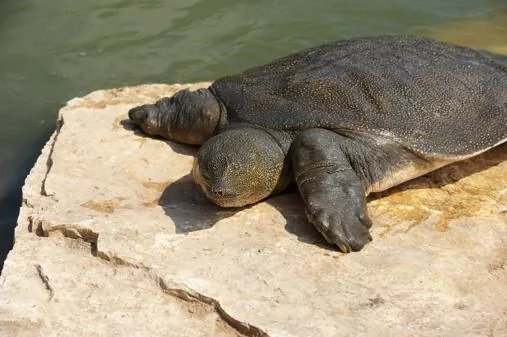
Genus Cyclanorbis
- Nubian flapshell turtle (Cyclanorbis elegans)
- Geographical Range: Benin, Chad, Ethiopia, Ghana, Nigeria, Sudan and Togo Conservation Status: Near Threatened Senegal flapshell turtle (Cyclanorbis senegalensis) · Geographical Range: Most the African continent · Conservation Status: Near Threatened
Genus Chelus
- Mata-mata or Matamata (Chelus fimbriatus) · Geographical Range: Amazon and Orinoco basins, South America · Conservation Status: Least Concern
Genus Cycloderma
- Aubry's flapshell turtle (Cycloderma aubryi)
- Geographical Range: Democratic Republic of Congo, Zaire, Gabon and Angola Conservation Status: NA Zambezi flapshell turtle (Cycloderma frenatum) · Geographical Range: Southeastern Africa · Conservation Status: Near Threatened
Genus Lissemys
- Indian flapshell turtle (Lissemys punctata)
- Geographical Range: South Asia Conservation Status: Least Concern Burmese flapshell turtle (Lissemys scutata) · Geographical Range: Myanmar and Thailand · Conservation Status: Data Deficient
Genus Amyda
- Asiatic softshell turtle (Amyda cartilaginea) · Geographical Range: Southeast Asia · Conservation Status: Vulnerable Amyda nakornsrithammarajensis Geographical Range: Thailand and surrounding regions Conservation Status: Vulnerable
Genus Apalone
- Florida softshell turtle (Apalone ferox)
- Geographical Range: The states of South Carolina, Georgia, Florida and Alabama in the U.S. Conservation Status: NA Smooth softshell turtle (Apalone mutica)
- Geographical Range: Eastern United States Conservation Status: NA Spiny softshell turtle (Apalone spinifera) · Geographical Range: Canada, United States and Mexico · Conservation Status: Least Concern
Genus Chitra
- Asian narrow-headed softshell turtle (Chitra chitra)
- Geographical Range: Indonesia, Thailand and Myanmar Conservation Status: Critically Endangered Siamese narrow-headed softshell turtle (Chitra chitra chitra)
- Geographical Range: Indian subcontinent Conservation Status: NA Javanese narrow-headed softshell turtle (Chitra chitra javanensis) · Geographical Range: Southeast Asia · Conservation Status: NA
- Indian narrow-headed shelled turtle (Chitra indica)
- Geographical Range: India and Pakistan Conservation Status: Vulnerable Burmese narrow-headed softshell turtle (Chitra vandijki) · Geographical Range: Southeast Asia · Conservation Status: NA
Genus Dogania
- Malayan soft-shelled turtle (Dogania subplana) · Geographical Range: Indonesia, Malaysia, Myanmar, Philippines and Singapore · Conservation Status: Least Concern
Genus Nilssonia
- Burmese softshell turtle (Nilssonia formosa)
- Geographical Range: Endemic to Myanmar Conservation Status: Endangered Ganges softshell turtle (Nilssonia gangetica)
- Geographical Range: South Asia Conservation Status: Vulnerable Peacock softshell turtle (Nilssonia hurum) · Geographical Range: Nepal, Bangladesh and Pakistan · Conservation Status: Vulnerable
- Nagpur softshell turtle (Nilssonia leithii)
- Geographical Range: Peninsular India Conservation Status: Vulnerable Black softshell turtle (Nilssonia nigricans) · Geographical Range: India and Bangladesh · Conservation Status: Extinct in the Wild
Genua Palea
- Wattle-necked softshell turtle (Palea steindachneri) · Geographical Range: Native to China and Vietnam · Conservation Status: Endangered
Genus Pelochelys
- New Guinea giant softshell turtle (Pelochelys bibroni)
- Geographical Range: Australia, West Papua, Indonesia, and Papua New Guinea Conservation Status: Vulnerable Cantor's giant softshell turtle (Pelochelys cantorii)
- Geographical Range: South and southeast Asia Conservation Status: Endangered Northern New Guinea giant softshell turtle (Pelochelys signifera) · Geographical Range: Endemic to Papua New Guinea · Conservation Status: NA
Genus Pelodiscus
- Chinese softshell turtle (Pelodiscus sinensis)
- Geographical Range: China, Korea, North Vietnam and Japan and Russia Conservation Status: Vulnerable Hunan softshell turtle (Pelodiscus axenaria) · Geographical Range: Guangxi Zhuang Autonomous Region · Conservation Status: NA
- Lesser Chinese softshell turtle (Pelodiscus piriformis)
- Geographical Range: Guangxi Zhuang Region and Hunan Province Conservation Status: NA Northern Chinese softshell turtle (Pelodiscus maackii) · Geographical Range: Russia, Northeast China, Democratic Republic of Korea and South Korea · Conservation Status: NA
Genus Rafetus
- Euphrates softshell turtle (Rafetus euphraticus)
- Geographical Range: Iraq, Syrian Arab Republic, Turkey, and Khuzestan Province of Iran Conservation Status: Endangered Yangtze giant softshell turtle (Rafetus swinhoei) · Geographical Range: Vietnam and China · Conservation Status: Critically Endangered
Genus Trionyx
- African softshell turtle or Nile softshell turtle (Trionyx triunguis) · Geographical Range: Parts of Africa and Near East · Conservation Status: NA
Side-necked Turtles
Side-necked turtles can't pull their head straight back into their shell. Instead, they fold their neck sideways and tuck the head into a gap near their front legs. Most side-necked turtles live in the southern hemisphere. They split into two families: Chelidae (the Austro-American side-necked turtles of Australia and South America) and Pelomedusidae (the African side-neck turtles, the Madagascan big-headed turtle, and the American side-neck river turtles).
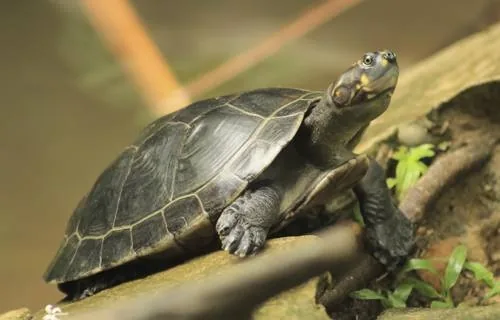
Genus Chelodina
- Arnhem land long neck turtle (Chelodina burrungandjii)
- Geographical Range: Northern Territory, Australia Conservation Status: Least Concern Broad-shelled turtle (Chelodina expansa)
- Geographical Range: Southern Australia Conservation Status: Data Deficient Cann's snake-neck turtle (Chelodina canni) · Geographical Range: Northern and northeastern parts of Australia · Conservation Status: Least Concern
- Eastern long-necked turtle (Chelodina longicollis)
- Geographical Range: Northern Queensland to South Australia Conservation Status: Least Concern Narrow-breasted snake-necked turtle (Macrodiremys colliei)
- Geographical Range: Endemic to the southwestern part of Western Australia Conservation Status: Near Threatened New Guinea snake-necked turtle (Chelodina novaeguineae) · Geographical Range: Northeastern Australia, Indonesia, Papua New Guinea · Conservation Status: Least Concern
- Northern long-necked turtle (Chelodina rugosa)
- Geographical Range: Australia, Indonesia and Pitcairn Islands Conservation Status: Near Threatened Parker's snake-necked Turtle (Chelodina parkeri)
- Geographical Range: West Papua in Indonesia and Papua New Guinea Conservation Status: Vulnerable Pritchard's snake-necked turtle (Chelodina pritchardi) · Geographical Range: Endemic to Papua New Guinea · Conservation Status: Endangered
- Reimann's snake-necked turtle (Chelodina reimanni)
- Geographical Range: Indonesia Conservation Status: Near Threatened Roti Island snake-necked turtle (Chelodina mccordi)
- Geographical Range: Rote Island between New Guinea and Australia Conservation Status: Critically Endangered Steindachner's snake-neck Turtle (Chelodina steindachneri) · Geographical Range: Western Australia · Conservation Status: NA
Genus Elseya
- Branderhorst's snapping turtle (Elseya branderhorstii)
- Geographical Range: Endemic to Indonesia Conservation Status: Vulnerable Gulf snapping turtle (Elseya lavarackorum)
- Geographical Range: Endemic to Australia Conservation Status: Endangered Irwin's turtle (Elseya irwini) · Geographical Range: Fitzroy River, Queensland · Conservation Status: Vulnerable
- Northern snapping turtle (Elseya dentata)
- Northern Western Australia and the Northern Territory Conservation Status: Least Concern White throated Snapping turtle (Elseya albagula) · Geographical Range: Endemic to southeastern Queensland, Australia · Conservation Status: Endangered
Genus Emydura
- Macquarie turtle (Emydura macquarii)
- Geographical Range: Eastern Australia Conservation Status: Least Concern Northern yellow-faced turtle (Emydura tanybaraga) · Geographical Range: Northern Australia · Conservation Status: Least Concern
- Red-bellied short-necked turtle or Jardine river turtle (Emydura subglobosa)
- Geographical Range: Australia and Papua New Guinea Conservation Status: Least Concern Victoria river red-faced turtle (Emydura victoriae) · Geographical Range: Northern Australia · Conservation Status: Least Concern
Genus Elusor
- Mary River turtle (Elusor macrurus) · Geographical Range: Mary River in South-East Queensland · Conservation Status: Endangered
Genus Myuchelys
- Bellinger river snapping turtle (Myuchelys georgesi)
- Geographical Range: Endemic to Australia Conservation Status: Data Deficient Manning river snapping turtle (Myuchelys purvisi)
- Geographical Range: Endemic to Australia Conservation Status: Data Deficient Namoi river snapping turtle (Myuchelys belli) · Geographical Range: Endemic to New South Wales, Australia · Conservation Status: Endangered
- New Guinea snapping turtle (Myuchelys novaeguineae)
- Geographical Range: Indonesia and Papua New Guinea Conservation Status: Least Concern Saw-shelled turtle (Myuchelys latisternum) · Geographical Range: Endemic to Australia · Conservation Status: Data Deficient
Genus Pseudemydura
- Western swamp tortoise (Pseudemydura umbrina) · Geographical Range: Western Australia · Conservation Status: Critically Endangered
Genus Rheodytes
- Fitzroy River Turtle (Rheodytes leukops) · Geographical Range: Endemic to south eastern Queensland, Australia · Conservation Status: Vulnerable
Genus Acanthochelys
- Big-headed pantanal swamp turtle (Acanthochelys macrocephala)
- Geographical Range: Argentina, Bolivia, Brazil and Paraguay Conservation Status: Near Threatened Black spine-neck swamp turtle (Acanthochelys spixii) · Geographical Range: Argentina, Brazil, Uruguay and Paraguay · Conservation Status: Near Threatened
- Brazilian radiolated swamp turtle (Acanthochelys radiolata)
- Geographical Range: Endemic to Brazil Conservation Status: Near Threatened Chaco side-necked turtle (Acanthochelys pallidipectoris) · Geographical Range: Argentina, Paraguay and Bolivia · Conservation Status: Vulnerable
Genus Mesoclemmys
- Amazon toad-headed turtle (Mesoclemmys raniceps)
- Geographical Range: Venezuela, Ecuador, Peru and Brazil Conservation Status: NA Dahl's toad-headed turtle (Mesoclemmys dahli)
- Geographical Range: Endemic to Colombia Conservation Status: Critically Endangered Gibba turtle (Mesoclemmys gibba) · Geographical Range: Most of South America · Conservation Status: Least Concern
- Hoge's side-necked turtle (Mesoclemmys hogei) · Geographical Range: Endemic to Brazil · Conservation Status: Endangered Mesoclemmys heliostemma Geographical Range: South America Conservation Status: NA Mesoclemmys nasuta Geographical Range: Guyana, Suriname, French Guiana and Brazil Conservation Status: NA Mesoclemmys perplexa Geographical Range: Endemic to Brazil Conservation Status: NA
- Tuberculate toad-headed turtle (Mesoclemmys tuberculata)
- Geographical Range: Endemic to Brazil Conservation Status: NA Vanderhaege's toad-headed turtle (Mesoclemmys vanderhaegei)
- Geographical Range: Argentina, Bolivia, Brazil, Paraguay and Uruguay Conservation Status: Near Threatened Zulia toad-headed turtle (Mesoclemmys zuliae) · Geographical Range: Endemic to Venezuela · Conservation Status: Vulnerable
Genus Phrynops
- Cotinga river toadhead turtle (Phrynops tubersosus)
- Geographical Range: South America Conservation Status: Least Concern Geoffroy's side-necked turtle (Phrynops geoffroanus) · Geographical Range: Most of South America · Conservation Status: Least Concern
- Hilaire's side-necked turtle (Phrynops hilarii)
- Geographical Range: Brazil, Uruguay and Argentina Conservation Status: Least Concern Williams' side-necked turtle (Phrynops williamsi) · Geographical Range: Brazil, Uruguay, Paraguay and Argentina · Conservation Status: NA
Genus Platemys
- Twist-necked turtle (Platemys platycephala) · Geographical Range: Northern South America · Conservation Status: Least Concern
Genus Rhinemys
- Red side-necked turtle (Rhinemys rufipes) · Geographical Range: Brazil, Colombia and Peru · Conservation Status: Near Threatened
Genus Hydromedusa
- Argentine snake-necked turtle (Hydromedusa tectifera)
- Geographical Range: Northern Argentina, Uruguay, Paraguay and Brazil Conservation Status: NA Brazilian snake-necked turtle (Hydromedusa maximiliani) · Geographical Range: Endemic to Brazil · Conservation Status: Vulnerable
Genus Pelomedusa
- African helmeted turtle or Marsh terrapin (Pelomedusa subrufa) · Geographical Range: Most the African continent · Conservation Status: Least Concern
Genus Pelusios
- Adanson's mud turtle (Pelusios adansonii)
- Geographical Range: Most the African continent Conservation Status: NA African dwarf mud turtle (Pelusios nanus)
- Geographical Range: Southern Africa Conservation Status: NA African forest turtle (Pelusios gabonensis) · Geographical Range: Tropical West Africa · Conservation Status: NA
- African keeled mud turtle (Pelusios carinatus)
- Geographical Range: Gabon, Congo-Brazzaville and the Democratic Republic of Congo Conservation Status: NA Central african mud turtle (Pelusios chapini)
- Geographical Range: Uganda and the Democratic Republic of Congo Conservation Status: NA East African black mud turtle (Pelusios subniger) · Geographical Range: Eastern and southeastern Africa · Conservation Status: Least Concern
- Gabon mud turtle (Pelusios marani)
- Geographical Range: Endemic to Gabon Conservation Status: NA Okavango mud turtle (Pelusios bechuanicus)
- Geographical Range: Angola, Namibia, Botswana, Zambia and Zimbabwe Conservation Status: NA Serrated hinged terrapin (Pelusios sinuatus) · Geographical Range: Southern Africa · Conservation Status: Data Deficient
- Turkana mud turtle (Pelusios broadleyi)
- Geographical Range: Endemic to Kenya Conservation Status: Vulnerable Upemba mud turtle (Pelusios upembae)
- Geographical Range: Endemic to Democratic Republic of the Congo Conservation Status: Data Deficient Variable mud turtle (Pelusios rhodesianus) · Geographical Range: Most the African continent · Conservation Status: Least Concern
- West African black turtle (Pelusios niger)
- Geographical Range: West Africa Conservation Status: NA West African mud turtle (Pelusios castaneus)
- Geographical Range: The African continent Conservation Status: NA Williams mud Turtle (Pelusios williamsi)
- Geographical Range: Endemic to the upper Nile drainage Conservation Status: NA Yellow-bellied mud turtle (Pelusios castanoides) · Geographical Range: Madagascar, Malawi, Mozambique, Seychelles, South Africa and Tanzania · Conservation Status: Least Concern
Genus Erymnochelys
- Madagascan big-headed turtle (Erymnochelys madagascariensis) · Geographical Range: Western Madagascar · Conservation Status: Critically Endangered
Genus Peltocephalus
- Big-headed Amazon River turtle or Big-headed sideneck (Peltocephalus dumerilianus) · Geographical Range: Brazil, Colombia, French Guiana, Venezuela and Ecuador · Conservation Status: Vulnerable
Genus Podocnemis
- Yellow-spotted Amazon river turtle or Yellow-spotted river turtle (Podocnemis unifilis) · Geographical Range: Amazon basin · Conservation Status: Vulnerable
- Arrau river turtle or Charapa turtle (Podocnemis expansa)
- Geographical Range: South America and the Caribbean Conservation Status: Conservation dependent Red-headed Amazon side-necked turtle or Red-headed sideneck (Podocnemis erythrocephala) · Geographical Range: Brazil, Colombia, and Venezuela · Conservation Status: Vulnerable
- Rio Magdalena river turtle or Magdalena river turtle (Podocnemis lewyana)
- Endemic to Colombia Conservation Status: Endangered Savanna side-necked turtle (Podocnemis vogli)
- Venezuela and Colombia Conservation Status: NA Six-tubercled Amazon river turtle or Six-tubercled river turtle (Podocnemis sextuberculata) · Geographical Range: Brazil, Colombia and Peru · Conservation Status: Vulnerable
The Madagascan big-headed turtle and the American side-neck river turtles are sometimes placed in their own family, Podocnemididae, but many scientists think they are so similar to Pelomedusidae that the two families should be merged.
Turtles have survived on Earth for over 200 million years, making them one of the longest-living animal groups of all time. But their future is far from certain. A study by the IUCN/SSC Tortoise and Freshwater Turtle Specialist Group found that 25 species are at an "extremely high risk of extinction." Sea turtles were not even counted in that study, if they had been, the leatherback sea turtle and Kemp's ridley sea turtle would also have featured on the critically endangered list.
The threats are wide-ranging: habitat loss, hunting for food, the illegal pet trade, and accidental capture by fishing gear. Poaching alone has grown into a multi-million dollar industry. Wildlife experts warn that the situation is even more serious than official numbers suggest, many species haven't been studied enough to know how close to the edge they truly are.
Explore More Animals
 Seriously Intriguing Facts About Snapping TurtlesSnapping turtles are among the largest freshwater turtles in the world. They are aggressive and snap readily when threatened. Learn about both species, their sh
 What Do Sea Turtles Eat? It's Not What You ThinkSea turtles, herbivores, carnivores or omnivores? The answer depends on the species. Discover the diet of all seven sea turtle species, plus a quiz, glossary,
 Types of Snakes With PicturesMeet every type of snake, from the deadliest venom-injecting cobras and vipers to record-breaking constrictors, tiny thread snakes, and ocean-going sea snakes.
 Types of Frogs and Toads: A Complete Picture GuideFrom the tiny Paedophryne to the giant goliath frog, discover all the main types of frogs and toads, with pictures, quick facts, and a quiz for kids.

 Fun fact for today!Turtles have lived on Earth for over 200 million years — they were already here before many of the dinosaurs, and a turtle can never climb out of its shell because it is part of its skeleton!